



Page 3
Page 3

Ethics of Belief : Essays in Tribute to D.Z. Phillips
This volume is presented as a tribute to D.Z. Phillips and the introduction by Eugene Long includes a brief discussion of Phillips' life and work. The first six articles were originally written at the invitation of Phillips for a conference on the ethics of belief held at Claremont Graduate University. Essays by Allen Wood, Richard Amesbury and Van Harvey discuss the question of the ethics of belief in the context of the evidentialist principle most frequently associated with W. K. Clifford. Essays by Ronney Mourad, Jennifer Faust and Robert Audi are concerned with the voluntariness of belief, the persuasive power of arguments and differing conceptions of faith, belief and acceptance. The final two essays by John Whittaker and Anselm Min focus on Phillips' understanding of the logic and rationality of religious belief.

Estimation in Conditionally Heteroscedastic Time Series Models
ARCH (autoregressive conditionally heteroscedastic), is well-suited for the description of economic and financial price. Nowadays ARCH has been replaced by more general and more sophisticated models, such as GARCH (generalized autoregressive heteroscedastic). This monograph concentrates on mathematical statistical problems associated with fitting conditionally heteroscedastic time series models to data. This includes the classical statistical issues of consistency and limiting distribution of estimators. Particular attention is addressed to (quasi) maximum likelihood estimation and misspecified models, along to phenomena due to heavy-tailed innovations. The used methods are based on techniques applied to the analysis of stochastic recurrence equations. Proofs and arguments are given wherever possible in full mathematical rigour. Moreover, the theory is illustrated by examples and simulation studies.

Equitable research partnerships : A global code of conduct to counter ethics dumping
This book offers insights into the development of the ground-breaking Global Code of Conduct for Research in Resource-Poor Settings (GCC) and the San Code of Research Ethics. Using a new, intuitive moral framework predicated on fairness, respect, care and honesty, both codes target ethics dumping – the export of unethical research practices from a high-income setting to a lower- or middle-income setting. The book is a rich resource of information and argument for any research stakeholder who opposes double standards in research. It will be indispensable for applicants to European Union framework programmes, as the GCC is now a mandatory reference document for EU funding.

Environmental and Health Risk Assessment and Management : Principles and Practices
The book covers the essential aspects of environmental and health law, environmental economics, applied statistical and probabilistic methods, fundamental notions of applied epidemiology and toxicology, as well as decision analysis, to provide an integrated overview of how risk assessment and management combine to produce sound societal outcomes. Risk-based methods play a pivotal role in identifying and ranking alternative, sustainable choices, while accounting for uncertainty and variability. Specifically, most reductions in risks require a balancing of the costs and benefits associated with the action to reduce exposure to a hazard and thus risk. This balancing necessarily involves linking exposure and response through causation. Fundamentally, in risk assessment and management, science and law intersect through legal and scientific causation to the point that the failure to provide a sound causal argument can make an otherwise beneficial law or regulation invalid.

Enterprise Collaboration : On-Demand Information Exchange for Extended Enterprises
Global supply chain is a fact of life in today's world. From the perspective of the First World, this practice reigns in outsourcing of jobs that, in the view of many, threatens a way of life. This argument actually implies that outsourcing represents a fair chance for the Third World to catch up and reverse-leverage through market economy.

Engineering Mechanics ; Vol.1 : Equilibrium
This is the first of two volumes introducing structural and continuum mechanics in a comprehensive and consistent way. The current book presents all theoretical developments both in text and by means of an extensive set of figures. This same approach is used in the many examples, drawings and problems. Both formal and intuitive (engineering) arguments are used in parallel to derive the principles used, for instance in bending moment diagrams and shear force diagrams. A very important aspect of this book is the straightforward and consistent sign convention, based on the stress definitions of continuum mechanics. The book is suitable for self-education.

Dialogue for Intercultural Understanding : Placing Cultural Literacy at the Heart of Learning
This book is a result of an extensive, ambitious and wide-ranging pan-European project focusing on the development of children and young people’s cultural literacy and what it means to be European in the 21st century prioritising intercultural dialogue and mutual understanding.

Dialogic Education and Technology : Expanding the Space of Learning
Dialogic Education and Technology is about using new technology to draw people into the kind of dialogues which take them beyond themselves into learning, thinking and creativity. The program of research reported in this book reveals key characteristics of learning dialogues and demonstrates ways in which computers and networks can deepen, enrich and expand such dialogues. A dialogic perspective is developed drawing upon recent work in communications theory, psychology, computer science and philosophy. The central argument of the book is that there is a convergence between this dialogic perspective in education and the affordances of new information and communications technology. A genuinely dialogic perspective is relatively new to the field of educational technology and there is a considerable amount of interest in this topic amongst researchers who wish to see what extra insights, if any, a dialogical approach can offer them.

Defending Life : The Nature of Host-Parasite Relations
Defending Life discusses the relationship between hosts and parasites. A major contention of the book is that the immune system depends ontologically on the ecosystem in which it is embedded; it would not have the features it has if it was not related in one way or other to parasitic agents and to the host’s own cells and tissues. To sustain the argument, life is investigated at all layers – from molecules up through cells, organisms and ecosystems. Together with the inverse course, which goes from ecological contingencies down to gene-expression profiles, the approach facilitates an advanced understanding of immunocompetence as well as its converse, immunoincompetence. The emphasis on analytical abstractions, coherent patterns and generative mechanisms makes possible the distinction between genuine causality and coincidental associations, and thus increases the understanding of why we observe what we observe. The book contains detailed descriptions of the immune system and the microbial world as well as methodological and conceptual clarifications.

Debating Transformations of National Citizenship
Deconomic, social and political change. It focuses on the emergence of global markets where citizenship is for sale and on how new reproduction technologies impact citizenship by descent. It also discusses the return of banishment through denationalisation of terrorist suspects, and the impact of digital technologies, such as blockchain, on the future of democratic citizenship. The book provides a wide range of views on these issues from legal scholars, political scientists, and political practitioners. It is structured as a series of four conversations in which authors respond to each other. This exchange of arguments provides unique depth to current debates about the future of citizenship.

Debating European Citizenship
This book raises crucial questions about the citizenship of the European Union. Is it a new citizenship beyond the nation-state although it is derived from Member State nationality? Who should get it? What rights and duties does it entail? Should EU citizens living in other Member States be able to vote there in national elections? If there are tensions between free movement and social rights, which should take priority? And should the European Court of Justice determine what European citizenship is about or the legislative institutions of the EU or national parliaments? This book collects a wide range of answers to these questions from legal scholars, political scientists, and political practitioners. It is structured as a series of three conversations in which authors respond to each other. This exchange of arguments provides unique depth to the debate

Critical Questions in STEM Education
This volume is divided into three sections: the first one describes the nature of the component disciplines of STEM. The next section presents work from leaders representing all STEM disciplines and deals with aspects such as K-12 and post-secondary education. The last section draws conclusions regarding the natures of the disciplines, challenges and advantages of STEM education in terms of theoretical and practical implications. The two final chapters compile arguments from the research chapters, describing themes in research results, and making recommendations for best STEM education practice, and examining areas for future research in STEM education.

Cooperative Information Agents XII ; 12th International Workshop, CIA 2008, Prague, Czech Republic, September 10-12, 2008. Proceedings
This book constitutes the refereed proceedings of the 12th International Workshop on Cooperative Information Agents, CIA 2008, held in Prague, Czech Republik, in September 2008.

Conviviality at the Crossroads : The Poetics and Politics of Everyday Encounters
Conviviality has lately become a catchword not only in academia but also among political activists. This open access book discusses conviviality in relation to the adjoining concepts cosmopolitanism and creolisation. The urgency of today’s global predicament is not only an argument for the revival of all three concepts, but also a reason to bring them into dialogue. Ivan Illich envisioned a post-industrial convivial society of ‘autonomous individuals and primary groups’ (Illich 1973), which resembles present-day manifestations of ‘convivialism’. Paul Gilroy refashioned conviviality as a substitute for cosmopolitanism, denoting an ability to be ‘at ease’ in contexts of diversity (Gilroy 2004)

Contributions from Science Education Research
In August 2005, over 500 international researchers from the field of science education met at the 5th European Science Education Research Association conference in Barcelona, Spain. Two of the main topics at this conference were: the decrease in the number of students interested in school science and concern about the worldwide outcomes of studies on students’ scientific literacy. At the conference, over 400 papers were presented, covering a wide range of topics relevant to science education research, such as evidence-based practice, teachers’ professional development, the role of ICT and multimedia, formal and informal learning environments, and argumentation and modelling in science education. This volume includes edited versions of 37 outstanding papers presented during the conference, including the lectures of the keynote speakers. They have been selected for their quality, variety and interest, and present a good overview of the field of science education research.

Contextualisms in Epistemology
This comprehensive anthology collects twenty original essays and critical commentaries on different aspects of contextualism, written by leading philosophers on the topic. The editors’ introduction sketches the historical development of the contextualist movement and provides a survey and analysis of its arguments and major positions. The papers explore, inter alia, the central problems and prospects of semantic (or conversational) contextualism and its main alternative approaches such as inferential (or issue) contextualism, epistemic contextualism, and virtue contextualism. They also investigate the connections between contextualism and epistemic particularism, and between contextualism and stability accounts of knowledge.

Computer safety, reliability, and security ; 39th International Conference, SAFECOMP 2020, Lisbon, Portugal, September 16–18, 2020, Proceedings
This book constitutes the proceedings of the 39th International Conference on Computer Safety, Reliability and Security, SAFECOMP 2020, held in Lisbon, Portugal, in September 2020.* The 27 full and 2 short papers included in this volume were carefully reviewed and selected from 116 submissions. They were organized in topical sections named: safety cases and argumentation; formal verification and analysis; security modelling and methods; assurance of learning-enabled systems; practical experience and tools; threat analysis and risk mitigation; cyber-physical systems security; and fault injection and fault tolerance.
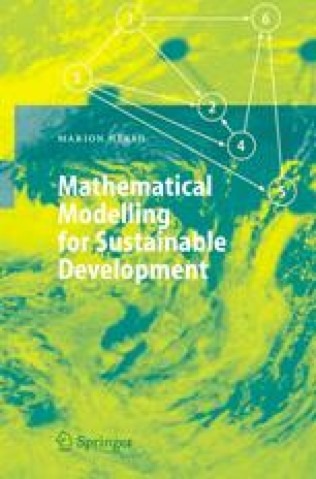
Mathematical Modelling for Sustainable Development
Mathematics needs Sustainable Development. When science was gradually reinvented in European medieval societies, it was legitimised as contributing to the disclosure of God’s divine creation. The conflicts that emerged became well known as a result of the clash between Galileo and the Church. Science found a new legitimacy through recognition that it was a powerful force against superstition. In the Enlightenment the argument was pushed forward by attributing Progress to the advancement of science: science could produce a better world by promoting rationality. In our modern society, science has become intimately linked to technology. Science for its own sake unfortunately rarely has positive outcomes in terms of research grant applications. Meanwhile, science and technology, and the progress they are supposed to produce, meet with wide scale scepticism. We all know of the current global problems: climate change, resource depletion, a thinning ozone layer, space debris, declining biodiversity, malnutrition, dying ecosystems, global inequity, and the risk of unprecedented nuclear wars
Market-Conform Valuation of Options
we will investigate the 'market-conform' pricing of newly issued contingent claims. A contingent claim is a derivative whose value at any settlement date is determined by the value of one or more other underlying assets, e. g. , forwards, futures, plain-vanilla or exotic options with European or American-style exercise features. Market-conform pricing means that prices of existing actively traded securities are taken as given, and then the set of equivalent martingale measures that are consistent with the initial prices of the traded securities is derived using no-arbitrage arguments.
Life in the Universe : Expectations and Constraints
Energy, chemistry, solvents, and habitats -- the basic elements of living systems - define the opportunities and limitations for life on other worlds. This class-tested text examines each of these parameters in crucial depth and makes the argument that life forms we would recognize may be more common in our solar system than many assume. It also considers, however, exotic forms of life that would not have to rely on carbon as basic chemical element, solar energy as a main energy source, or water as primary solvent. Finally the question of detecting bio- and geosignature of such life forms is discussed, ranging from Earth environments to deep space. While speculative considerations in this emerging field of science cannot be avoided, the authors have tried to present their study with the breadth and seriousness that a scientific approach to this issue requires. They seek an operational definition of life and investigate the realm of possibilities that nature offers to realize this very special state of matter and avoid scientific jargon wherever possible to make this intrinsically interdisciplinary subject understandable to a broad range of readers.
