


Refine Results
Sort By
From
To


A specifically Calvinist identity and theology emerged out of two key conflicts in the region: first, the fight to turn away from Catholic practices and traditions a population that had been forced to convert to Protestantism by the Bernese after their conquest of Vaud in 1536; second, the struggle against the Zwinglian political and theological ideas that dominated the Swiss Confederation and differed from the Calvinists' understanding of ecclesiastical discipline, the Eucharist, and predestination. The Pays de Vaud was central to this struggle, for it was subject politically to Zwinglian, German-speaking Bern, but many of its ministers were more strongly influenced by Calvin. Calvin himself was initially excited about the prospects for reform in the region, but frustrations with the Swiss led him and the Genevans increasingly to focus their efforts on France.

Calibrating the Cosmos describes hard science, but is gently written. It explains in clear, non-mathematical language the measurements and the interpretation of the resulting data that have led to the current understanding of the origin, evolution and properties of our expanding Big Bang universe. Many people have a sketchy idea of the work of cosmologists, but Professor Levin’s experience in teaching both scientific and liberal arts students has enabled him to impart much of our current thinking without resorting to difficult mathematics. Theoretical concepts are emphasized, in particular the symmetries of homogeneity and isotropy enjoyed by our universe on the largest scales, how these symmetries lead to only one quantity being needed to describe the growth of the universe from its infancy to the present time, and how the so-called parameters of the universe are the ingredients used to construct the model universes to which ours – the real thing – is compared.

Collaborative decision making processes are a form of communication inside organizations. Their functioning can teach lessons for the design of electronic office systems. Those processes are open ended and therefore decide themselves on their form. Like oral deliberations which cannot be modelled in advance any open ended communication process needs means for common control over the further advancement and the ending of the process.The book is a reworked English version of a thesis for the official qualification for university professorship accepted by the German University of Administrative Sciences Speyer. Germany.
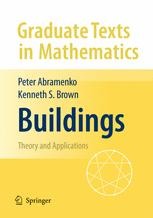
This book treats Jacques Tits's beautiful theory of buildings, making that theory accessible to readers with minimal background. It includes all the material of the earlier book Buildings by the second-named author, published by Springer-Verlag in 1989, which gave an introduction to buildings from the classical (simplicial) point of view. This new book also includes two other approaches to buildings, which nicely complement the simplicial approach: On the one hand, buildings may be viewed as abstract sets of chambers with a Weyl-group-valued distance function; this point of view has become increasingly important in the theory and applications of buildings. On the other hand, buildings may be viewed as metric spaces. Beginners can still use parts of the new book as a friendly introduction to buildings, but the book also contains valuable material for the active researcher.

This twenty-third ICMI Study addresses for the first time mathematics teaching and learning in the primary school (and pre-school) setting, while also taking international perspectives, socio-cultural diversity and institutional constraints into account. One of the main challenges of designing the first ICMI primary school study of this kind is the complex nature of mathematics at the early level. Accordingly, a focus area that is central to the discussion was chosen, together with a number of related questions. The broad area of Whole Number Arithmetic (WNA), including operations and relations and arithmetic word problems, forms the core content of all primary mathematics curricula. this study presents a meta-level analysis and synthesis of what is currently known about WNA, providing a useful base from which to gauge gaps and shortcomings, as well as an opportunity to learn from the practices of different countries and contexts.

What are the challenges and action points for agricultural sustainability in Sub-Saharan Africa? This collection of papers offers technical analyses, policy recommendations and an overview of success stories to date. Each carefully selected paper provides valuable insights for improved policy making and defines relevant strategic priorities on Africa’s sustainable transformation process, which is in line with the international development agenda. Although agriculture remains the main source of income for Africa’s population, the sector is rain-fed subjecting it to the vagaries of weather and climate change. This volume demonstrates the rationale of developing a competitive, inclusive and sustainable agribusiness sector for Africa’s food security and structural transformation.

In the 1960s, it became increasingly clear that more and more information was going to be stored on computers, not on pieces of paper. With these changes in technology and the ways it was used came a need to protect both the systems and the information. For the next ten years, encryption systems of varying strengths were developed, but none proved to be rigorous enough. In 1973, the NBS put out an open call for a new, stronger encryption system that would become the new federal standard. Several years later, IBM responded with a system called Lucifer that came to simply be known as DES (data encryption standard).

This book provides a detailed exploration of the British media coverage of the press reform debate that arose from the News of the World phone hacking scandal and the Leveson Inquiry. Gathering data from a content analysis of 870 news articles, Ogbebor shows how journalists cover debates on media policy and illustrates the impact of their coverage on democracy

This book represents the most comprehensive description of the physical findings of an investigation into the spatio-temporal characteristics of the gravity of breaking waves and the foam activity in open sea by methods and instruments of optical and microwave remote sensing. Much emphasis is placed on the physical aspects of breaking processes necessary to measure the possibilities and limitations of remote sensing methods in specific observation cases of an oceanic surface. Numerous practical applications and illustrations are provided from air-borne, ship-borne and laboratory up-to-date experiments.

This book addresses a large variety of models in mathematical and computational neuroscience.He devotes the main part to the synchronization problem. He presents neural net models more realistic than the conventional ones by taking into account the detailed dynamics of axons, synapses and dendrites, allowing rather arbitrary couplings between neurons. He gives a complete stabile analysis that goes significantly beyond what has been known so far. He also derives pulse-averaged equations including those of the Wilson--Cowan and the Jirsa-Haken-Nunez types and discusses the formation of spatio-temporal neuronal activity pattems. An analysis of phase locking via sinusoidal couplings leading to various kinds of movement coordination is included.

This volume contains eleven state of the art contributions on boundary integral equation and boundary element methods. Beside some historical and more analytical aspects in the formulation and analysis of boundary integral equations also modern fast boundary element methods are described and analyzed from a mathematical point of view. In addition, engineering and industrial applications of those methods are presented showing the ability of state of the art boundary element methods to solve challenging problems from different fields of applications. This book is addressed to researchers, graduate students and practitioners working on and using boundary element methods. All contributions also show the great achievements of interdisciplinary research between mathematicians and engineers, with direct applications in industry.

The goal of this book is to disseminate information on the worldwide status and trends in biosensing R&D to government decisionmakers and the research community. The contributors critically analyze and compare biosensing research in the United States with that being pursued in Japan, Europe and other major industrialized countries.

Environmental biotechnology, which was in its infancy in the early 80's, has evolved thanks to the revolution brought about by molecular biology. Multiple successes in the biological cleanup of civil and industrial wastewater and of hydrocarbon soil pollution, demonstrate the vast power of clean technologies. In addition, the buildup of information on the activities of microorganisms as catalysts in all sorts of natural, industrial and animal environments has flourished. There is a continuing realization of the critical role of microbial processes in biological, industrial and geological systems. Since environmental biotechnology has matured, it is ready to tackle bigger challenges: the scaling up of many bioremediation systems still in progress, the search for novel biocatalysts for industrial applications, the continuing effort against common human life-threatening processes such as antibiotic resistance, the accumulation of hormone-mimicking substances (endocrine disrupters), the deposition of air-borne pesticides in the environment and, the degradation of recalcitrant contaminants. These endeavors will help prevent the contamination of food chains, protect human life and allow for human activity and economic development that do not compromise environmental sustainabijity.
Transmembrane signaling is one of the most significant cell biological events in the life and death of cells in general and lymphocytes in particular. Until recently biochemists and biophysicists were not accustomed to thinking of these processes from the side of a high number of complex biochemical events and an equally high number of physical changes at molecular and cellular levels at the same time. Both types of researchers were convinced that their findings are the most decisive, having higher importance than the findings of the other scientist population. Both casts were wrong. Life, even at cellular level, has a number of interacting physical and biochemical mechanisms, which finally build up the creation of an "excited" cell that will respond to particular signals from the outer or inner world.
The development of a bio-engineered pacemaker is of substantial clinical and also scientific interest because it promises to overcome several limitations of electronic pacemakers. Moreover it may answer the longstanding question of whether the complex structure of the sinus node is indeed a prerequisite for reliable pacemaking, or simpler structures might work as well. This book gives an overview of the current state-of-the-art of creating a bio-engineered pacemaker. It shows the approaches to develop of genetic and cell-based engineering methods suitable to implement them with safety and stability. It also illuminates the problems that need to be solved before bio-pacemaking can be considered for clinical use.
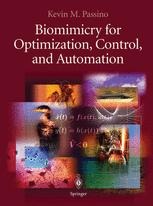
In this book, we focus onhowtousebiomimicryof the functionaloperationofthe “hardwareandso- ware” of biological systems for the development of optimization algorithms and feedbackcontrolsystemsthatextendourcapabilitiestoimplementsophisticated levels of automation. The primary focus is not on the modeling, emulation, or analysis of some biological system. The focus is on using “bio-inspiration” to inject new ideas, techniques, and perspective into the engineering of complex automation systems. There are many biological processes that, at some level of abstraction, can berepresentedasoptimizationprocesses,manyofwhichhaveasa basicpurpose automatic control, decision making, or automation.
The human body is composed of structures organized in a hierarchical fashion: from biomolecules assembled into polymers, to multimeric assemblies such as cellular or-ganelles, to individual cells, to tissues, to organ systems working together in health and disease- each dominated by a characteristic length scale. Decades of science and engineer-ing are now converging to provide tools that enable the orderly manipulation of biological systems at previously inaccessible, though critically important, length scales (<100 mi-crons). Thus, the approaches described in this volume provide a snapshot of how micro-and nanotechnologies can enable the investigation, prevention, and treatment of human disease.The volume is divided into three parts. The first part, Cell-based therapeutics; cov- ers the merger of cells with micro- and anosystems for applications in regenerative medicine spanning the development of novel nanobiomaterials.
Abe Lee has been working on micro/ and nanotechnology for biomedical and biotech applications since 1992. His recent research focuses on the development of integrated micro and nano fluidic chip processors for the following applications: point-of-care diagnostics, "smart" nanomedicine for early detection and treatment, stem cell biology and therapeutics, the synthesis of novel and pure materials, and biosensors to detect environmental and terrorism threats. Jim Lee's research interest includes BioMEMS/NEMS, and polymer micro/nanotechnology. In the last 4 years, he has over 20 refereed journal publications, 2 book chapters, and 5 patents in these areas. He is now leading an NSF Nanoscale Science and Engineering Center for Affordable Nanoengineering of Polymer Biomedical Devices at OSU.

The biological effects of asteroid and comet impacts have been widely viewed as primarily destructive. The role of an impactor in the K/T boundary extinctions has had a particularly important influence on thinking concerning the role of impacts in ecological and biological changes. th During the 10 and final workshop of the ESF IMPACT program during March 2003, we sought to investigate the wider aspects of the involvement of impact events in biological processes, including the beneficial role of these events from the prebiotic through to the ecosystem level. The ESF IMPACT programme (1998-2003) was an interdisciplinary effort that is aimed at understanding impact processes and their effects on the Earth environment, including environmental, geological and biological changes.
Interfacial electrochemistry of redox metalloproteins and DNA-based molecules is presently moving towards new levels of structural and functional resolution. This is the result of powerful interdisciplinary efforts. Underlying fundamentals of biological electron and proton transfer is increasingly well understood although with outstanding unresolved issues. Comprehensive bioelectrochemical studies have mapped the working environments for bioelectrochemical electron transfer, supported by the availability of mutant proteins and other powerful biotechnology. Introduction of surface spectroscopy, the scanning probe microscopies, and other solid state and surface physics methodology has finally offered exciting new fundamental and technological openings in interfacial bioelectrochemistry of both redox proteins and DNA-based molecules.

Daraa Highway - Ghabagheb - Syria
+963-15 2050 - 15 860 380 /1/2/3 - 11 662 3900