



Page 23
Page 23
Artificial intelligence in medicine
Provides a structured and analytical guide to the use of artificial intelligence in medicine. Covering all areas within medicine, the chapters give a systemic review of the history, scientific foundations, present advances, potential trends, and future challenges of artificial intelligence within a healthcare setting.

Artificial intelligence hardware design : Challenges and solutions
Learn foundational and advanced topics in Neural Processing Unit design with real-world examples from leading voices in the field. A thorough introduction to neural networks and neural network development history, as well as Convolutional Neural Network (CNN) models Explorations of various parallel architectures, including the Intel CPU, Nvidia GPU, Google TPU, and Microsoft NPU, emphasizing hardware and software integration for performance improvement Discussions of streaming graph for massive parallel computation with the Blaize GSP and Graphcore IPU An examination of how to optimize convolution with UCLA Deep Convolutional Neural Network accelerator filter decomposition
Artificial gravity
"This book reviews the principle and rationale for using artificial gravity during space missions, and describes the current options proposed, including a short-radius centrifuge contained within a spacecraft. In Artificial Gravity, experts provide recommendations on the research needed to assess whether or not short-radius centrifuge workouts can help limit deconditioning of physiological systems.""Aided by an exquisite group of experts, Gilles Clement and Angie Bukley have managed to put together THE new, comprehensive reference book on artificial gravity. This book will be an essential resource for students, scientists, and program planners alike."
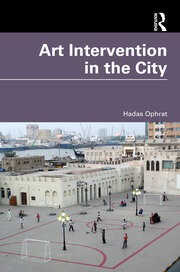
Art Intervention in the City
This book focuses on the phenomenon of art intervention—an expression of local initiatives by artists, collectives, and art centers wishing to influence the design of the space or make a change in its lifestyle.
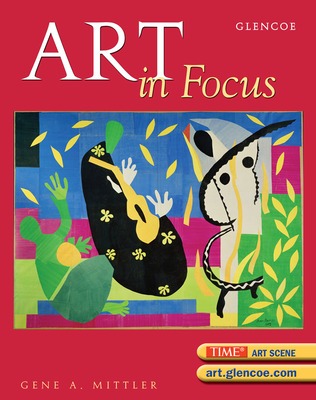
Art in Focus
The premier art history text! This integrated, chronological approach to the study of art demonstrates the interrelationships of aesthetics, art criticism, art history, and studio art.
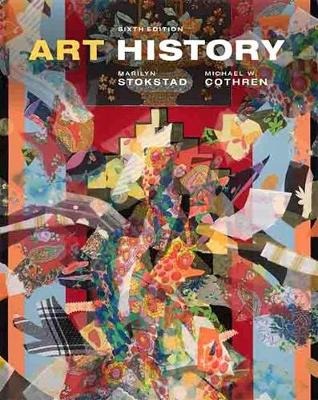
Art History
Brings the history of art to life for a new generation of students. It is global in scope, inclusive in its coverage, and warm and welcoming in tone. The guiding vision of Art History is that the teaching of art history survey courses should be filled with equal delight, enjoyment, and serious learning, while fostering an enthusiastic and educated public for the visual arts.
Arid Dune Ecosystems: The Nizzana Sands in the Negev Desert
Sand dune dynamics plays a key role in many arid deserts. This volume provides a synthesis of a specific sand dune ecosystem, the Nizzana site in the Negev Desert. Describing its climate and geophysical/geochemical properties of soils, geological history, flora and fauna, and past/present land-use patterns, it elucidates ecological and geomorphological processes and their interrelations, based on long-term monitoring, in situ experiments and satellite imagery. Particular attention is drawn to the impact of the topsoil biological crust in controlling water availability at local/regional scales. The interdisciplinary approach adopted in this case study offers a good example of a highly complex and dynamic system, which could easily be applied to other sandy ecosystems.
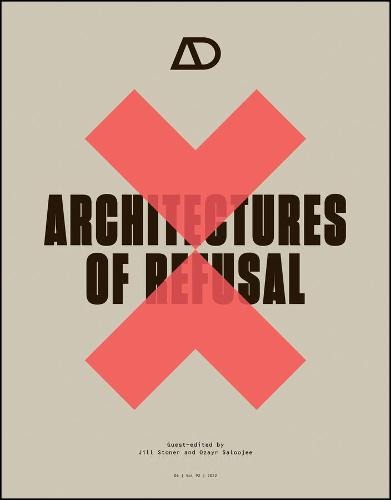
Architectures of refusal
Reveals how designers, practitioners, scholars and architects are participating in dismantling the major canons of Western architecture. The work is both literal and figural: taking buildings apart and reconstituting them, and challenging mythologies that include drawing-as-analogue, building-as object, architect-as-hero and nature-as-other.
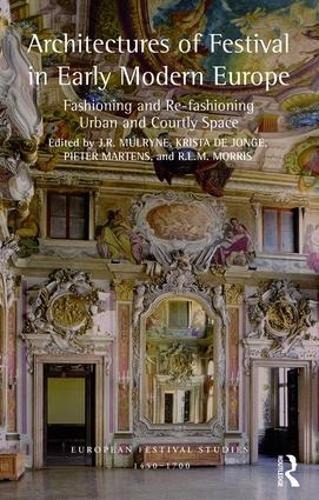
Architectures of festival in early modern Europe : Fashioning and re-fashioning urban and courtly space
Draws on up-to-date research by a Europe-wide group of academic scholars and museum and gallery curators to provide a unique, intellectually-stimulating and beautifully-illustrated account of temporary architecture created for festivals of the sixteenth and seventeenth centuries, together with permanent architecture pressed into service for festival occasions across major European locations including Italian, French, Austrian, Scottish and German.
Architecture constructed : Notes on a discipline
In this book, acclaimed architectural theorist Mark Jarzombek examines this tension head-on, and uses it to rethink the nature of the history of architecture. He reveals architecture to be a troubled, interconnected realm, incomplete and unstable, where labor, craft, and occupation are the ‘invisible’ complements to the work of the architect.
Architecture beyond the cupola : Inventions and designs of Dante Bini
This book reviews Dante Bini’s inventions and designs, focusing on his form-resistant Binishell and other pneumatic construction systems. Dante Bini’s double profile of architect and builder underpins the narrative of the entire book. It is used to analyse the evolution of the early reinforced-concrete Binishell patent into a variety of automated construction systems based on the use of air. Dante Bini has always been quite proactive in promoting his work and disseminating the results of his experimentations and achievements via journal articles, conference presentations and public talks.
Architecture and the novel under the Italian fascist regime
The book is divided into seven chapters, which in turn analyze the interconnections between the novel and architecture in theory and in practice. The first six chapters cover debates on State art, on the novel and on architecture, as well as their historical development and their unfolding in key journals of the period. The last chapter offers a detailed analysis of some important novels and buildings, which have in practice realized some of the key principles articulated in the theoretical disputes.
Architecture and the modern hospital : Nosokomeion to Hygeia
Explores the rapid evolution of hospital design in the twentieth century, analysing the ways in which architects and other specialists reimagined the modern hospital. It examines how the vast expansion of medical institutions over the course of the century was enabled by new approaches to architectural design and it highlights the emerging political conviction that physical health would become the cornerstone of human welfare.
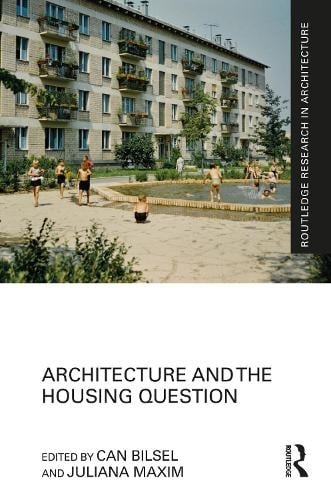
Architecture and the housing question
Examines how the design and provision of housing around the world have become central both to competing political projects and to the architecture profession. How have architects acting as housing experts helped alleviate or enforce class, race, and gender inequality? What are the disciplinary implications of taking on shelter for the multitude as an architectural assignment and responsibility? The book features essays in the historiography of architecture and the housing question, and a collection of historical case studies from Belgium, China, France, Ghana, the Netherlands, Kenya, the Soviet Union, Turkey, and the United States.
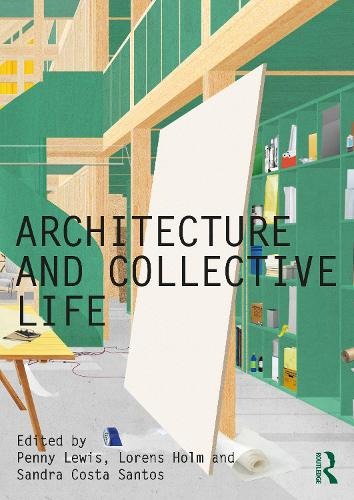
Architecture and Collective Life
Addresses the changing nature of public life alongside an analysis of changes in the architectural profession. Contains thought-provoking chapters from some of the disciplines' leading thinkers and draws together new research that helps us to look again at the question of urban development. Focuses on the link between architecture, urban theory and societal ideas.
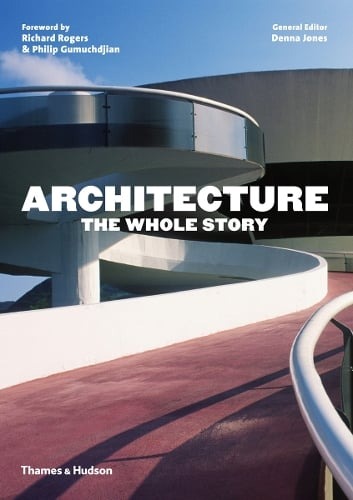
Architecture : the whole story
From ancient and classical masterpieces to contemporary, cutting-edge buildings, architecture has defined our world throughout history. Drawing its examples from all around the globe, Architecture: The Whole Story is a richly illustrated and comprehensive account of the architects, plans, designs and constructions that over the centuries have most engaged our minds, inspired our imaginations and raised our spirits. For everyone who has ever wished for greater insight into the art of building design, Architecture: The Whole Story provides the analytical tools to appreciate to the fullest the variety of architectural achievement and the built environment in the world.
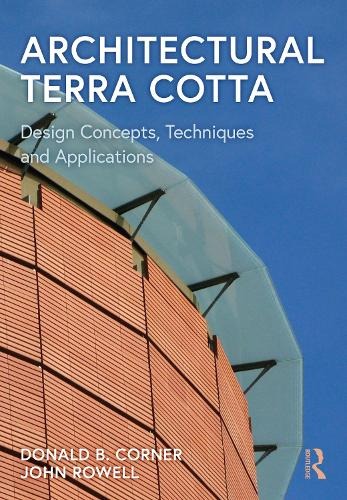
Architectural Terra Cotta : Design concepts, techniques and applications
Examines the evolution of terra cotta and prepares architects and builders to make new, creative uses of the timeless material. Terra cotta is among the oldest of manufactured building products, yet it has once again become a material of choice in contemporary façade design. From the walls of Babylon to high performance rainscreens, terra cotta claddings have repeatedly proven to be technically superior and aesthetically triumphant. Understanding the evolution of terra cotta prepares architects to add new, creative chapters to a rich history.
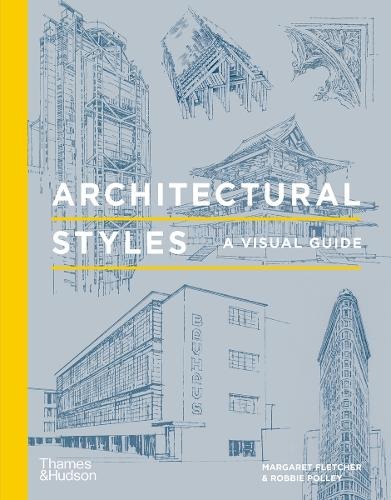
Architectural styles : A visual guide
It begins with the earliest styles of the ancient civilizations – Egypt, Greece and Rome – before travelling through Medieval, Renaissance and Baroque and into the modern world via the panoply of 19th century revivalist styles. Also covered is the traditional architecture of China, India, Japan and Pre-Columbian America. A final section gathers together key architectural elements from different periods – columns, towers, doorways, windows.
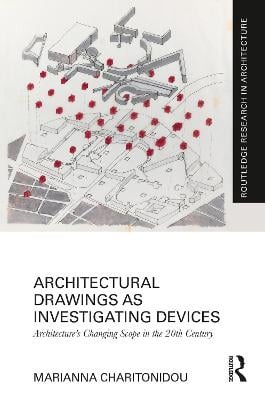
Architectural drawings as investigating devices : Architecture’s changing scope in the 20th century
Explores how the changing modes of representation in architecture and urbanism relate to the transformation of how the addressees of architecture and urbanism are conceived. Diagnoses the dominant epistemological debates in architecture and urbanism during the 20th and 21st centuries. It traces their transformations, paying special attention to Le Corbusier and Ludwig Mies van der Rohe’s preference for perspective representation, to the diagrams of Team 10 architects, to the critiques of functionalism, and the upgrade of the artefactual value of architectural drawings in Aldo Rossi, John Hejduk, Peter Eisenman, and Oswald Mathias Ungers, and, finally, to the reinvention of architectural programme through the event in Bernard Tschumi and the Office for Metropolitan Architecture (OMA). Particular emphasis is placed on the spirit of truth and clarity in modernist architecture, the relationship between the individual and the community in post-war era architecture, the decodification of design process as syntactic analogy and the paradigm of autonomy in the 1970s and 1980s architecture, the concern about the dynamic character of urban conditions and the potentialities hidden in architectural programme in the post-autonomy era.
Architectural colossi and the human body buildings and metaphors
Architectural Colossi and the Human Body discusses the role of Platonic and Cartesian philosophy and how philosophers such as Heidegger and Merleau-Ponty, and theoreticians such as Frascari and Pallasmaa, have seen, described and analysed the human body and the role of architecture and perception. Drawing upon three key case studies and by employing theoretical ideas of Venturi and others, this book will provide an understanding of the role of anthromorphism and the relation and use of the human body with reference to selected architects and artists.
