



Page 216
Page 216

Advanced Radiation Sources and Applications ; Proceedings of the NATO Advanced Research Workshop, held in Nor-Hamberd, Yerevan, Armenia, August 29 - September 2, 2004
A NATO Advanced Research Workshop on ”Advanced Radiation Sources and Applications” Hosted by the Yerevan Physics Institute, Yerevan, Armenia, 30 invited researchers from former Soviet Union and NATO countries gathered at Nor-Hamberd, Yerevan, on the slopes of Mount Aragats to discuss recent theoretical as well as expe- mental developments on means of producing photons from mostly low energy electrons.
Advanced Quantum Mechanics
Advanced Quantum Mechanics, the second volume on quantum mechanics by Franz Schwabl, discusses nonrelativistic multi-particle systems, relativistic wave equations and relativistic fields. Characteristic of Schwabl’s work, this volume features a compelling mathematical presentation in which all intermediate steps are derived and where numerous examples for application and exercises help the reader to gain a thorough working knowledge of the subject. The treatment of relativistic wave equations and their symmetries and the fundamentals of quantum field theory lay the foundations for advanced studies in solid-state physics, nuclear and elementary particle physics. This text extends and complements Schwabl’s introductory Quantum Mechanics, which covers nonrelativistic quantum mechanics and offers a short treatment of the quantization of the radiation field. New material has been added to this third edition of Advanced Quantum Mechanics on Bose gases, the Lorentz covariance of the Dirac equation, and the ‘hole theory’ in the chapter "Physical Interpretation of the Solutions to the Dirac Equation."

Advanced organic chemistry ; Part B : Reaction and synthesis
Since its original appearance in 1977, Advanced Organic Chemistry has maintained its place as the premier textbook in the field, offering broad coverage of the structure, reactivity and synthesis of organic compounds. As in the earlier editions, the text contains extensive references to both the primary and review literature and provides examples of data and reactions that illustrate and document the generalizations. While the text assumes completion of an introductory course in organic chemistry, it reviews the fundamental concepts for each topic that is discussed.
Advanced Numerical Methods to Optimize Cutting Operations of Five-Axis Milling Machines
Presents new optimization algorithms designed to improve the efficiency of tool paths for five-axis NC machining of sculptured surfaces. The book introduces the reader to fundamental issues involved in the tool path planning such as the kinematics of five-axis machines, types of 5 axis machines, part surface representation, machining strips, optimal tool orientation, gouging avoidance and forward step error. It also introduces new methods of optimization based on research conducted by the authors, including schemes performed in the spatial domain, angular domain as well as procedures to optimize the initial setup. The book can be used by undergraduate and graduate students and researchers in the field of NC machining and CAD/CAM as well as by the corporate research groups for advanced optimization of cutting operations.
Advanced Methods in Material Forming
The book contains the most relevant papers presented in the International Conference on Materials Forming, ESAFORM 2005. The list below presents some of the most successful minisymposia of the conference: - New and advanced numerical strategies in forming process simulation; - Sheet metal forming technologies and modeling; - Anisotropy and formability of materials; - Polymer processing and modeling; - Composite forming technologies and modeling; - Superplastic forming. This volume gathers selected plenary and keynote papers presented in the conference, offering an up-to-date synthesis of the academic and industrial research in the fields of physical and numerical modeling of materials forming processes. The book is useful for the doctoral fellows, scientists and engineers involved in various domains of materials processing technology.
Advanced methods for knowledge discovery from complex data
An overview of the field, looking at the issues and challenges involved is followed by coverage of recent trends in data mining, including descriptions of some currently popular tools like genetic algorithms, neural networks and case-based reasoning. This provides the context for the subsequent chapters on methods and applications. Part I is devoted to the foundations of mining different types of complex data like trees, graphs, links and sequences. A knowledge discovery approach based on problem decomposition is also described. Part II presents important applications of advanced mining techniques to data in unconventional and complex domains, such as life sciences, world-wide web, image databases, cyber security and sensor networks. With a good balance of introductory material on the knowledge discovery process, advanced issues and state-of-the-art tools and techniques, as well as recent working applications this book provides a representative selection of the available methods and their evaluation in real domains. It will be useful to students at Masters and PhD level in Computer Science, as well as practitioners in the field.
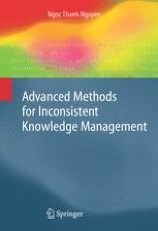
Advanced Methods for Inconsistent Knowledge Management
This book presents a unified and systematic description of a wide class of miscellaneous problems of inconsistent knowledge management, analyzed by traditional mathematical methods using relational and logical representations.
Advanced mathematical science for mobility society
The automotive industry has made steady progress in technological innovations under the names of Connected Autonomous-Shared-Electric (CASE) and Mobility as a Service (MaaS). Needless to say, mathematics and informatics are important to support such innovations. As the concept of cars and movement itself is diversifying, they are indispensable for grasping the essence of the future mobility society and building the foundation for the next generation. This book contains three main contents. 1. Mathematical models of flow 2. Mathematical methodsfor huge data and network analysis 3. Algorithm for mobility society The first one discusses mathematical models of pedestrian and traffic flow, as they are important for preventing accidents and achieving efficient transportation.

Advanced materials in smart building skins for sustainability : From nano to macroscale
Demonstrates the importance of smart and dynamic building skins in in sustainable buildings / Provides the scientific basis for integration of nanoscale materials in building envelopes with enhanced performance / Illustrates engineering solution and design process incorporating advanced materials in applications of building skins. / Updates readers on the key areas of smart building skins embodied in the novel advanced materials with unique structures and smart properties that enable multiple functions in energy efficiency, solar harvesting, and environmental greenness. It synergistically integrates the topics and knowledge of material design and experimental studies, theoretical analyses of building energy-saving mechanisms and solar energy utilization, and new design methodologies and processes taking advanced materials into account at different scales - from nano to the macroscale.
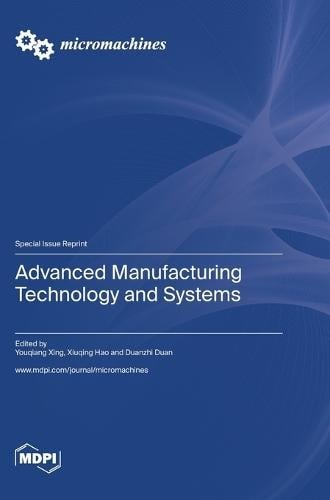
Advanced manufacturing technology and systems
Advanced manufacturing technology and systems cover a broad scope involving manufacturing processes, machine tool design, system optimization, smart and flexible manufacturing, theoretical study and metrology. This reprint comprises 19 original papers concerning recent advances in the research and development of AMTSs. Specifically, there are many research fields that are covered: machining processes (six papers), micro-/nano-precision fabrication (four papers), and system optimization (eight papers), in addition to one review.
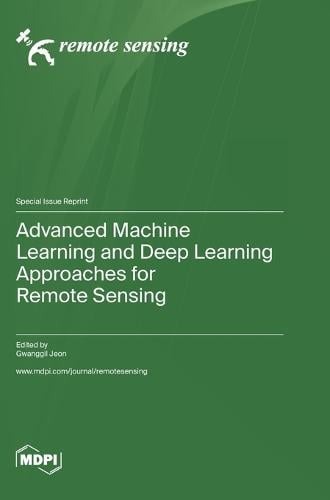
Advanced machine learning and deep learning approaches for remote sensing
Provides research on how technologies such as artificial intelligence-based machine learning and deep learning can be applied to remote sensing. Through this, we can see the process of solving the existing problems of image and image signal processing for remote sensing. These techniques are computationally intensive and require the help of high-performance computing devices. With the development of devices such as GPUs, remote sensing technology, and aerial sensing technology, it is possible to monitor the Earth with high-resolution images and to obtain vast amounts of Earth observation data. The papers published in this reprint describe recent advances in big data processing and artificial intelligence-based technologies for remote sensing technology.
Advanced Linear Algebra
The first part of the book contains a careful but rapid discussion of the basics of linear algebra, including vector spaces, linear transformations, quotient spaces, and isomorphism theorems. The author then proceeds to modules, emphasizing a comparison with vector spaces. A thorough discussion of inner product spaces, eigenvalues, eigenvectors, and finite dimensional spectral theory follows, culminating in the finite dimensional spectral theorem for normal operators. The second part of the book is a collection of topics, including metric vector spaces, metric spaces, Hilbert spaces, tensor products, and affine geometry. The last chapter discusses the umbral calculus, an area of modern algebra with many important applications.
Advanced Intelligent Computing Theories and Applications. With Aspects of Theoretical and Methodological Issues ; 4th International Conference on Intelligent Computing, ICIC 2008 Shanghai, China, September 15-18, 2008 Proceedings
This book - in conjunction with the two volumes CCIS 0015 and LNAI 5226 - constitutes the refereed proceedings of the 4th International Conference on Intelligent Computing, ICIC 2008, held in Shanghai, China, in September 2008.
Advanced Intelligent Computing Theories and Applications. With Aspects of Theoretical and Methodological Issues ; 3rd International Conference on Intelligent Computing, ICIC 2007 Qingdao, China, August 21-24, 2007 Proceedings
Provides an annual forum dedicated to the emerging and challenging topics in artificial intelligence, machine learning, bioinformatics, and computational biology, etc. It aims to bring - gether researchers and practitioners from both academia and industry to share ideas, problems and solutions related to the multifaceted aspects of intelligent computing. This year, the conference concentrated mainly on the theories and methodologies as well as the emerging applications of intelligent computing. Its aim was to unify the picture of contemporary intelligent computing techniques as an integral concept that highlights the trends in advanced computational intelligence and bridges theoretical research with applications.
Advanced Intelligent Computing Theories and Applications. With Aspects of Contemporary Intelligent Computing Techniques ; 4th International Conference on Intelligent Computing, ICIC 2008 Shanghai, China, September 15-18, 2008 Proceedings
Constitutes the refereed proceedings of the Fourth International Conference on Intelligent Computing, ICIC 2008, held in Shanghai, China in September 2008.
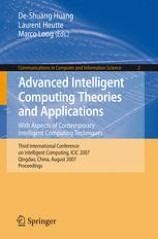
Advanced Intelligent Computing Theories and Applications : With Aspects of Contemporary Intelligent Computing Techniques ; 3rd International Conference on Intelligent Computing, ICIC 2007 Qingdao, China, August 21-24, 2007 Proceedings
The International Conference on Intelligent Computing (ICIC) was formed to provide an annual forum dedicated to the emerging and challenging topics in artificial intelligence, machine learning, bioinformatics, and computational biology, etc. It aims to bring - gether researchers and practitioners from both academia and industry to share ideas, problems and solutions related to the multifaceted aspects of intelligent computing.This year, the conference concentrated mainly on the theories and methodologies as well as the emerging applications of intelligent computing. Its aim was to unify the picture of contemporary intelligent computing techniques as an integral concept that highlights the trends in advanced computational intelligence and bridges theoretical research with applications.
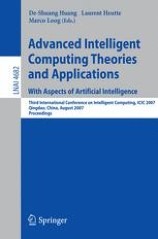
Advanced Intelligent Computing Theories and Applications : With Aspects of Artificial Intelligence ; 3rd International Conference on Intelligent Computing, ICIC 2007, Qingdao, China, August 21-24, 2007, Proceedings
The International Conference on Intelligent Computing (ICIC) was formed to provide an annual forum dedicated to the emerging and challenging topics in artificial intelligence, machine learning, bioinformatics, and computational biology, etc. It aims to bring gether researchers and practitioners from both academia and industry to share ideas, problems and solutions related to the multifaceted aspects of intelligent computing.This year, the conference concentrated mainly on the theories and methodologies as well as the emerging applications of intelligent computing. Its aim was to unify the picture of contemporary intelligent computing techniques as an integral concept that highlights the trends in advanced computational intelligence and bridges theoretical research with applications.

Advanced Fuzzy Logic Technologies in Industrial Applications
Addresses the problem by introducing a dynamic, on-line fuzzy inference system. In this system membership functions and control rules are not determined until the system is applied and each output of its lookup table is calculated based on current inputs. The tuning process is a major focus in this volume because it is the most difficult stage in fuzzy control application. Using new methods such as µ-law technique, histogram equalization and the Bezier-based method, all detailed here, the tuning process can be significantly simplified and control performance improved. The other great strength of this book lies in the range and contemporaneity of its applications and examples which include: laser tracking and control; robot calibration; image processing and pattern recognition; medical engineering; audio systems; autonomous underwater vehicles and data mining.
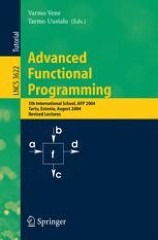
Advanced functional programming ; 5th International School, AFP 2004, Tartu, Estonia, August 14-21, 2004, Revised Lectures
Contains the revised lecture notes corresponding to nine of thelecture courses presented at the 5th International School on Advanced Functional Programming, AFP 2004, held in Tartu, Estonia, August 14–21, 2004. The goal of the AFP schools is to inform the wide international communitiesof computer science students and software production professionals about thenew and important developments in the area of functional programming. The schools put a special emphasis on practical applications of advanced techniques.
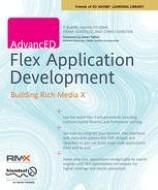
AdvancED Flex Application Development : Building Rich Media X
Many Flex books cover the basics—this book does something different, and goes far further. The authors, leading Flash platform developers at Almer/Blank, working with Adobe User Group communities, are the creators of the Rich Media Exchange (RMX), a social media network for Adobe developers. In covering just how the RMX was built, this book contains all the knowledge you need to build similar large-scale rich Internet applications with Adobe Flex. From the inception of the idea through to deployment, the authors show the techniques needed to plan and build advanced applications. You'll learn how to use forms, styles, validators, video, sound analysis, and framework caching, ensuring you make the most of the features introduced in Flex 3.
