



Page 205
Page 205

50 Years of Artificial Intelligence : Essays Dedicated to the 50th Anniversary of Artificial Intelligence
This Festschrift volume, published in celebration of the 50th Anniversary of Artificial Intelligence, includes 34 refereed papers written by leading researchers in the field of Artificial Intelligence. The papers were carefully selected from the invited lectures given at the 50th Anniversary Summit of AI, held at the Centro Stefano Franscini, Monte Verità, Ascona, Switzerland, July 9-14, 2006. The summit provided a venue for discussions on a broad range of topics.
4th Kuala Lumpur International Conference on Biomedical Engineering 2008 ; BIOMED 2008 25–28 June 2008 Kuala Lumpur, Malaysia
The topics covered in the conference proceedings include: Artificial organs, bioengineering education, bionanotechnology, biosignal processing, bioinformatics, biomaterials, biomechanics, biomedical imaging, biomedical instrumentation, bioMEMS, clinical engineering, prosthetics.
3rd Kuala Lumpur International Conference on Biomedical Engineering 2006 ; Biomed 2006, 11-14 December 2006, Kuala Lumpur, Malaysia
The Kuala Lumpur International Conference on Biomedical Engineering (Biomed 2006) was held from 11 to 14 December 2006 at the Palace of the Golden Horses, Kuala Lumpur, Malaysia. This international conference was jointly organised by the Department of Biomedical Engineering, University of Malaya, Malaysia; Department of Biomedical Engineering, Inje University, Korea; and Malaysian Society of Medical and Biological Engineering. The papers presented at Biomed 2006 cover the following areas: artificial intelligence, biological effects of non-ionising electromagnetic fields, biomaterials, biomechanics, biomedical sensors, biomedical signal analysis, biotechnology, clinical engineering, human performance engineering, imaging, medical informatics, medical instruments and devices, physiological modelling, simulation, and control, prostheses and artificial organs, regulations and organisations, rehabilitation engineering, telemedicine, tissue engineering, and virtual reality in medicine.

3-D Shape Estimation and Image Restoration : Exploiting Defocus and Motion-Blur
Images contain information about the spatial properties of the scene they depict. When coupled with suitable assumptions, images can be used to infer three-dimensional information. This useful volume concentrates on motion blur and defocus, which can be exploited to infer the 3-D structure of a scene—as well as its radiance properties—and which in turn can be used to generate novel images with better quality. 3-D Shape Estimation and Image Restoration presents a coherent framework for the analysis and design of algorithms to estimate 3-D shape from defocused and motion blurred images, and to eliminate defocus and motion blur to yield "restored" images. It provides a collection of algorithms that are optimal with respect to the chosen model and estimation criterion.

3D Segmentation for medical images (OsteoVision) = التقطيع ثلاثي الأبعاد للصور الطبية
With the increasing integration of AI across various sectors, artificial intelligence (AI) is already playing a significant role in the healthcare industry, and its use is expected to grow further. AI systems used in image processing and computer vision algorithms have shown a significant ability to perform many operations such as segmentation, classification, and detection. This project presents the application of computer vision algorithms in the field of medical imaging for diagnostic, therapeutic, and interventional purposes. This thesis explores the use of several computer vision algorithms to address different pathologies, specifically brain tumors (glioma) (see Appendix A) and knee osteoarthritis (OA), as well as tracking the progression of knee osteoarthritis using the Kellgren and Lawrence (KL) grading system, a common method for classifying the severity of OA into five grades. To achieve the desired impact, the project employs various techniques, including 3D segmentation for brain tumors, 2D segmentation for knee joints, and multinomial classification for determining the severity of knee OA injuries. The primary aims of the project are to enhance diagnostic accuracy, assist in creating treatment plans, provide an assistive tool for healthcare providers to make more informed decisions, leverage AI's capabilities to detect abnormalities that might escape the human eye, and streamline workflow. To facilitate these goals, the project incorporates a user-friendly UI, a website, and a Flutter-based mobile application, enabling healthcare providers to efficiently integrate these tools into their practice and improve patient care.

3D Recording and Interpretation for Maritime Archaeology
Includes recording and analysis of maritime archaeology through emerging technologies, including both practical and theoretical contributions. Topics include photogrammetric recording, laser scanning, marine geophysical 3D survey techniques, virtual reality, 3D modelling and reconstruction, data integration and Geographic Information Systems. This convergence of digital technologies such as underwater photography and photogrammetry, 3D sonar, 3D virtual reality, and 3D printing has highlighted a pressing need for these new methodologies to be considered together, both in terms of defining the state-of-the-art and for consideration of future directions.

3D Radiative Transfer in Cloudy Atmospheres
Assessing developments in three-dimensional cloud radiation, this volume treats two main application areas: the impact of clouds on the Earth's radiation budget, and remote observation of clouds. It is suitable for graduate students, researchers, and also for those interested in cloud-radiation processes in the solar and infrared spectral regions.
3D printing in oral & maxillofacial surgery
A comprehensive guide to 3D printing and 3D bioprinting methods and their application in oral and maxillofacial surgeries. Among the 3D printing methods considered are fused deposition modeling, selective laser sintering, photopolymer jetting, powder binder printing, and stereolithography, while the coverage of 3D bioprinting encompasses inkjet, microextrusion, and laser techniques. In each case, the relevance of the technique to oral and maxillofacial surgery is explained. In addition, the available inks and bioinks for 3D printing are reviewed. The roles of soft and hard tissue printing in oral and maxillofacial tissue engineering and the use of 3D printing in multi- and interfacial tissue engineering are then examined in depth. The particular value of 3D printing in the treatment of critically sized defects is discussed separately. Finally, up-to-date information is provided on guided tissue/bone regeneration using 3D printing. The book will be of interest to both oral and maxillofacial surgeons and biomedical engineers.

37th Hemophilia Symposium ; Epidemiology : Treatment of Inhibitors in Hemophiliacs ; Hemophilic Arthropathy and Synovitis ; Relevant Hemophilia Treatment 2006 ; Pediatric Hemostasiology; Free Lectures
This book contains the contribution to the 37th Hemophilia Symposium, Hamburg 2006. The main topics are epidemiolgy, treatment of inhibitors in hemophiliacs, hemophilic arthropathy and synovitis, relevant hemophilia treatment 2006, and pediatric hemostasiology.

35th Hemophilia Symposium Hamburg 2004 ; epidemiology ; risk of infections and inhibitors in hemophilia ; chronic lic synovitis and long-term results of orthopedic treatment ; laboratory diagnostics : coagulation factors ; inhibitors, monitoring ; pediatric hemostaseology ; Free Lectures
Motion analysis as introduced 2 years ago on a national basis effectively identifies individual functional disorders and provides a means for describing them on the basis of a score. Individual therapy planning is possible. More treatment tends to produce better function scores and thus helps to lower the strain on the joint.

34th Hemophilia symposium Hamburg 2003 ; HIV infection and epidemiology ; Management of bleedings in hemophiliacs with inhibitors ; orthopedic problems and therapy in hemophiliacs ; Therapy with protein C ; Pediatric Hemostaseology ; Free Lectures
This book contains the contributions to the 34th Hemophilia Symposium, Hamburg 2003. The main topics are HIV infection and epidemiology, management of bleedings in hemophiliacs with inhibitors, orthopedic problems and therapy in hemophiliacs, therapy with protein C and pediatric hemostaseology. The volume is rounded off by numerous free papers and posters on hemophilia, hemophiliacs with inhibitors, thrombophilia and molecular diagnostics.
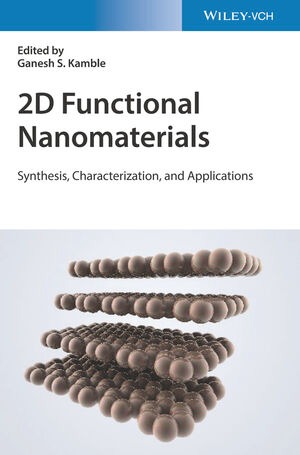
2D Functional Nanomaterials : Synthesis, Characterization, and Applications
In 2D Functional Nanomaterials: Synthesis, Characterization, and Applications, Dr. Ganesh S. Kamble presents an authoritative overview of the most recent progress in the rational design and synthesis of 2D nanomaterials and their applications in semiconducting catalysts, biosensors, electrolysis, batteries, and solar cells. This interdisciplinary volume is a valuable resource for materials scientists, electrical engineers, nanoscientists, and solid-state physicists looking for up-to-date information on 2D heterojunction nanomaterials.
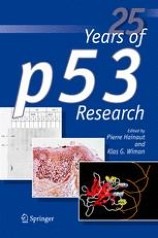
25 Years of P53 Research
Communication, awareness and access to information: Given the complexity of the field and the fact that data pertaining to each particular aspects of p53 biology or deregulation are scattered in many different publications, it is extremely difficult to access the full scale of relevant information of any specific p53-related topic. This book may help in this task by putting into perspective both general considerations on the p53 pathway and more specific information on various aspects of p53. In the longer term, however, open access to p53 complexity will require the development of knowledge bases accessible through the web and using simple navigation tools to guide users towards the specific information they need. Several efforts are currently being developed in that direction. They need to be strenghtened and better integrated within the rapidly growing galaxy of web-based information sources on molecular and individual variations in cancer. 2. Reference functional assays and structural analysis: Given the huge diversity of cellular and animal models for wild-type or mutant p53 functions, it will be important to set up standard, universally accepted assays to measure critical p53 protein functions.
17th International Conference on Information Technology–New Generations (ITNG 2020)
This volume presents the 17th International Conference on Information Technology—New Generations (ITNG), and chronicles an annual event on state of the art technologies for digital information and communications. The application of advanced information technology to such domains as astronomy, biology, education, geosciences, security, and healthcare are among the themes explored by the ITNG proceedings. Visionary ideas, theoretical and experimental results, as well as prototypes, designs, and tools that help information flow to end users are of special interest. Specific topics include Machine Learning, Robotics, High Performance Computing, and Innovative Methods of Computing. The conference features keynote speakers; a best student contribution award, poster award, and service award; a technical open panel, and workshops/exhibits from industry, government, and academia.
14th Nordic-Baltic conference on biomedical engineering and medical physics : NBC 2008 16–20 June 2008 Riga, Latvia
The topics covered by the Conference Proceedings include: Biomaterials and Tissue Engineering; Biomechanics, Artificial Organs, Implants and Rehabilitation; Biomedical Instrumentation and Measurements, Biosensors and Transducers; Biomedical Optics and Lasers; Healthcare Management, Education and Training; Information Technology to Health; Medical Imaging, Telemedicine and E-Health; Medical Physics; Micro and Nanoobjects, Nanostructured Systems, Biophysics
