



Page 2
Page 2

Introducing Molecular Electronics
This volume presents a summary of our current understanding of molecular electronics combined with selected state-of-the-art results at a level accessible to the advanced undergraduate or novice postgraduate. This single book comprises the basic knowledge of both theory and experiment underpinning this rapidly growing field. Concepts and techniques such as density functional theory and charge transport, break junctions and scanning probe microscopy are introduced step-by-step and are subsequently used in specific examples. The text addresses a wide range of systems including molecular junctions made of single-molecules, self-assembled monolayers, carbon nanotubes and DNA.

Intelligent Computing Theories and Application ; 16th International Conference, ICIC 2020, Bari, Italy, October 2–5, 2020, Proceedings, Part II
This two-volume set of LNCS 12463 and LNCS 12464 constitutes - in conjunction with the volume LNAI 12465 - the refereed proceedings of the 16th International Conference on Intelligent Computing, ICIC 2020, held in Bari, Italy, in October 2020. The 162 full papers of the three proceedings volumes were carefully reviewed and selected from 457 submissions. The ICIC theme unifies the picture of contemporary intelligent computing techniques as an integral concept that highlights the trends in advanced computational intelligence and bridges theoretical research with applications. The theme for this conference is “Advanced Intelligent Computing Methodologies and Applications.” Papers related to this theme are especially solicited, addressing theories, methodologies, and applications in science and technology.

Intelligent Computing Theories and Application ; 16th International Conference, ICIC 2020, Bari, Italy, October 2–5, 2020, Proceedings, Part I
This two-volume set of LNCS 12463 and LNCS 12464 constitutes - in conjunction with the volume LNAI 12465 - the refereed proceedings of the 16th International Conference on Intelligent Computing, ICIC 2020, held in Bari, Italy, in October 2020. The 162 full papers of the three proceedings volumes were carefully reviewed and selected from 457 submissions The ICIC theme unifies the picture of contemporary intelligent computing techniques as an integral concept that highlights the trends in advanced computational intelligence and bridges theoretical research with applications. The theme for this conference is “Advanced Intelligent Computing Methodologies and Applications.” Papers related to this theme are especially solicited, addressing theories, methodologies, and applications in science and technology.

Intelligence and Security Informatics ; Vol. 3917 ; International Workshop, WISI 2006, Singapore, April 9, 2006, Proceedings
Intelligence and security informatics (ISI) can be broadly defined as the study of the development and use of advanced information technologies and systems for national and international security-related applications. The First and Second Symposiums on ISI were held in Tucson, Arizona, in 2003 and 2004, respectively. In 2005, the IEEE International Conference on ISI was held in Atlanta, Georgia. These ISI conferences brought together academic researchers, law enforcement and intelligence experts, information technology consultants and practitioners to discuss their research and practice related to various ISI topics including ISI data management, data and text mining for ISI applications, terrorism informatics, deception detection, terrorist and criminal social network analysis, crime analysis, monitoring and surveillance, policy studies and evaluation, and information assurance, among others. We continued these stream of ISI conferences by organizing the Workshop on Intelligence and Security Informatics (WISI 2006) in conjunction with the Pacific Asia Conference on Knowledge Discovery and Data Mining (PAKDD 2006).

Implantology Made Easy
Provides basic information related to implants right from the inception to use in dentistry. It focuses on dental implants used in conjunction with other prosthetic devices. It is designed to help the partially or completely edentulous patient recover normal function, aesthetics, comfort and speech. Step by step procedures guide practitioners about the rough challenging clinical situations and assist them in refining their technique. The information in this practical, highly illustrated book with a bonus DVD-ROM reflects the latest treatment planning, implant designs, material techniques and various dental implant systems.

ICP design methods for driven piles in sands and clays
While axial capacity is often the governing design criterion with driven piles, the reliability of predictions made by conventional procedures is generally poor. A long-term research program run at Imperial College London in conjunction with Industry, the UK's Health and Safety Executive and Engineering and Physical Sciences Research Council led to the new design recommendations published by Jardine and Chow in 1996. Their procedures offered considerable improvements and have been applied worldwide in many offshore, marine and onshore projects.

High-Resolution Methods for Incompressible and Low-Speed Flows
This book covers the basic techniques for simulating incompressible and low-speed flows with high fidelity in conjunction with high-resolution methods. This includes techniques for steady and unsteady flows with high-order time integration and multigrid methods.

Haptic and Audio Interaction Design ; 1st International Workshop, HAID 2006, Glasgow, UK, August 31 - September 1, 2006, Proceedings
Overview The International Workshop on Haptic and Audio Interaction Design was - ganized as part of the EPSRC-funded MultiVis project. The main focus of the workshop was to investigate how the modalities of sound and haptics (touch) could be used together in interaction, and what novel interfaces could be p- vided when they are used in conjunction. What are the relative advantages of each of the modalities when used alone and together? Are there reasons why haptic-based information is moreuseful in certain situations than equivalent - dio information? How can di?erent modalities be used together to create c- pelling and useful interaction with computer-based systems?
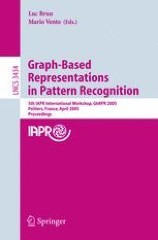
Graph-based representations in pattern recognition ; 5th IAPR International Workshop, GbRPR 2005, Poitiers, France, April 11-13, 2005, Proceedings
Many vision problems have to deal with di?erent entities (regions, lines, line junctions, etc.) and their relationships. These entities together with their re- tionships may be encoded using graphs or hypergraphs. The structural inf- mation encoded by graphs allows computer vision algorithms to address both the features of the di?erent entities and the structural or topological relati- ships between them. Moreover, turning a computer vision problem into a graph problem allows one to access the full arsenal of graph algorithms developed in computer science. The Technical Committee (TC15, http://www.iapr.org/tcs.html) of the IAPR (International Association for Pattern Recognition) has been funded in order to federate and to encourage research work in these ?elds. Among its - tivities, TC15 encourages the organization of special graph sessions at many computer vision conferences and organizes the biennial workshop GbR.

Granular computing : At the junction of rough sets and fuzzy sets
This volume is a compilation of the best papers presented at the First International Symposium on Fuzzy and Rough Sets (ISFUROS 2006) held in Santa Clara, Cuba. You will therefore find valuable contributions both in the theoretical field as in several application domains.

Graded Ferroelectrics, Transpacitors and Transponents
The primary focus of the book is directed toward polarization-graded ferroelectrics and their active components - transpacitors; however, the findings here are quite general. The theory of graded ferroics is put on a solid foundation in Chapters 2 and 5, whereas much of the introductory material relies more heavily upon analogy. This was done so as to provide the reader with an intuitive approach to graded ferroics. Heterogeneous ferroics are shown as logical extensions of passive semiconductor junction devices such as p-n and n-p diodes and their active manifestations: transistors, to transpacitors, transductors, translastics and ultimately to the general active ferroic elements, transponents.

Geographic Hypermedia : Concepts and Systems
This book introduces a new paradigm, Geographic Hypermedia, which emerges from the convergence of Geographic Information Science and - permedia technology. Both GI Science and hypermedia have been rapidly evolving fields. The initial idea of Geographic Hypermedia was born in 2004 when the editors had been invited to organize a workshop in conju- tion with the ‘Hypertext’ conference organized annually by the Special - terest Group of the Association for Computing Machinery. The purpose of the workshop was to examine how hypermedia concepts and tools may be applied in geographical domains. The workshop was eventually held in conjunction with the Maps and the Internet Commission of the International Cartographic Association at the annual meeting of the Association of American Geographers in Denver, Colorado, in April 2005. The Denver workshop was a successful event, bringing together mul- disciplinary researchers and professionals in the area of Geographic - permedia.

Gap Junctions in Development and Disease
Starting with a comprehensive review of the various mouse and human genes encoding the channel-forming protein connexin, further chapters describe the most important connexin mutations that lead to diseases such as hereditary deafness and female infertility in humans. Erroneous signaling mediated via connexin-protein interactions, thought to be responsible for disfunction of organs such as heart, muscle, brain, skin, lens, placenta, and endocrine tissue in mice and men, is also addressed.

Frontiers of high performance computing and networking – ISPA 2007 workshops ; ISPA 2007 International workshops, SSDSN, UPWN, WISH, SGC, ParDMCom, HiPCoMB, and IST-AWSN, Niagara Falls, Canada, August, 28-September 1, 2007, Proceedings
This book constitutes the refereed joint proceedings of seven international workshops held in conjunction with the 5th International Symposium on Parallel and Distributed Processing and Applications, ISPA 2007, held in Niagara Falls, Canada in August 2007.

Frontiers of high performance computing and networking – ISPA 2006 workshops ; ISPA 2006 International workshops FHPCN, XHPC, S-GRACE, GridGIS, HPC-GTP, PDCE, ParDMCom, WOMP, ISDF, and UPWN, Sorrento, Italy, December 4 -7, 2006, Proceedings
This book constitutes the refereed joint proceedings of ten internationl workshops held in conjunction with the 4th International Symposium on Parallel and Distributed Processing and Applications, ISPA 2006, held in Sorrento, Italy in December 2006 (see LNCS 4330). Topics addressed are frontiers of high performance computing and networking (FHPCN 2006), XEN in HPC cluster and grid computing environments (XHPC 2006), semantic grid applications in computing and engineering (S-GRACE 2006), fertilization of grid computing and geographic information system (GridGIS 2006), high performance computing in genomic proteomic and transcriptomic (HPC-GTP 2006), parallel and distributed computing in engineering (PDCE 2006), parallel and distributed multimedia computing (ParDMCom 2006), middleware performance (WOMP 2006), information security and digital forensics (ISDF 2006), and ubiquitous processing for wireless networks (UPWN 2006).

Foundations of Object-Oriented Programming Using .NET 2.0 Patterns
Foundations of Object-Oriented Programming Using .NET 2.0 Patterns solves the object-oriented and pattern-programming problem by mixing the two—the book teaches object-oriented concepts using patterns, or a solutions-based approach. The book's material is organized around tasks and patterns, and illustrated through development problems and solutions that include persistence, code efficiency, and good design. This book is of special interest to those who want to learn how to use .NET 2.0 Generics in conjunction with patterns. This unique book is based on the author's lectures, and the information unfolds in a practical manner.

Foundations of Ajax
Ajax burst onto the Web development scene by offering highly interactive, desktop-like Web applications that can be deployed through any modern Web browser without the need for special plug-ins. Ajax is built on existing Web technologies such as JavaScript, HTML, and CSS, and it is used in conjunction with your favorite server-side language. Foundations of Ajax explains how to combine these technologies effectively to implement Ajax into your new or existing Web applications. Like you, we are developers who are in the trenches, tasked with building Web-enabled applications that provide real value to our customers. As the Web continues to grow, the demand for more expressive and engaging interfaces will continue to increase.

Formal Modeling and Analysis of Timed Systems ; Vol. 3829 ; 3rd International Conference, FORMATS 2005, Uppsala, Sweden, September 26-28, 2005, Proceedings
This book constitutes the thoroughly refereed post-proceedings of the Third International Conference on Formal Modeling and Analysis of Timed Systems, FORMATS 2005, held in Uppsala, Sweden in September 2005 in conjunction with ARTIST2 summer school on Component Modelling, Testing and Verification, and Static analysis of embedded systems. The 19 revised full papers presented together with the abstracts of 3 invited talks were carefully selected from 43 submissions. The papers cover work on semantics and modeling of timed systems, formalisms for modeling and verification including timed automata, hybrid automata, and timed petri nets, games for verification and synthesis, model-checking, case studies and issues related to implementation, security and performance analysis.

Formal approaches to software testing ; Vol. 3997 ; 5th International Workshop, FATES 2005, Edinburgh, UK, July 11, 2005, Revised Selected Papers
This book constitutes the thoroughly refereed post-proceedings of the 5th International Workshop on Formal Approaches to Software Testing, FATES 2005, held in Edinburgh, UK, in July 2005 in conjunction with CAV 2005.

Formal Approaches to Agent-Based Systems ; 3rd International Workshop, FAABS 2004, Greenbelt, MD, April 26-27, 2004, Revised Selected Papers
The 3rd Workshop on Formal Approaches to Agent-Based Systems (FAABS-III) was held at the Greenbelt Marriott Hotel (near NASA Goddard Space Flight Center) in April 2004 in conjunction with the IEEE Computer Society. The first FAABS workshop was help in April 2000 and the second in October 2002. Interest in agent-based systems continues to grow and this is seen in the wide range of conferences and journals that are addressing the research in this area as well as the prototype and developmental systems that are coming into use. Our third workshop, FAABS-III, was held in April, 2004. This volume contains the revised papers and posters presented at that workshop. The Organizing Committee was fortunate in having significant support in the planning and organization of these events, and were privileged to have wor- renowned keynote speakers Prof. J Moore (FAABS-I), Prof. Sir Roger Penrose (FAABS-II), and Prof. John McCarthy (FAABS-III), who spoke on the topic of se- aware computing systems, auguring perhaps a greater interest in autonomic computing as part of future FAABS events. We are grateful to all who attended the workshop, presented papers or posters, and participated in panel sessions and both formal and informal discussions to make the workshop a great success. Our thanks go to the NASA Goddard Space Flight Center, Codes 588 and 581 (Software Engineering Laboratory) for their financial support and to the IEEE Computer Society (Technical Committee on Complexity in Computing) for their sponsorship and organizational assistance.
