


Refine Results
Sort By
From
To

The multiplicity of cardiological tests and therapeutical procedures demands a sound knowledge of cardiological English and can be extremely demanding for non-native English speaking cardiologists, cardiology residents, nurses, and medical students.
In this new edition of Cardiovascular Disease in AIDS new insights coming from basic and clinical research in the field of HIV-associated cardiovascular disease and antiretroviral therapy are reported, along with the clinical guidelines for a careful stratification of the cardiovascular risk and cardiovascular monitoring of HIV-infected patients receiving HAART. The authors offer a wide overview of the topic for specialists in cardiology and infectious diseases involved in the clinical management of HIV-infected patients.
Cardiac rehabilitation can be extremely complex art. In Cardiac Rehabilitation, expert authors provide state-of-the-art information that serves as a manual to the multidisciplinary nature of cardiac rehabilitation in the current era, the current state of cardiac rehabilitation, and the issues facing current CR programs. Covering the major components of a CR program, including medical therapy, exercise, nutrition, and behavioral therapy, from referral to testing to individualizing the program for the participants, the volume is a thorough, vital guide to this important field.
Cryopreserved allograft tissues are now standard materials for the reconstructive cardiac surgeon. Since publication of the first edition ("Cardiac Reconstructions with Allograft Valves") in 1989, the field has progressed dramatically with increased clinical use of cardiovascular allograft tissues, with the development of new surgical techniques, and with advances in the understanding of the fundamentals of valve transplantation biology and cryopreservation. As a result, over two-thirds of the present volume represents new material. Fifty-six authors bring their expertise to thirteen comprehensive, lavishly illustrated sections which discuss the principles of the use of homograft valves, major clinical series of homograft valves for both left and right ventricular outflow tracts, cryopreserved allograft tissue for cardiac reconstruction, cell biology of heart valve leaflets, cryobiology of heart valve preservation, morphological, biochemical, and explant pathology studies of allograft heart valves, allograft valve banking, as well as detailed explanation of surgical techniques for valve and root methods for left and right ventricular outflow tract reconstructions, the Ross operation and variants, and complex reconstructions. A final section presents potential future directions for the field. Over 400 illustrations, created expressly for this book, depict the surgical techniques from the perspective of the surgeon standing at the operating table.
The second edition of Cardiac Pacing for the Clinician will provide a succinct, yet comprehensive reference for the implantation and follow-up of implantable cardiac rhythm devices. It is intended to be a practical guide for the day-to-day management of these increasingly complex devices.
For about hundred years the investigation of heart physiology has had one central guiding principle, the "law" of Frank and Starling. This connects the return of blood into the heart and the blood pressure with cardiac con traction force. The "law" does it in a way that enables the cardiovascular system to react to perturbations without major malfunctions. This book is a compilation of reviews of prominent scientists on this subject. The differ ence of the original formulation of the Frank-Starling principle is that mechanotransduction is the central theme that leads the reader through the book. Since the discovery of the "law" the scope of topics related to this subject has broadened enormously, as can be seen easily by glancing at the contents of this book. Mechanotransduction in the heart has many faces that range from molecules to humans and their diseases.
Cardiac Drug Therapy, 7th ed., addresses the pharmacology and therapeutic application of drugs used to treat heart diseases and hypertension. Additions and updates to the sixth edition include six new chapters on current controversies in cardiac drug therapy such as the beta blocker issue many cardiologists are presently grappling with. The book provides practical advice on how to manage cardiac diseases and addresses the choice of one particular cardiac agent vs. another. In addition to providing core knowledge in cardiovascular therapeutics, the text assists in resolving some of the issues surrounding cardiac drugs. Cardiac Drug Therapy provides practical information including properties, dosage, side effects, potential salutary benefits, and drawbacks on virtually all commercially available cardiac drugs.
This book collates all relevant imaging findings of the use of cardiac CT and presents them in a clinically relevant and practical manner appropriate for residents and fellows in both cardiology and radiology. The images have been supplied by an internationally renowned set of contributing authors and represent the full spectrum of cardiac CT imaging.
Testicular cancer has benefited from important therapeutic advances radically transforming its prognosis. Recent protocols have led to the development of treatments that maintain therapeutic efficacy while favoring quality of life and minimizing the sequelae (such as fertility disorders) in these often young men. This book discusses the various technical advances both in the field of diagnosis - with the contribution of modern imaging and anatomopathology - and therapy. The place of chemotherapy as well as that of surgery are largely detailed, thus placing the urologist at the heart of the multidisciplinary team taking care of these patients. Quality of life is also discussed by taking into account the impact of the treatment of these tumors on the fertility of these young patients.
This topic is a new entry in the area of cellular calcium signaling: yet, it now spans the entire area, with discoveries that cover both genetic and acquired pathologies, even offering glimpses in the direction of therapy.Cellular calcium homeostasis, and thus calcium signalling, is mainly regulated by membrane intrinsic proteins and calcium sensor proteins. Both classes may be involved in pathological processes that affect both human and animals, ranging from common and important diseases (e.g. migraine, diabetes, epilepsia, manic depression, infertility, various types of cancer, Alzheimer’s disease, muscular dystrophy) to rare genetic conditions (e.g., a number of genetic heart conditions, autoimmune retinopathies, night blindness, hereditary amyloid polyneuropathy, malignant hyperthermia, cerebellar ataxia, atherothrombotic disease).
Despite the increasing awareness that neural mechanisms are the primary cause of cardiac disease and its progression, therapy continues to focus on end-organ protection and does not approach the neural core of the problem. Growing public health problems such as heart failure are still treated with autonomic drugs that are 30-40 years old and simply act on cardiac receptors. However, it has now been shown that the progression of ischemic heart disease to heart failure is mainly due to abnormal central responses to incipient cardiac disease, with neural activation the primary cause rather than the consequence of cardiac remodeling.
In this newly updated second edition of Blood Pressure Monitoring in Cardiovascular Medicine and Therapeutics, William B. White, MD, and a panel of highly distinguished clinicians give a critical review of every aspect of the evaluation of high blood pressure. This includes home and ambulatory blood pressure monitoring, the relationship between whole-day blood pressure and the cardiovascular disease process, and the effects of antihypertensive therapies on these blood pressure parameters. World-class contributors describe the significant advances in our understanding of the circadian pathophysiology of cardiovascular disorders and demonstrate that ambulatory blood pressure values are independent predictors of cardiovascular morbidity and mortality.
Divided into four parts and intends to give an overview on the pathogenesis of atherosclerosis, established treatment and prevention regimen, and of perspectives for the development of new treatment modalities.
This book covers all aspects (biological, pathological, genetic, clinical and therapeutical) of arrhythmogenic right ventricular cardiomyopathy/dysplasia, a recent cardiomyopathy which represents a very high risk of sudden death in the young and in athletes. The monograph presents the results of 5-year research program on ARVC/D supported by grants of both the European Commission and the NIH, which enabled the discovery of seven disease-causing genes, thus opening new avenues for the early identification of affected patients and for sudden death prevention.
Antioxidants and Cardiovascular Disease, Second Edition addresses a complex but very timely and fascinating problem in cardiovascular medicine. It is written by recognized experts in the fields of atherosclerosis and antioxidants. It should be of interest not only to academicians but also to practicing physicians.
Diabetes is a chronic condition associated with metabolic disorder. Persons suffering from diabetes have shown accelerated levels of blood sugar which often harms the heart, blood vessels, eyes, kidneys, and nerves. Over the past few decades, the prevalence of diabetes has been progressively increasing. Synthetic drugs are used to treat diabetic patients to help control the disorder, but it is shown that numerous medicinal plants and herbal drugs are widely used in several traditional systems of medicine to prevent and treat diabetes. They are reported to produce beneficial effects in combating diabetes and alleviating diabetes-related complications. These plants contain phtyonutrients and phytoconstituents demonstrating protective or disease preventive properties. In many developing countries, herbal drugs are recommended by traditional practitioners for diabetes treatment because the use of synthetic drugs is not affordable.
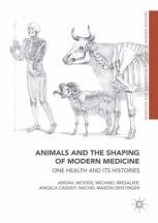
This book breaks new ground by situating animals and their diseases at the very heart of modern medicine. In demonstrating their historical significance as subjects and shapers of medicine, it offers important insights into past animal lives, and reveals that what we think of as ‘human’ medicine was in fact deeply zoological.Each chapter analyses an important episode in which animals changed and were changed by medicine. Ranging across the animal inhabitants of Britain’s zoos, sick sheep on Scottish farms, unproductive livestock in developing countries, and the tapeworms of California and Beirut, they illuminate the multi-species dimensions of modern medicine and its rich historical connections with biology, zoology, agriculture and veterinary medicine. The modern movement for One Health – whose history is also analyzed – is therefore revealed as just the latest attempt to improve health by working across species and disciplines.
In this book, the genetic and molecular basis of cardiovascular aging will be discussed. In addition, a comprehensive assessment of the bioenergetic changes that occur in human and animal models of cardiac aging as well as current diagnostic and future therapeutic modalities will be undertaken.
Advances in Electromagnetic Fields in Living Systems , Volume 4 begins with fetal magnetocardiography (fMCG), a noninvasive method of detecting components of the magnetic field produced by the electrical activity of the fetal heart. FMCG is experiencing steady growth, and is expected to gain influence in diagnosing certain congenital fetal heart defects while at the same time providing optimal care for patients. FMCG provides a distinct signal, free of maternal cardiac interference, which can be detected throughout the last half of pregnancy.
Adrenomedullin in Cardiovascular Disease is an up-to-date review of the most relevant aspects of adrenomedullin. It encompasses a broad range of fields including biochemistry, molecular biology, physiology, pharmacology, pathophysiology of cardiovascular disease and clinical applications of adrenomedullin to cardiovascular disease.

Daraa Highway - Ghabagheb - Syria
+963-15 2050 - 15 860 380 /1/2/3 - 11 662 3900