


Refine Results
Sort By
From
To

Business process management is usually treated from two different perspectives: business administration and computer science. While business administration professionals tend to consider information technology as a subordinate aspect for experts to handle, by contrast computer scientists often consider business goals and organizational regulations as terms that do not deserve much thought but require the appropriate level of abstraction.This textbook is ideally suited for classes on business process management, information systems architecture, and workflow management. It is also valuable for project managers and IT professionals working in business process management.
For cloud users and providers alike, security is an everyday concern, yet there are very few books covering cloud security as a main subject. This book will help address this information gap from an Information Technology solution and usage-centric view of cloud infrastructure security. The book highlights the fundamental technology components necessary to build and enable trusted clouds. Here also is an explanation of the security and compliance challenges organizations face as they migrate mission-critical applications to the cloud, and how trusted clouds, that have their integrity rooted in hardware, can address these challenges.
This book clearly describes how to establish an architecture practice that delivers value for an organization. The authors demonstrate a wealth of experience and a deep understanding of the multifaceted nature of this challenging task and they provide sound advice on how to avoid the many pitfalls that may be encountered along the way. Building an Enterprise Architecture Practice provides practical advice on how to develop your enterprise architecture practice.
The book is organized as follows. In the beginning of this book (chapters 1 through 6), you learn how to build a data warehouse, for example, defining the architecture, understanding the methodology, gathering the requirements, designing the data models, and creating the databases. Then in chapters 7 through 10, you learn how to populate the data warehouse, for example, extracting from source systems, loading the data stores, maintaining data quality, and utilizing the metadata. After you populate the data warehouse, in chapters 11 through 15, you explore how to present data to users using reports and multidimensional databases and how to use the data in the data warehouse for business intelligence, customer relationship management, and other purposes. Chapters 16 and 17 wrap up the book: After you have built your data warehouse, before it can be released to production, you need to test it thoroughly. After your application is in production, you need to understand how to administer data warehouse operation.

Blockchain technology is a powerful, cost-effective method for network security. Essentially, it is a decentralized ledger for storing all committed transactions in trustless environments by integrating several core technologies such as cryptographic hash, digital signature and distributed consensus mechanisms. Over the past few years, blockchain technology has been used in a variety of network interaction systems such as smart contracts, public services, Internet of Things (IoT), social networks, reputation systems and security and financial services. With its widespread adoption, there has been increased focus on utilizing blockchain technologies to address network security concerns and vulnerabilities as well as understanding real-world security implications.

The book explains the security architecture model and the practice of building data sharing from the blockchain infrastructure, allowing readers to understand the importance of data sharing security based on the blockchain framework, as well as the threats to security and privacy. Further, by presenting specific data sharing case studies, it offers insights into solving data security sharing problems in more practical fields. The book is intended for readers with a basic understanding of the blockchain infrastructure, consensus mechanisms, smart contracts, secure multiparty computing, homomorphic encryption and image retrieval technologies.
Covers analytical techniques for handling the huge amount of data generated by the Internet of Things, from architectures and platforms to security and privacy issues, applications, and challenges as well as future directions. The fields of Big Data and the Internet of Things (IoT) have seen tremendous advances, developments, and growth in recent years. The IoT is the inter-networking of connected smart devices, buildings, vehicles and other items which are embedded with electronics, software, sensors and actuators, and network connectivity that enable these objects to collect and exchange data. The IoT produces a lot of data. Big data describes very large and complex data sets that traditional data processing application software is inadequate to deal with, and the use of analytical methods to extract value from data. This edited book covers analytical techniques for handling the huge amount of data generated by the Internet of Things, from architectures and platforms to security and privacy issues, applications, and challenges as well as future directions.
Combines experimental and theoretical research on big data recommender systems to help computer scientists develop new concepts and methodologies for complex applications. It includes original scientific contributions in the form of theoretical foundations, comparative analysis, surveys, case studies, techniques and tools.
The book explains in detail how you can organize your Java EE solution into a multilayer architecture, placing most emphasis on how to implement the persistence and database tiers of an application. Through many examples, this book shows how you can efficiently use the Java Persistence features available in the Java EE platform. Find out how you can greatly simplify the task of building the persistence layer of your Java EE application by moving some application logic into the underlying database, utilizing database views, stored programs, and triggers. The book also explains how to deploy Java EE applications to GlassFish, a free, open source Java EE 5–compliant application server.
This book takes a look at fully automated, autonomous vehicles and discusses many open questions: How can autonomous vehicles be integrated into the current transportation system with diverse users and human drivers? Where do automated vehicles fall under current legal frameworks? What risks are associated with automation and how will society respond to these risks? How will the marketplace react to automated vehicles and what changes may be necessary for companies?
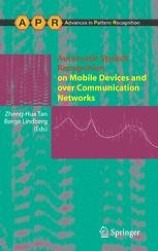
This book brings together leading academic researchers and industrial practitioners to address the issues in this emerging realm and presents the reader with a comprehensive introduction to the subject of speech recognition in devices and networks.
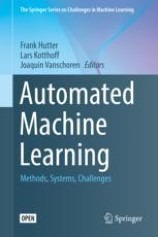
This book presents the first comprehensive overview of general methods in Automated Machine Learning (AutoML), collects descriptions of existing systems based on these methods, and discusses the first series of international challenges of AutoML systems. The recent success of commercial ML applications and the rapid growth of the field has created a high demand for off-the-shelf ML methods that can be used easily and without expert knowledge. However, many of the recent machine learning successes crucially rely on human experts, who manually select appropriate ML architectures (deep learning architectures or more traditional ML workflows) and their hyperparameters. To overcome this problem, the field of AutoML targets a progressive automation of machine learning, based on principles from optimization and machine learning itself.
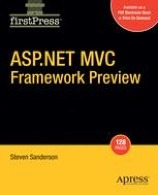
The ASP.NET MVC framework is the latest evolution of Microsoft's ASP.NET web platform. It introduces a radical high–productivity programming model, promotes cleaner code architecture, supports test–driven development, and provides powerful extensibility, combined with all the benefits of ASP.NET 3.5. ASP.NET MVC Framework Preview is a first look at this technology's main features, designed to give you a head start getting to grips with this powerful new technology.
Covers the internals of front and back propagation and helps you understand the main principles of neural network processing. You also will learn how to prepare the data to be used in neural network development and you will be able to suggest various techniques of data preparation for many unconventional tasks. You will learn: Use Java for the development of neural network applications / Prepare data for many different tasks / Carry out some unusual neural network processing / Use a neural network to process non-continuous functions / Develop a program that recognizes handwritten digits
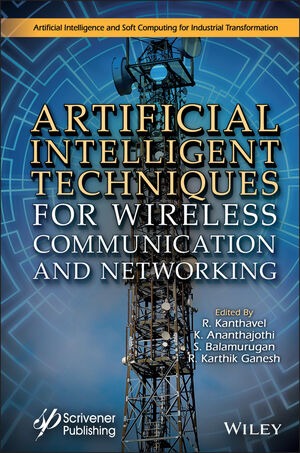
Wireless communication and networking based on AI concepts and techniques are explored in this book, specifically focusing on the current research in the field by highlighting empirical results along with theoretical concepts. The possibility of applying AI mechanisms towards security aspects in the communication domain is elaborated; also explored is the application side of integrated technologies that enhance AI-based innovations, insights, intelligent predictions, cost optimization, inventory management, identification processes, classification mechanisms, cooperative spectrum sensing techniques, ad-hoc network architecture, and protocol and simulation-based environments.

Learn foundational and advanced topics in Neural Processing Unit design with real-world examples from leading voices in the field. A thorough introduction to neural networks and neural network development history, as well as Convolutional Neural Network (CNN) models Explorations of various parallel architectures, including the Intel CPU, Nvidia GPU, Google TPU, and Microsoft NPU, emphasizing hardware and software integration for performance improvement Discussions of streaming graph for massive parallel computation with the Blaize GSP and Graphcore IPU An examination of how to optimize convolution with UCLA Deep Convolutional Neural Network accelerator filter decomposition
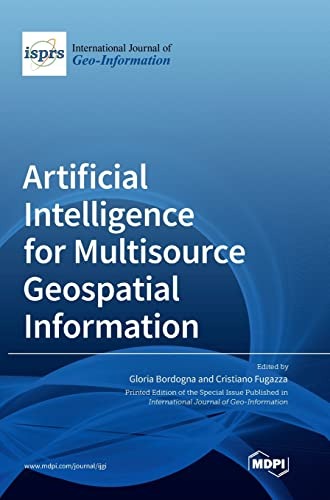
Collects 10 original research contributions published in the Special Issue entitled “Artificial Intelligence for Multisource Geospatial Information” of the ISPRS International Journal of Geo-Information. The focus is on different methods of Geospatial Artificial Intelligence (GeoAI) based on deep learning using different network architectures, clustering, soft computing, and semantic approaches. They are proposed to deal with a variety of Geospatial Big Data (GBD), such as georeferenced texts and photos in social networks, remote sensing images, cartographic maps, multidimensional geo databases, metadata in spatial data infrastructures, and for different tasks, such as for multisource georeferenced text integration and geodata flexible querying, for social sensing by applying sentiment analysis, clustering and geo analysis, for segmentation of roads, clouds and snow, and for detection of small targets and people on the streets.
Provides advanced system implementation for Smart Cities using artificial intelligence. It addresses the complete functional framework workflow and explores basic and high-level concepts. The book is based on the latest technologies covering major challenges, issues and advances, and discusses intelligent data management and automated systems.
It's about the science of artificial intelligence (AI). AI is the study of the design of intelligent computational agents. This book provides a valuable resource for researchers, scientists, professionals, academicians and students dealing with the new challenges and advances in the areas of AI and innovations. This book also covers a wide range of applications of machine learning such as fire detection, structural health and pollution monitoring and control. Provides insight into prospective research and application areas related to industry and technology / Discusses industry- based inputs on success stories of technology adoption / Discusses technology applications from a research perspective in the field of AI / Provides a hands- on approach and case studies for readers of the book to practice and assimilate learning
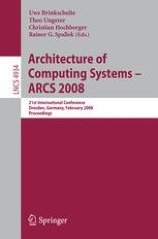
This book constitutes the refereed proceedings of the 21st International Conference on Architecture of Computing Systems, ARCS 2008, held in Dresden, Germany, in February 2008.

Daraa Highway - Ghabagheb - Syria
+963-15 2050 - 15 860 380 /1/2/3 - 11 662 3900