


Refine Results
Sort By
From
To

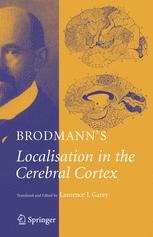
It is one of the major "classics" of the neurological world. Even today it forms the basis for so-called "localisation" of function in the cerebral cortex. Brodmann's "areas" are still used to designate functional regions in the cortex, the part of the brain that brings the world that surrounds us into consciousness, and which governs our responses to the world. For example, we use "area 4" for the "motor" cortex, with which we control our muscles, "area 17" for "visual" cortex, with which we see, and so on. This nomenclature is used by neurologists and neurosurgeons in the human context, as well as by experimentalists in various animals. Indeed, Brodmann's famous "maps" of the cerebral cortex of humans, monkeys and other mammals must be among the most commonly reproduced figures in neurobiological publishing. The most famous of all is that of the human brain. There can be few textbooks of neurology, neurophysiology or neuroanatomy in which Brodmann is not cited, and his concepts pervade most research publications on systematic neurobiology.
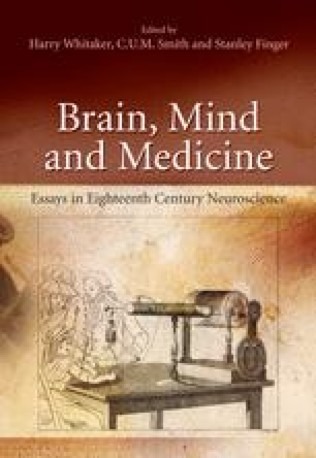
Ideas we associate with the 18th century are clearly seen in work published from the latter decades of the 17th century through the first decades of the 19th century. This is the "long 18th century", a period which exhibits multiple discourses in medicine, brain science and philosophy. The editors have deliberately adopted a "presentist" subtitle, "neuroscience", to emphasize that this collection of essays reflect a range of current thought about 18th century-studies of the nervous system in isolation and in context. There are six sections, each preceded by a short introduction.
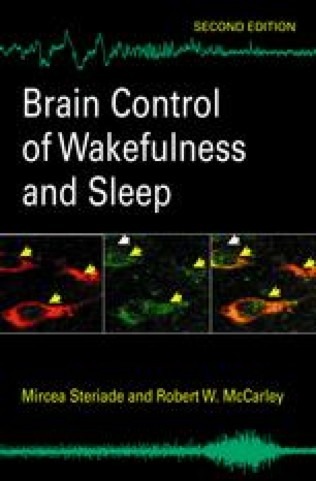
The book is rich in references and leaves no aspect of the problem untouched. The morphological, pharmacological, physiological and mathematical modeling aspects of different components of the subject are treated to exhaustion...the book is richly illustrated and down-right comprehensive. It will delight those interested in the field, will inform those who need a context for their research efforts and is a must for graduate and medical libraries.

Beginning with an expansive introduction to the basics of biopharmaceutics and the context that underpins the field, the included resources go on to discuss how biopharmaceutics are integrated into product development within the pharmaceutical industry. Explorations of how the regulatory aspects of biopharmaceutics function, as well as the impact of physiology and anatomy on the rate and extent of drug absorption, follow.

This book presents a concise and comprehensive review of the biology, ecology, and management of Norway spruce. It integrates classic and contemporary literature (more than 2000 works cited in the text), highlighting basic research and forestry practices in central and eastern Europe. The topics include anatomy and morphology, physiology and nutrition, reproductive biology and genetics, and ecology. In addition, it examines mycorrhiza, diseases and pests as well as silviculture and wood products. In the light of increasing threats to forest health from air pollution, climate change, and insects and disease, it provides an essential information source to those concerned with the ecology, conservation, and management of the species
offers both the physician and researcher a critical survey of the best new technologies for studying neurodegeneration, as well as describing their optimal use in the diagnosis and treatment of specific neurodegenerative diseases

New three-dimensional endoanal and endorectal ultrasonographic and magnetic resonance imaging techniques have given better insight into the complex anatomy of the pelvic floor and its pathologic modification in benign anorectal diseases. Obstetrical events leading to fecal incontinence in females, the relationship between fistulous tracks and the sphincter complex, and mechanisms of obstructed defecation syndrome can now be accurately evaluated, which is of fundamental importance for decision making.
This book focuses on balloon kyphoplasty and alter- tive minimally invasive treatments for stabilization of osteoporotic vertebral fractures. The optimal treatment of a patient with osteoporotic vertebral fractures requires an interdisciplinary - proach, and therefore our book draws on the expertise of orthopedic surgeons, traumatologists and neu- surgeons, and also includes a chapter on medical treatment.
This book is a single source that provides a multi-perspective look at and approach to Atrial Fibrillation. Because Atrial Fibrillation is so prevalent and affects all areas of medicine, the information in this book will be useful to cardiologists, cardiac surgeons, researchers, and all those in the medical field.

he „Atlas of Woody Plant Stems“ is a com- Naturally, it was impossible to cover completely the Tprehensively illustrated book with short, in- enormous variability of plant life forms. We have formative texts. We chose this layout because plant tried, however, to illustrate the main principles and anatomy and morphology can only be conveyed by features. Many decades of collection and prepa- detailed pictures. In addition, a vivid presentation tion provided the basis for this book.
The second edition of this book provides updated knowledge about the biological characteristics and clinical use of arterial grafts for coronary artery bypass surgery. The reader will find first-hand information on arterial grafts as well as vein grafts with regard to biological characteristics, clinical use including off-pump coronary bypass grafting surgery, results, and future developments. Written by world-renowned cardiac surgeons and cardiovascular research scientists working in this area.
Ophthalmic microsurgery is applied in ophthalmic pathological conditions. Ophthalmic pathology sets the landmarks for all kinds of microsurgical manipulations. This excellent textbook emphasizes the ocular structures such as the nuances of morphology, surgical anatomy, and pathology.
This multidisciplinary book reviews the diagnosis and management of anterior knee pain and patellar instability in an eminently clinical and practical manner. The book reviews the therapeutic alternatives, both surgical and non-surgical, emphasizing the considerable importance of minimal intervention and non-surgical methods. Similarly, anterior knee pain following ACL reconstruction is covered in detail.
The book assembles many new aspects in the broad field of anorectal and genitourinary malformations. Special attention is given to the new surgical techniques posterior sagittal anorectal plasty (PSARP), urogenital sinue advancement, and laparoscopy. The results of an international workshop of 26 international authorities on congenital malformations of the organs of the pelvis and perineum are presented. The new classification proposed at the Krickenberg Conference will enable future studies comparing the types and the results of treatment of anorectal malformations.
Andrology for the Clinician consists of two parts: In Part One, the busy clinician can easily find the problem-orientated information he or she needs on such issues as * Male factor fertility problems * Male contraception * Male genital tract infection and tumours Part Two contains in-depth subject-orientated information and adds important scientific background information to the recommendations received in Part One. Several leading experts have contributed to this work, which has been extensively subedited by world-renowned editors to ensure a well-structured didactic design and homogeneous content.
This book presents selected works of contemporary evolutionary morphologists and includes such topics as broad scale reconstructions of the brain and ear of dinosaurs, inference of locomotor habits from cancellous bone architecture in fossil primates, and a comparison of the independently evolved manipulating apparatuses in the lesser and giant pandas. Insight is provided into the application of modern noninvasive technologies, including digital imaging techniques and virtual 3D reconstruction, to the investigation of complex anatomical features and coherences. In combination with traditional methods, this allows for the formulation of improved hypotheses on coordinated function and evolution. The creation of virtual translucent specimens makes it possible to realize the age-old dream of the classical anatomists: looking through the skin into the inner organization of an organism. On full display here is the dramatic and promising impact that modern imaging techniques have on scientific progress in evolutionary morphology.
Few medical or scientific addresses have so unmistakeably made history as the presentation delivered by Alois Alzheimer on November 4th, 1906 in Tübingen. The celebratory event, "Alzheimer 100 Years and Beyond" organized on the initiative of the Alzheimer community in Germany and worldwide, in collaboration with the Fondation Ipsen, at the very site of the original lecture, namely the Institute of Psychiatry at the University of Tübingen in Germany from November 2nd to 5th, 2006, was the highlight of the Alzheimer Year. Over the last century of Alzheimer research (1906-2006), remarkable progress has been achieved. Most of the authors of the major discoveries and the people involved in research in this field will present, during the meeting and in this volume, the pioneering research explaining the conditions under which they were conducted. The goal of this book is to honor the work accomplished, to summarize the most important knowledge and to provide material for the history of science.
This authoritative reference book assembles the experience of an international faculty of authors, each of whom has performed several thousand facelifts, i.e. procedures to rejuvenate and harmonize the human face. All procedures in this regard are covered and the text is accompanied by extensive artwork and photographs. The authors share their experience, including tips and tricks, as well as ways to avoid complications and pitfalls. Special emphasis is given to the concept of looking at the face as a mosaic, i.e. treating its individual parts in a harmonic way and maintaining mimic units. Combining different methods.
We have come a long way since the days when abdominal wall contouring was p- formed by simple dermolipectomies, with no attention to diastasis correction and muscular reinforcement, and little regard for the final aesthetic result. Nowadays, an abdominoplasty may be indicated for even the most demanding of patients. Details such as placement of the incision and umbilicoplasty are meticulously planned so as to conceal undesirable scars. Since the advent of suction-assisted lipectomy, in as- ciation with a classical operation or as an isolated procedure, the plastic surgeon has become capable of remodeling the entire trunk, assuring removal of considerable amounts of adipose tissue.
Rhytidoplasty is a palliative procedure in which face wrinkles are surgically removed to promote a more youthful appearance.The first sections focus on the surgical planning, including psychological considerations, preparation of the patient and anatomical and biochemical changes caused by the aging process. It also describes the surgical anatomy of the forehead, face, neck and eyelids. The third section provides a comprehensive overview of the basic techniques of facelift with details of refined surgical approaches for each segment of the face and neck. It highlights liposuction techniques, lipoinjection as well as transference of stem cells, showing their importance in reshaping the facial contours. It addresses both the treatment of soft tissue and craniofacial bone structures to improve the aesthetics of the face. The next sections present the final scars after face-lifting, minimally invasive procedures as complementary approaches during rhytidoplasty and the associated procedures during rhytidoplasty. The last section discusses postoperative care.

Daraa Highway - Ghabagheb - Syria
+963-15 2050 - 15 860 380 /1/2/3 - 11 662 3900