



Page 17
Page 17

Evaluation of the use of medicine plants in cancer treatment
Turmeric (Curcuma longa) and ginger (Zingiber officinale) have been widely studied for their potential anticancer effects, primarily due to the bioactive compounds curcumin and gingerol. Both compounds exhibit significant therapeutic properties, including anti-inflammatory, antioxidant, pro-apoptotic, and anti-angiogenic activities, which target key pathways implicated in cancer progression, such as NF-κB, STAT-3, and mTOR. Through these mechanisms, curcumin and gingerol inhibit tumor growth, reduce metastasis, and enhance the efficacy of conventional cancer treatments.

Ethnobotany and ethnopharmacology of medicinal and aromatic plants : steps towards drug discovery
Medicinal and aromatic plants are beneficial to human health. Plant-derived molecules possess biological activities that can be used to prevent many infectious diseases and metabolic disorders. Ethnobotany and Ethnopharmacology of Medicinal and Aromatic Plants summarizes techniques and methods used to study the biological activities of plant-derived extracts and compounds to study ethnobotanical and ethnopharmacological features of medicinal and aromatic plants.

Ethnobotany : A phytochemical perspective
Explores the chemistry behind hundreds of plant medicines, dyes, fibers, flavors, poisons, insect repellants, and many other uses of botanicals. Bridging the gap between ethnobotany and chemistry, this book presents an introduction to botany, ethnobotany, and phytochemistry to clearly join these fields of study and highlight their importance in the discovery of botanical uses in modern industry and research. Part I. Ethnobotany, explores the history of plant exploration, current issues such as conservation and intellectual property rights, and a review of plant anatomy. An extensive section on plant taxonomy highlights particularly influential and economically important plants from across the plant kingdom. Part II. Phytochemistry, provides fundamentals of secondary metabolism, includes line drawings of biosynthetic pathways and chemical structures, and describes traditional and modern methods of plant extraction and analysis. The last section is devoted to the history of native plants and people and case studies on plants that changed the course of human history from five geographical regions: Africa, the Americas, Asia, Europe, and Ocean. Throughout the entire book, vivid color photographs bring science to life, capturing the essence of human botanical knowledge and the beauty of the plant kingdom.

Establishing medical reality : Essays in the metaphysics and epistemology of biomedical science
This volume approaches the philosophy of medicine from the broad naturalist perspective that holds that philosophy must be continuous with, constrained by, and relevant to empirical results of the natural and social sciences and that believes that the history, sociology, politics, and ethics of science provide relevant information for philosophical analysis. One traditional topic covered by several of the contributions is the nature of disease, but the approach is largely from the philosophy of science rather than traditional linguistic analysis. The complex interplay of epistemological and sociological factors in producing evidence in medicine is discussed by chapters on collective medical discussion making, experimental medicine, " genetic" diseases, mental illness, and race and gender categories. The upshot is a volume that ties medicine to contemporary issues in philosophy of science and metaphysics like no other.

Essentials of Sports Nutrition and Supplements
Millions of consumers want to lose body fat, gain muscle mass, and/or improve exercise performance. In addition to an exercise program, they often look to sports supplements as ‘tools’ to help them reach their goals. This book, the culmination of years of work by the thought leaders in the sports nutrition field will help the consumer, student, scientist, and sports nutrition professional sift through the huge volume of information and come up with reasonable and scientifically-based ideas and conclusions about sports nutrition.
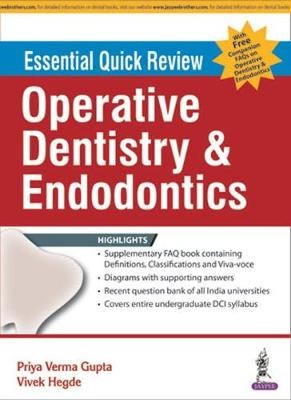
Essential Quick Review : Operative Dentistry & Endodontics
Provides a complete outline for writing an essay type, a short answer type, or a viva voce type of questions. Written in a simple language along with well-illustrated diagrams wherever possible. Supported with a supplementary booklet for each subject containing three sections: definitions, classifications, and viva voce.

ESD Protection Device and Circuit Design for Advanced CMOS Technologies
ESD Protection Device and Circuit Design for Advanced CMOS Technologies is intended for practicing engineers working in the areas of circuit design, VLSI reliability and testing domains.

Equilibrium Between Phases of Matter : Phenomenology and Thermodynamics
The phase behaviour of materials and their thermodynamic properties are a central subject in all fields of materials research. The first Volume of the work, meant for graduate students in chemistry, geology, physics, and metallurgy, and their engineering counterparts, is split up in three levels, such that from level to level the portion and importance of thermodynamics and mathematics are increased. In the ground level it is shown that the basic principles of phase equilibria can be understood without the use of thermodynamics – be it that the concept of chemical potential is introduced right from the beginning. The intermediate level is an introduction to thermodynamics; culminating in the Gibbs energy as the arbiter for equilibrium – demonstrated for systems where the phases in equilibrium are pure substances. In the third level the accent is on binary systems, where one or more phases are solutions of the components.

Epigenetics in oncology
Covers the most recent advances in RNA/histone/DNA epigenetics in Oncology. RNA/histone/DNA epigenetics have been shown to play pivotal roles in cancer initiation, progression, maintenance and drug response/resistance, tumor microenvironment, cancer stem cell self-renewal, cancer metabolism, and tumor immune evasion. In particular, research in RNA cancer epigenetics has made impressive progress in the last few years. Individual chapters in Part I (focusing on RNA epigenetics) are devoted to RNA modifications in Cancer Metabolism and Microenvironment, Cancer Stem Cell Biology, Immune Surveillance, Solid Tumors and Tumor Immunity, and Hematopoietic Malignancies, as well as to RNA editing in Cancer. Chapters in Part II and III of the book focus on histone epigenetics and DNA epigenetics, respectively.

Environmental Risk Assessment : Quantitative Measures, Anthropogenic Influences, Human Impact
The world is a dirty place and getting dirtier all the time. The reasons for this ever-increasing lack of cleanliness are not hard to find, being basically caused by the actions of the six billion people who inhabit the planet. The needs of the people for air, water, food, housing, clothing, heating, materials, oil, gas, minerals, metals, chemicals, and so forth have, over the centuries, given rise to a variety of environmental problems that have been exacerbated or been newly created by the industrialization of the world, the increase in population, and the increase in longevity of the population. The costs of cleaning even fractions of the known environmental problems are truly enormous, as detailed in the volume Environmental Risk Analysis (I. Lerche and E. Paleologos, 2001, McGraw-Hill). The chances of causing new environmental problems, and their associated costs of clean up, are equally challenging in terms of anthropogenic influences and also of the natural environmental problems that can be triggered by humanity.

Environmental Chemistry : Green Chemistry and Pollutants in Ecosystems
Environmental chemistry is a new, fast developing science aimed at deciphering fundamental mechanisms ruling the behaviour of pollutants in ecosystems. Applying this knowledge to current environmental issues leads to the remediation of environmental media, and to new, low energy, low emission, sustainable processes. This book describes the state-of-the-art advances regarding the pollution of water, soils, atmosphere, food and living organisms by toxic metals, fossil fuels, pesticides and other organic pollutants. Furthermore, the eco-toxicology section presents novel bio-assays to assess the toxicity of various pollutants such as dioxins and endocrine disrupters within complex media. The green chemistry section highlights novel chemical reactions based upon environmentally friendly conditions. The analytical chemistry section describes very sensitive methods which trace the fate of pollutants in complex ecosystems.

Environmental Bioremediation Technologies
Environmental contamination from both natural and anthropogenic sources is, today, a major environmental concern due to pervasiveness and persistence of many toxicants. It is considered as an inevitable evil of our progress and modernization. To decontaminate the soils, sediments and waters, polluted by anthropogenic activities, the scientists and technologists have evolved different technologies over the years. Although we have to pay high cost for physical and chemical environmental technologies, but they are not eco-friendly and safe. Hence, it was deeply realized to develop viable technologies employing microbes and plants to remediate not only metallic residues and radionuclides, but also the xenobiotic compounds like PCBs, PAHs, PCPs, petroleum sludge and the military wastes. No doubt, the scientists have also got some success in this endeavour and as the result, many companies are in place today to promote the sale of plant or microbe-based technologies to deal with specific environmental contamination challenges. Besides, these technologies are se- driven and do not disturb the sites in cleaning process.

Enhancing the Dissolution Rate of Atorvastatin by Solid Dispersion Technique
In the last few decades, solid dispersion (SD) technology had been studied as an approach to produce an amorphous carrier to enhance the solubility, dissolution rate, and bioavailability of poorly water-soluble drugs. The use of suitable carrier and methodology in the preparation of SDs play a significant role in the biological behavior of the SDs. Atorvastatin is a statin group HMG-CoA reductase inhibitor drug that is commonly used to adverse cardiovascular events and to lower blood total cholesterol and LDL-cholesterol. the solubility of atorvastatin in water is very low (0.1 mg mL− 1), which results in reduced bioavailability. In order to enhance its solubility, we have prepared solid dispersions (SDs) of atorvastatin at different drug: polymer ratios (1:2, 1:10, 1:20,1:25 and 1:40), using polyethylene glycol 6000 as polymer and different preparation methods (co-precipitate and melting methods) The characterization of the SDs was performed using differential scanning calorimetry (DSC), Fourier transform infrared spectroscopy (FTIR) The solubility of AT was improved by the incorporation PEG6000.
Engineering Stochastic Local Search Algorithms. Designing, Implementing and Analyzing Effective Heuristics ; International Workshop, SLS 2007, Brussels, Belgium, September 6-8, 2007, Proceedings
Stochastic local search (SLS) algorithms enjoy great popularity as powerful and versatile tools for tackling computationally hard decision and optimization pr- lems from many areas of computer science, operations research, and engineering. However, in recent years it has become evident that at the core of this development task there is a highly complex engineering process, which combines various aspects of algorithm design with empirical analysis techniques and problem-specific background, and which relies heavily on knowledge from a number of disciplines and areas, including computer science, operations research, artificial intelligence, and statistics. This development process needs to be - sisted by a sound methodology that addresses the issues arising in the various phases of algorithm design, implementation, tuning, and experimental eval- tion.

Engineering Damage Mechanics : Ductile, Creep, Fatigue and Brittle Failures
Engineering Damage Mechanics is deliberately oriented toward applications of Continuum Damage Mechanics to failures of mechanical and civil engineering components in ductile, creep, fatigue and brittle conditions depending upon the thermomechanical loading and the materials: metals and alloys, polymers, elastomers, composites, concretes. Nevertheless, to help engineers, researchers, beginners or not, the first two chapters are devoted to the main concepts of damage mechanics and to the associated computational tools.

Energy Metabolism and Obesity : Research and Clinical Applications
Elucidate the most important aspects of genetic background, neuropeptide secretion and action, neuronal pathways, adipokines, gut hormones, and environmental influences (physical activity, pharmacologic agents, and surgical alteration of the gastrointestinal tract), as well as the complex interactions among them.

Endophytic microbes: Isolation, identification, and bioactive potentials
Provides basic insight and protocols relating to endophytic microbes. Chapter are divided into five major sections detailing basic isolation, bioactive metabolites production. endophytism, isolation and identification of endophytes, bioactive potentials, and screening of metabolites.

Endocrinology : Basic and Clinical Principles
For this new edition of Conn & Melmed's Endocrinology: Basic and Clinical Principles, a panel of distinguished scientists and clinicians has completely rewritten every chapter to reflect the latest advances in our understanding of the endocrine system. Maintaining the original goal of the first edition to integrate the basic science of endocrinology with its physiological and clinical principles, the authors have succinctly summarized in 450 pages the latest findings on hormone secretion and hormone action, as well as all of the most recent insights into the physiology and pathophysiology of hormonal disorders. Coverage extends across the entire spectrum of endocrinology-from mammalian cells, plants, and insects to animal models and human diseases-with much increased coverage of diabetes and metabolism. Highlights include cutting-edge discussions of appetite disorders, obesity, reproductive failure, control of thyroid function, hormone action in humans and the lower species, and the mechanisms subserving hormone secretion.

Encyclopedia of Human Nutrition
Provides updated information on the foundations of nutrition science, along with the biology and functions of vitamins and other essential nutrients present in the human diet. The book's content offers a modern understanding of the links between diet and health effects, including diseases of recognized nutritional etiology. This overview of the genetic and molecular aspects of nutrient-health interrelationships includes important content on topics like nutrigenomics, metabolomics and the microbiome. In addition, the book provides global context, particularly on the issue of food production, sustainability and climate change.

Encyclopaedia of the History of Science, Technology, and Medicine in Non-Western Cultures
The second edition of this landmark encyclopaedia will contain approximately 1000 entries dealing in depth with the history of the scientific, technological and medical accomplishments of cultures outside of the United States and Europe. The entries consist of fully updated articles together with hundreds of entirely new topics.This unique reference work includes: Intercultural articles on broad topics such as Mathematics and Astronomy Philosophical articles on concepts and ideas related to the study of non-Western Science, such as Rationality, Objectivity, and Method, Religion and Science, East and West, and Magic and Science Articles on topics such as Native American Mathematics, Polynesian Navigation, Korean Maps, and African Metallurgy Biographical articles for those cultures where individual scientists are known to us, such as China and the Islamic world.
