



Page 151
Page 151

Financial technologies and DeFi : A revisit to the digital finance revolution
Fleshes out the core developments and trending fintech 2.0 solutions that pause challenges and bring opportunities for businesses and economies. It comprises nine main chapters with collective insights and interdisciplinary perspectives covering the business, tech, and regulatory layers of financial technologies and decentralized finance. Besides, the book illustrates how to leverage these state-of-the-art technologies for the evolving digital and decentralized finance world.

Financial statements : Analysis, reporting and valuation
Through a mixture of concepts and examples, the second edition of this book demystifies the variety of elements of financial accounting and uncovers the need-to-know information for certification in this field. This book covers the two aspects of financial statement analysis, namely quantitative and non-quantitative analysis. Unique to the second edition, the book will also cover Non-GAA- metrics and valuation accounting.

Financial statement analysis : Basis for management advice
Key topics covered include: valuation techniques, effect ratios, DuPont system for analyzing profitability, causal analysis. how to conduct a financial statement analysis, users of financial statements, forecasting sustainable growth, and bankruptcy prediction models

Financial statement analysis : A practitioner's guide
This fully revised and up-to-date 5th Edition offers fresh information that will help you to evaluate financial statements in today's volatile markets and uncertain economy. The declining connection between GAAP earnings and stock prices has introduced a need to discriminate between instructive and misleading non-GAAP alternatives. This book integrates the alternatives and provides guidance on understanding the extent to which non-GAAP reports, particularly from US companies, may be biased.

Financial risk management with bayesian estimation of GARCH models : Theory and applications
This book presents methodologies for the Bayesian estimation of GARCH models and their application to financial risk management. The study of these models from a Bayesian viewpoint is relatively recent and can be considered very promising due to the advantages of the Bayesian approach, in particular the possibility of obtaining small-sample results and integrating these results in a formal decision model. The first two chapters introduce the work and give an overview of the Bayesian paradigm for inference. The next three chapters describe the estimation of the GARCH model with Normal innovations and the linear regression models with conditionally Normal and Student-t-GJR errors. The sixth chapter shows how agents facing different risk perspectives can select their optimal Value at Risk Bayesian point estimate and documents that the differences between individuals can be substantial in terms of regulatory capital.

Financial Privacy : An International Comparison of Credit Reporting Systems
This book provides the first in-depth analysis of the economics and regulation of financial privacy. It is an international comparison of credit reporting systems in the United States and in European countries. On the theoretical level the book explains competition in information markets, especially in markets for goods made of highly personal and sensitive information. It reviews the microeconomics of information and privacy and discusses the economic incentives to disclose or to conceal information. The book also focuses on the institutions of credit reporting, the history of credit reporting agencies and the regulation of privacy and credit reporting on both sides of the Atlantic as well as internationally. Finally, on the empirical level, it reviews the microeconomic and potential macroeconomic effects of credit reporting in the credit markets of countries around the world.

Financial Modeling Under Non-Gaussian Distributions
Practitioners and researchers who have handled financial market data know that asset returns do not behave according to the bell-shaped curve, associated with the Gaussian or normal distribution. Indeed, the use of Gaussian models when the asset return distributions are not normal could lead to a wrong choice of portfolio, the underestimation of extreme losses or mispriced derivative products. Consequently, non-Gaussian models and models based on processes with jumps are gaining popularity among financial market practitioners.

Financial modeling and valuation : A practical guide to investment banking and private equity
Built around an in-depth case study of global retail leader Amazon, this fully updated Second Edition shows you how to analyze the financial standing of a company using the methods of Wall Street professionals. Step-by-step, you will learn to build the core three statements—income statement, cash flow statement, and balance sheet—as well as the three major supporting schedules required for complete company valuation and analysis.
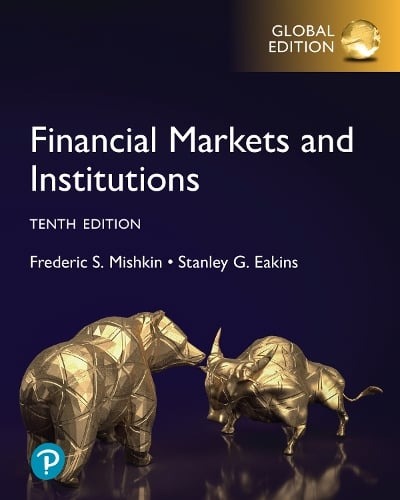
Financial markets and institutions
A practical introduction to the workings of today's financial markets and institutions. Moving beyond the descriptions and definitions provided by other textbooks in the field, Financial Markets and Institutions encourages students to understand the connection between the theoretical concepts and their real-world applications. By enhancing students' analytical abilities and concrete problem-solving skills, this textbook prepares students for successful careers in the financial services industry or successful interactions with financial institutions, whatever their jobs

Financial market imperfections and corporate decisions : Lessons from the transition process in Hungary
The book presents the results of an empirical investigation of the behaviour of Hungarian firms during the transition process focusing in particular on the role of financial market imperfections for corporate capital structure and investment decisions. The results suggest that financial market reforms have succeeded, albeit partially, in hardening firms's budget constraints and improving the efficiency of the credit allocation process. In particular, following the introduction of the banking sector reform and of the new bankruptcy law, budget constraints became more binding for small private firms, while informational costs became less relevant for foreign-owned firms.

Financial management for technology start-ups : How to power growth, track performance and drive innovation
Develops the financial intelligence you need to communicate effectively with investors, implement business strategies and pinpoint emerging pathways for profit / Outlines how to analyze your performance and undertake risk-return assessments to tactically grow your start-up / Offers proven methods for tracking your start-up's progress to ensure that growth is maintained and continuous / Analysis of financial statements directly from start-ups, new case studies on companies that have scaled up, focus on new digital technologies and market opportunities for start-ups, information on new players and potential future tech start-ups

Financial management and risk analysis strategies for business sustainability
Financial Management and Risk Analysis Strategies for Business Sustainability proposes a series of practical and theoretical perspectives on how the business world has to evolve to adapt to the new situation the world has reached due to undeniable climate change forcing businesses to redefine their productive processes and internal organization. Topics highlighted include financial management procedures, corporate social responsibility, risk analysis, financial literacy, and innovation in sustainability and sustainable development. areas.

Financial management and corporate governance
This book provides an integrative perspective on financial management and corporate governance deployed in management decisions. It analyzes wide-ranging issues such as valuation, capital investment, capital structure, mergers and acquisitions, shareholder and stakeholder value management, and corporate governance structure. Throughout the analyses, the book provides a coherent view of firms, laws and markets, and offers practical financial modeling techniques to assist in financial decisions.

Financial management and accounting in the public sector
Public sector managers are confronted daily with targets and demands that are often set in confusing accounting and financial language. In Financial Management and Accounting in the Public Sector, Gary Bandy employs a clear and concise narrative to introduce the core concepts of public financial management to help those managers to deliver programmes, projects and services that are value for money. As the author puts it, managing public money is an art, not a science.

Financial economics and econometrics
Covers financial data and univariate models; asset returns; interest rates, yields and spreads; volatility and correlation; and corporate finance and policy. Each chapter begins with a theory in financial economics, followed by econometric methodologies which have been used to explore the theory. Next, the chapter presents empirical evidence and discusses seminal papers on the topic. Boxes offer insights on how an idea can be applied to other disciplines such as management, marketing and medicine, showing the relevance of the material beyond finance. Readers are supported with plenty of worked examples and intuitive explanations throughout the book, while key takeaways, ‘test your knowledge’ and ‘test your intuition’ features at the end of each chapter also aid student learning.
Financial cryptography and data security ; FC 2020 International Workshops, AsiaUSEC, CoDeFi, VOTING, and WTSC, Kota Kinabalu, Malaysia, February 14, 2020, Revised Selected Papers
This book constitutes the refereed proceedings of two workshops held at the 24th International Conference on Financial Cryptography and Data Security, FC 2020, in Kota Kinabalu, Malaysia, in February 2020. The 39 full papers and 3 short papers presented in this book were carefully reviewed and selected from 73 submissions. The papers feature four Workshops: The 1st Asian Workshop on Usable Security, AsiaUSEC 2020, the 1st Workshop on Coordination of Decentralized Finance, CoDeFi 2020, the 5th Workshop on Advances in Secure Electronic Voting, VOTING 2020, and the 4th Workshop on Trusted Smart Contracts, WTSC 2020.

Financial Cryptography ; 5th International Conference, FC 2001, Grand Cayman, British West Indies, February 19-22, 2001. Proceedings
Constitutes the post-proceedings of the 5th International Conference on Financial Cryptography held in the British West Indies in 2002. Papers cover managing payment transaction costs, trust and risk management, groups and anonymity, certificates and authentication, credit card security and more.
Financial crisis management and democracy : Lessons from Europe and Latin America
This book discusses financial crisis management and policy in Europe and Latin America, with a special focus on equity and democracy. Based on a three-year research project by the Jean Monnet Network, this volume takes an interdisciplinary, comparative approach, analyzing both the role and impact of the EU and regional organizations in Latin America on crisis management as well as the consequences of crisis on the process of European integration and on Latin America’s regionalism.
Financial Controlling
Provides an introduction to the fundamentals of operational and strategic controlling. It conveys the central tasks and functions that controlling has in the company and shows the challenges that this cross-sectional position entails. In addition, it addresses trends and developments in controlling that will have a significant impact on the work of controllers in the coming years.

Financial Compensation for Victims of Catastrophes : A Comparative Legal Approach
Some countries have created a specific fund solution; others follow a generous ad hoc approach whereby large amounts of compensation are made available on an ex post basis. This book shall pay attention to all of these seemingly quite different solutions. Experts from different countries report on the way catastrophes are dealt with in their particular jurisdiction from the angle of tort law, social security, insurance or alternative compensation mechanisms such as compensation funds. Various possible remedies for victims are critically discussed; attention is also paid to the economic analysis of law.
