


Refine Results
Sort By
From
To

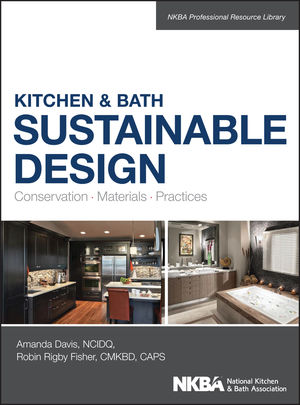
Guide to "greening" these important rooms. The first book to focus exclusively on kitchen and bath sustainability, this full color guide covers every consideration for both remodels and new construction, making it a handy reference for any kitchen and bath professional. Case studies of award-winning projects demonstrate how space, budget, and sustainability can come together to create beautiful, functional, efficient rooms, and illustrations throughout provide visual examples of the techniques discussed. The book includes information on greening one's practice for the client's benefit, plus an appendix of additional resources and instructional materials for classroom use.
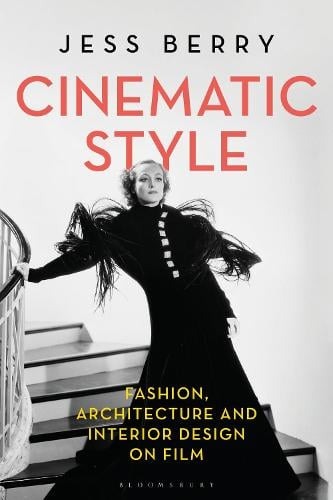
This book is the first to consider the significant interplay between fashion and interiors and their combined contribution to cinematic style from early film to the digital age. With examples from Frank Lloyd Wright inspired architecture in Hitchcock's North by Northwest, to Coco Chanel's costumes for Gloria Swanson and a Great Gatsby film-set turned Ralph Lauren flagship, Cinematic Style describes the reciprocal relationship between these cultural forms. Exposing the bleeding lines between fashion and interiors in cinematic and real-life contexts, Berry presents case studies of cinematic styles adopted as brand identities and design movements promoted through filmic fantasy.
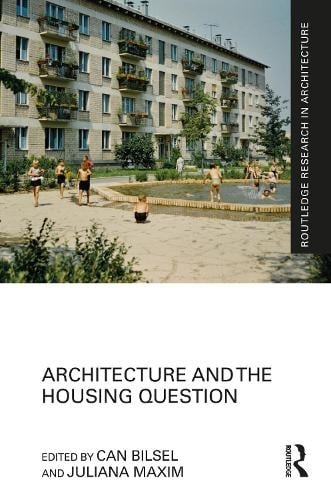
Examines how the design and provision of housing around the world have become central both to competing political projects and to the architecture profession. How have architects acting as housing experts helped alleviate or enforce class, race, and gender inequality? What are the disciplinary implications of taking on shelter for the multitude as an architectural assignment and responsibility? The book features essays in the historiography of architecture and the housing question, and a collection of historical case studies from Belgium, China, France, Ghana, the Netherlands, Kenya, the Soviet Union, Turkey, and the United States.
Architectural Colossi and the Human Body discusses the role of Platonic and Cartesian philosophy and how philosophers such as Heidegger and Merleau-Ponty, and theoreticians such as Frascari and Pallasmaa, have seen, described and analysed the human body and the role of architecture and perception. Drawing upon three key case studies and by employing theoretical ideas of Venturi and others, this book will provide an understanding of the role of anthromorphism and the relation and use of the human body with reference to selected architects and artists.
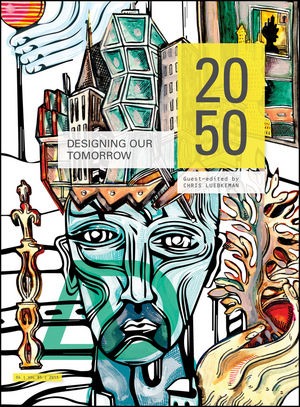
Envisioning a positive future through design 2050: Designing Our Tomorrow describes the ways in which architecture and design can engage with the key drivers of change and provide affirmative aspirations for a not-so distant future. See how architects and designers inspire global positive change Consider architecture's role in shaping cultural outlook Learn the key drivers of change for the built environment Explore the perspectives of leading experts and designers
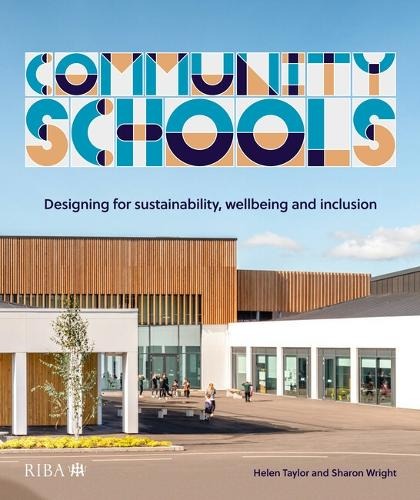
Reconsiders what is required from physical school environments, building on the learning gathered from the sector over the past two decades. To meet the new social, environmental and economic challenges it advocates designing differently, both in terms of the form that buildings take and the evaluation of their impact and performance. By calling for a reframing of the way that schools are regarded as community-wide amenities, this book explores the potential for architects to deliver design in a manner that supports healthy lifestyles and promotes wellbeing. Through encouraging social connections, new possibilities open up for educational facilities to become open, welcoming and inclusive. Featuring: Over 12 international case studies from practices including: Architype, Argyll + Bute, Bogle Architects, DRMM, Revaerk, Scott Brownrigg and XDGA. Key themes of wellbeing, connectivity, inclusion, indicators and evaluation. Practical guidance and learning points throughout. A new design brief for community schools
Presents recent advances in modelling, planning and evaluating city logistics for sustainable and liveable cities based on the application of ICT (Information and Communication Technology) and ITS (Intelligent Transport Systems). It highlights modelling the behaviour of stakeholders who are involved in city logistics as well as planning and managing policy measures of city logistics including cooperative freight transport systems in public-private partnerships. Case studies of implementing and evaluating city logistics measures in terms of economic, social and environmental benefits from major cities around the world are also given.
Presents recent advances in modelling, planning and evaluating city logistics for sustainable and liveable cities based on the application of ICT (Information and Communication Technology) and ITS (Intelligent Transport Systems). It highlights modelling the behaviour of stakeholders who are involved in city logistics as well as planning and managing policy measures of city logistics including cooperative freight transport systems in public-private partnerships. Case studies of implementing and evaluating city logistics measures in terms of economic, social and environmental benefits from major cities around the world are also given.
Presents recent advances in modelling, planning and evaluating city logistics for sustainable and liveable cities based on the application of ICT (Information and Communication Technology) and ITS (Intelligent Transport Systems). It highlights modelling the behaviour of stakeholders who are involved in city logistics as well as planning and managing policy measures of city logistics including cooperative freight transport systems in public-private partnerships. Case studies of implementing and evaluating city logistics measures in terms of economic, social and environmental benefits from major cities around the world are also given.
Provides a comparative perspective on housing and planning policies affecting the future of cities, focusing on people- and place-based outcomes using the nexus of planning, design and policy. A rich mosaic of case studies features good practices of city-led strategies for affordable housing provision, as well as individual projects capitalising on partnerships to build mixed-income housing and revitalise neighbourhoods. Twenty chapters provide unique perspectives on diversity of approaches in eight countries and 12 cities in Europe, Canada and the USA.
On the occasion of the annual Swiss Federal Design Competition, the Federal Office of Culture is realizing a publication and an exhibition - this year in collaboration with the Musée de design et d'arts appliqués contemporains in Lausanne. They serve as platforms to present and document all award winners and their award-winning works. Works from the fields of fashion, textiles, graphics, illustration, photography, product design and jewelry can be seen.
Expands on Building Information Modeling, showing its applicability to a range of design-oriented projects. It emphasizes the full impact that a data modeling tool has on design processes, systems, and the high level of collaboration required across the design team. It also explains the quantitative analysis opportunities that BIM affords for sustainable design and for balancing competing design agendas, while highlighting the benefits BIM offers to designing in 3D for construction. The book concludes with a deep look at the possible future of BIM and digitally-enhanced design.
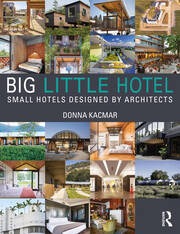
This book showcases small hotels, all located in the United States, designed by architects who use light and materials in interesting and intentional ways. The designs also deliberately connect to their local history, context, or land – in many cases all three. Both the architecture and the operations harmonize with the place, whether that is a bustling city, small town, or natural area. Many are new buildings but some are adaptive reuse projects or renovations of historic properties, extending the connectivity of the place into the future.
The facade serves as the building's public face, allowing rapid assessment of its architecture. 'Best of Detail: Facades' explores this topic with theoretical discussions and an in-depth look at a range of selected projects, which, besides showcasing suitable materials and designs, give the reader a detailed look behind the scenes. It turns out that quality architecture can only result from a coherency between the facade, structure, internal organisation and building services design elements that interact directly with each other. This presents the architect with enormous challenges, particularly as the unity between the exterior and interior is no longer a given, as today's range of materials and design possibilities offer nearly limitless creativity.
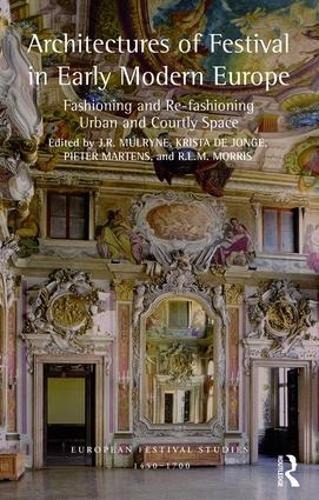
Draws on up-to-date research by a Europe-wide group of academic scholars and museum and gallery curators to provide a unique, intellectually-stimulating and beautifully-illustrated account of temporary architecture created for festivals of the sixteenth and seventeenth centuries, together with permanent architecture pressed into service for festival occasions across major European locations including Italian, French, Austrian, Scottish and German.
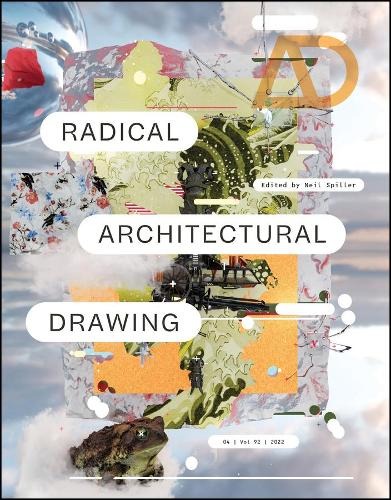
Seeks to showcase the architects who are pushing the envelope of drawing in extraordinary ways, and their insights into architecture’s future spatial dexterity. The issue is built around an international group of architects involved in an ongoing KU Leuven Faculty of Architecture international drawing research project, who are creating new drawing methodologies in new and exciting realms.
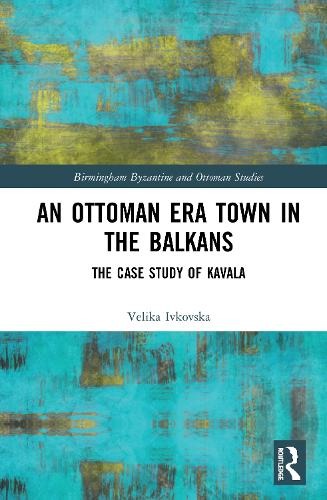
Presents the town of Kavala in Northern Greece as an example of Ottoman urban and residential development, covering the long period of Kavala’s expansion over five centuries under Ottoman rule. Kavala was part of the Ottoman Empire from 1387 to 1912. In the middle of the sixteenth century, Ibrahim Pasha, grand vizier of Suleiman the Magnificent, contributed to the town's prosperity and growth by the construction of an aqueduct. The Ottomans also rebuilt and extended the existing Byzantine fortress.
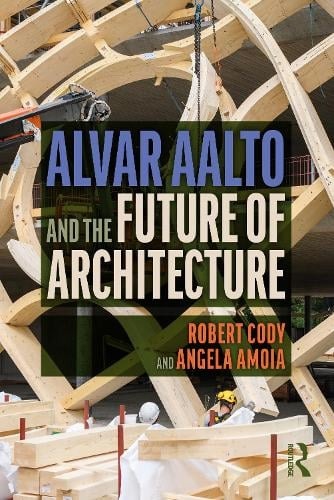
Exposes dialogue between history, theory, design, construction, technology, and sensory experience by means of digital simulations that enhance the assessment and values of our material choices. It offers a critical look to the past to inspire the future. This new edition looks to Alvar Aalto as the primary protagonist for channeling discussions related to these topics. Architects like ALA, Shigeru Ban, 3XN, Peter Zumthor, and others also play the role of contemporary guides in this review. The work of Aalto and selected contemporary architects, along with computer modeling software, showcase the importance of comprehensive design.
provides thought-provoking and inquisitive insights into how we can prolong the useful life of buildings by designing them to be more adaptable, and hence create a more sustainable built environment. The book provides a theoretical foundation counterpointed by the experiences and ideas of those involved in the design and use of buildings. It explains many approaches to designing for change, with lessons from history, and case studies including The Cedar Rapids Public Library, Kentish Town Health Centre and Folkestone Performing Arts Centre, which stretch our thinking beyond the conventional notions of adaptability. The authors reveal the many conditions that make it a complex design phenomenon, by considering the purpose, design and business case of buildings as well as the physical product. Full of summaries, diagrams, reference charts, tables, and photos of exemplar solutions for use as conversational tools or working aids, this book is for any professional or student who wants to research, question, imagine, illustrate - and ultimately design for - adaptation.
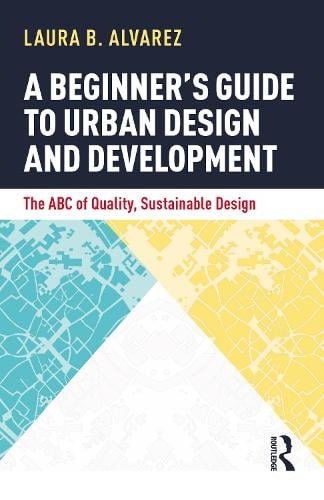
Provides invaluable guidance to all those with an interest in placemaking and the built environment, from those with no experience to those who have worked for many years in industry, illustrating key principles that will secure higher quality, more sustainable design in accessible, jargon-free language. Explains the design process in a straightforward way, exploring the different roles and highlighting the opportunities and limitations different agencies have to influence design over the various stages of the process. Examples from the UK and worldwide look at how the system operates and how best practice can make a real difference on the ground. Case studies examine situations where quality or sustainability fell short – and how this could have been avoided. This book also showcases a variety of evaluation tools, explaining how they operate, and giving guidance on how to create project-specific tools to drive schemes forward. With community empowerment at its core, the book explains technical language and shares bountiful knowledge to broaden place democracy and make influencing design accessible to many, not just a few.

Daraa Highway - Ghabagheb - Syria
+963-15 2050 - 15 860 380 /1/2/3 - 11 662 3900