


Refine Results
Sort By
From
To

This volume presents recent advances in the area of adaptativeness in metaheuristic optimization, including up-to-date reviews of hyperheuristics and self-adaptation in evolutionary algorithms, as well as cutting edge works on adaptive, self-adaptive and multilevel metaheuristics, with application to both combinatorial and continuous optimization.
The book describes some effective strategies to generate a sequence of viewing poses and sensor settings for optimally completing a perception task. Several methods are proposed to solve the problems in both model-based and nonmodel-based vision tasks. For model-based applications, the method involves determination of the optimal sensor placements and a shortest path through these viewpoints for automatic generation of a perception plan.

Telecommunication systems and human-machine interfaces start employing multiple microphones and loudspeakers in order to make conversations and interactions more lifelike, hence more efficient. This development gives rise to a variety of acoustic signal processing problems under multiple-input multiple-output (MIMO) scenarios, encompassing distant speech acquisition, sound source localization and tracking, echo and noise control, source separation and speech dereverberation, and many others. The last decade has witnessed a growing interest in exploring these problems, but there has been little effort to develop a theory to have all these problems investigated in a unified framework. This unique book attempts to fill the gap.

The book covers all levels from the description of AE basics for AE beginners (level of a student) to sophisticated AE algorithms and applications to real large-scale structures as well as the observation of the cracking process in laboratory specimen to study fracture processes.
This book describes recent research developments in automatic abstraction refinement techniques. The authors address the main challenge in abstraction refinement, i.e., the ability to efficiently reach or come close to the optimum abstraction (the smallest abstract model that proves or refutes the given property). A suite of fully automatic abstraction techniques are proposed to improve the overall computation efficiency. The suite of algorithms presented in this book has demonstrated significant improvement over the prior art; some of them have already been adopted by the EDA companies in their commercial/in-house verification tools.
Recent years have seen dramatic progress in shape recognition algorithms applied to ever-growing image databases. They have been applied to image stitching, stereo vision, image mosaics, solid object recognition and video or web image retrieval. More fundamentally, the ability of humans and animals to detect and recognize shapes is one of the enigmas of perception. The book describes a complete method that starts from a query image and an image database and yields a list of the images in the database containing shapes present in the query image. A false alarm number is associated to each detection. Many experiments will show that familiar simple shapes or images can reliably be identified with false alarm numbers ranging from 10-5 to less than 10-300.

Aims to lead a further stage in the computational revolution in commutative algebra. Another feature of the book is its breadth of coverage of theoretical topics in the portions of commutative algebra closest to algebraic geometry, with algorithmic treatments of almost every topic.

This book develops the answers to these questions and fits them into a roadmap for formal property verification – a roadmap that shows how to glue FPV technology into the traditional validation flow. A Roadmap for Formal Property Verification explores the key issues in this powerful technology through simple examples – you do not need any background on formal methods to read most parts of this book.
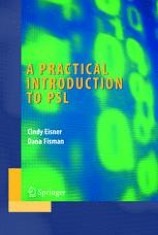
Practical Introduction to PSL is primarily targeted to hardware designers and verification engineers who plan to use PSL. This book is also of interest to students of temporal logic. The formal semantics of PSL are included as an appendix, and bibliographical notes include pointers to some of the main theoretical works.
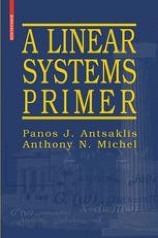
Based on a streamlined presentation of the authors' successful work Linear Systems, this textbook provides an introduction to systems theory with an emphasis on control. The material presented is broad enough to give the reader a clear picture of the dynamical behavior of linear systems as well as their advantages and limitations. Fundamental results and topics essential to linear systems theory are emphasized. The emphasis is on time-invariant systems, both continuous- and discrete-time.
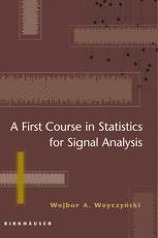
This essentially self-contained, deliberately compact, and user-friendly textbook is designed for a first, one-semester course in statistical signal analysis for a broad audience of students in engineering and the physical sciences. The emphasis throughout is on fundamental concepts and relationships in the statistical theory of stationary random signals, explained in a concise, yet fairly rigorous presentation.
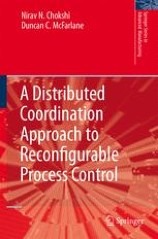
A Distributed Coordination Approach to Reconfigurable Process Control presents research that addresses this critical question, via developing a new distributed framework that will enable the building of a process control system that is capable of reconfigurability.
This monograph gives a detailed treatment of applications of geometric methods to advanced grid technology. It focuses on and describes a comprehensive approach based on the numerical solution of inverted Beltramian and diffusion equations with respect to monitor metrics for generating both structured and unstructured grids in domains and on surfaces.
Rough terrain robotics is a fast evolving field of research and a lot of effort is deployed towards enabling a greater level of autonomy for outdoor vehicles. This book demonstrates how the accuracy of 3D position tracking can be improved by considering rover locomotion in rough terrain as a holistic problem. In this work, a mechanical structure allowing smooth motion across obstacles with limited wheel slip is used. In particular, it enables the use of odometry and inertial sensors to improve the position estimation in rough terrain. A method for computing 3D motion increments based on the wheel encoders and chassis state sensors is developed. The algorithm runs online and can be adapted to any kind of passive wheeled rover. Finally, sensor fusion using 3D-Odometry, inertial sensors and visual motion estimation based on stereovision is presented. The experimental results demonstrate how each sensor contributes to increase the accuracy and robustness of the 3D position estimation.

Daraa Highway - Ghabagheb - Syria
+963-15 2050 - 15 860 380 /1/2/3 - 11 662 3900