


Refine Results
Sort By
From
To

The availability of microdata has increased rapidly over the last decades, and standard statistical and econometric software packages for data analysis include ever more sophisticated modeling options. The goal of this book is to familiarize readers with a wide range of commonly used models, and thereby to enable them to become critical consumers of current empirical research, and to conduct their own empirical analyses.
The topics addressed in this book are of vital importance to the survival of humankind. Agricultural biodiversity, encompassing genetic diversity as well as human knowledge, is the base upon which agricultural production has been built, and protecting this resource is critical to ensuring the capacity of current and future generations to adapt to unforeseen challenges. Agricultural biodiversity underpins the productivity of all agricultural systems and is particularly important for poor and food-insecure farmers, who maintain highly diverse production systems in response to the marginal and risky production conditions they operate under. Understanding the importance of agricultural biodiversity in the livelihoods of the food insecure and enhancing its performance through the use of a variety of tools, including biotechnology, is a critically important issue in the world today
Production planning in fresh food industries is a challenging task. Although modern Advanced Planning and Scheduling (APS) systems could provide significant support, APS implementation numbers in these industries remain low. Therefore, based on an in-depth analysis of three sample fresh food industries (dairy, fresh and processed meat), the author evaluates what APS systems should offer in order to effectively support production planning and how the leading systems currently handle the most distinguishing characteristic of fresh food industries, the short product shelf life. Starting from the identified weaknesses, customized software solutions for each of the sample industries are proposed that allow to optimize the production of fresh foods with respect to shelf life.

Much has been written about the economic and political problems of countries that are in the process of changing from centrally planned systems to market systems. Most studies have focused on the economic, legal, political and sociological problems these economies have had to face during the transition period. However, not much has been written about the dramatic changes that have to be made to the accounting and financial system of a transition economy. This book was written to help fill that gap. Using Russia as a case study the authors examined all the major aspects of accounting reform, starting with problems of implementation. They also examined the current state of auditing in Russia. They also devote chapters to corporate governance issues, the Russian tax system and the problems Russian enterprises face when they try to attract foreign direct investment.

"Market quality" is a complex, ambiguous term that means different things to different people. How should it be defined, measured, monitored, and improved? What is the evidence about the current state of our markets? How effective have recent innovations been? How can we better meet investor needs? These are some of the questions that we address in this book, along with a broad range of issues concerning equity market structure, regulation, and the quest for best execution. Throughout, particular attention is given to the perspective of front line participants on the buy-side and sell-side trading desks.

Aesthetics in Digital Photography presents theories developed over the last 25 centuries by philosophers and art critics, who have sometimes been governed by the objectivity of perception, and other times, of course, by the subjectivity of human judgement. It explores the advances that have been made in neuro-aesthetics and their current limitations.

Examines the recent resurgence of interest in the handmade building and the use of local and renewable materials in contemporary construction. In the past, raw materials were shaped to provide shelter and to accommodate the cultural, social, and economic needs of individuals and communities. This is still true today as architects, engineers, and builders turn once again to local resources and methods, not simply for constructing buildings, but also as a strategy for supporting social engagement, sustainable development, and cultural continuity. Building from Tradition features global case studies that allow readers to understand how building practices-developed and refined by previous generations-continue to be adapted to suit a broad range of cultural and environmental contexts. The book provides: a survey of historical and technical information about geologic and plant-based materials such as: stone, earth, reed and grass, wood, and bamboo; 24 detailed case studies examining the disadvantages and benefits to using traditional materials and methods and how they are currently being integrated with contemporary construction practices
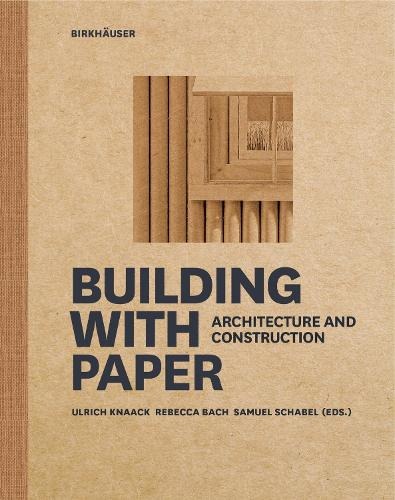
Paper and cardboard as sustainable building materials are currently the subject of research and testing in building practice. Properly protected from moisture and fire, the material proves to be strong and durable. This introduction explains the basics and the technology of building with cardboard and paper and shows a wide range of exciting examples.
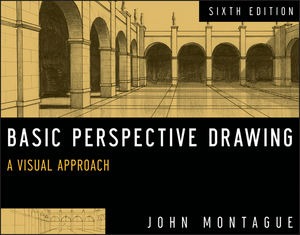
Introduces students, both those in formal design courses and self-learners, to the basic principles and techniques of perspective drawing. Clear and accessible illustrations show how to construct perspective views one step at a time. The new, streamlined Sixth Edition contains must-have content for students and instructors in art and design, architecture, and interior design programs. Updated illustrations reflect the most current drawing styles and examples while supplementary tutorial videos, grouped by architectural disciplines, interior design, and studio art/illustration, provide live-action demonstrations of key topics discussed in the book.
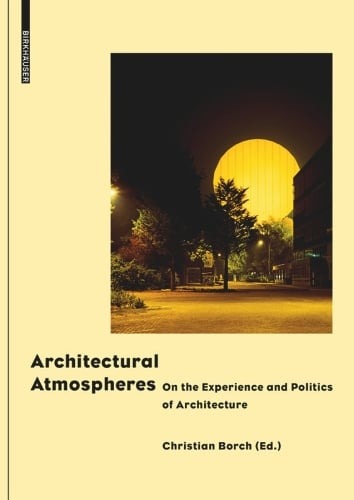
Addresses the growing awareness of the atmospheric dimension of architecture and provides a current, programmatic discussion of this topic. What possibilities does this approach open to architecture, what value does this knowledge have? Three essays and a conversation lead a cross-discipline discussion on the impact of architecture, and contribute to the debate first initiated by Peter Zumthor. The texts are accompanied by approximately forty color images that capture architectural moods in a variety of ways

This book provides a holistic, interdisciplinary overview of offshore wind energy, and is a must-read for advanced researchers. Topics, from the design and analysis of future turbines, to the decommissioning of wind farms, are covered. The scope of the work ranges from analytical, numerical and experimental advancements in structural and fluid mechanics, to novel developments in risk, safety & reliability engineering for offshore wind. The core objective of the current work is to make offshore wind energy more competitive, by improving the reliability, and operations and maintenance (O&M) strategies of wind turbines.
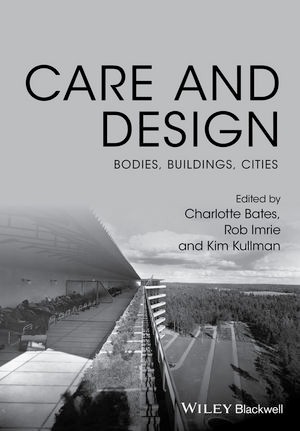
Connects the study of design with care, and explores how concepts of care may have relevance for the ways in which urban environments are designed. It explores how practices and spaces of care are sustained specifically in urban settings, thereby throwing light on an important arena of care that current work has rarely discussed in detail.

presents a comprehensive and systematic overview of the subject. It provides a working definition of building performance, and an in-depth discussion of the role building performance plays throughout the building life cycle. The book also explores the perspectives of various stakeholders, the functions of buildings, performance requirements, performance quantification (both predicted and measured), criteria for success, and the challenges of using performance analysis in practice. Assembles the current body of knowledge on building performance analysis in one unique resource Offers deep insights into the complexity of using building performance analysis throughout the entire building life cycle, including design, operation and management Contributes an emergent theory of building performance and its analysis
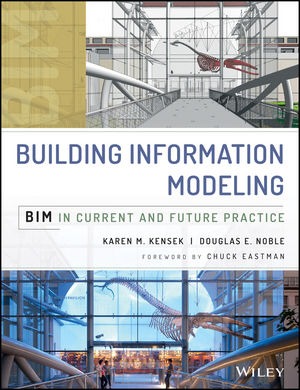
Thought leaders from universities and professional practice composed essays exploring BIM's potential to improve the products and processes of architectural design including the structure and content of the tools themselves. These authors provide insights for assessing the current practice and research directions of BIM and speculate about its future. Design Thinking and BIM BIM Analytics Comprehensive BIM Reasoning with BIM Professional BIM BIM Speculations

Provides a foundation for understanding the critical context of architecture and design in this region. It does this by: presenting a practical overview of architectural know-how in the Middle East, and its potential for cultivating a sense of place introducing local architectural vocabularies and styles, and how they can still be reactivated in contemporary design exploring the cultural and contextual meaning of forms as references that may influence contemporary architecture discussing important discourses and trends in architecture that allow a rethinking of the current global/local dichotomy.

This book teaches you how to design a building that will perform as well as you intend. Integrate appropriate detailing into your designs Learn the latest in materials, assemblies, and construction methods Incorporate sustainable design principles and current building codes Design buildings that perform well, age gracefully, and look great
Image registration is an emerging topic in image processing with many applications in medical imaging, picture and movie processing. The classical problem of image registration is concerned with ?nding an appropriate transformation between two data sets. This fuzzy de?nition of registration requires a mathematical modeling and in particular a mathematical speci?cation of the terms appropriate transformations and correlation between data sets. Depending on the type of application, typically Euler, rigid, plastic, elastic deformations are considered. The variety of similarity p measures ranges from a simpleL distance between the pixel values of the data to mutual information or entropy distances. This goal of this book is to highlight by some experts in industry and medicine relevant and emerging image registration applications and to show new emerging mathematical technologies in these areas. Currently, many registration application are solved based on variational prin- ple requiring sophisticated analysis, such as calculus of variations and the theory of partial differential equations, to name but a few. Due to the numerical compl- ity of registration problems ef?cient numerical realization are required. Concepts like multi-level solver for partial differential equations, non-convex optimization, and so on play an important role. Mathematical and numerical issues in the area of registration are discussed by some of the experts in this volume.
Mathematics needs Sustainable Development. When science was gradually reinvented in European medieval societies, it was legitimised as contributing to the disclosure of God’s divine creation. The conflicts that emerged became well known as a result of the clash between Galileo and the Church. Science found a new legitimacy through recognition that it was a powerful force against superstition. In the Enlightenment the argument was pushed forward by attributing Progress to the advancement of science: science could produce a better world by promoting rationality. In our modern society, science has become intimately linked to technology. Science for its own sake unfortunately rarely has positive outcomes in terms of research grant applications. Meanwhile, science and technology, and the progress they are supposed to produce, meet with wide scale scepticism. We all know of the current global problems: climate change, resource depletion, a thinning ozone layer, space debris, declining biodiversity, malnutrition, dying ecosystems, global inequity, and the risk of unprecedented nuclear wars

Proposing a wide range of mathematical models that are currently used in life sciences may be regarded as a challenge, and that is precisely the challenge that this book takes up. Of course this panoramic study does not claim to offer a detailed and exhaustive view of the many interactions between mathematical models and life sciences. This textbook provides a general overview of realistic mathematical models in life sciences, considering both deterministic and stochastic models and covering dynamical systems, game theory, stochastic processes and statistical methods. Each mathematical model is explained and illustrated individually with an appropriate biological example. Finally three appendices on ordinary differential equations, evolution equations, and probability are added to make it possible to read this book independently of other literature.

Based on lecture notes of two summer schools with a mixed audience from mathematical sciences, epidemiology and public health, this volume offers a comprehensive introduction to basic ideas and techniques in modeling infectious diseases, for the comparison of strategies to plan for an anticipated epidemic or pandemic, and to deal with a disease outbreak in real time. It covers detailed case studies for diseases including pandemic influenza, West Nile virus, and childhood diseases. Models for other diseases including Severe Acute Respiratory Syndrome, fox rabies, and sexually transmitted infections are included as applications. Its chapters are coherent and complementary independent units. In order to accustom students to look at the current literature and to experience different perspectives, no attempt has been made to achieve united writing style or unified notation.

Daraa Highway - Ghabagheb - Syria
+963-15 2050 - 15 860 380 /1/2/3 - 11 662 3900