



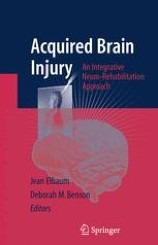
Acquired Brain Injury : An Integrative Neuro-Rehabilitation Approach
Regardless of etiology, such as accident, tumor, stroke or assault, acquired brain injury presents numerous challenges for survivors, caregivers and treating professionals. Interdisciplinary and integrated evaluations, treatment, and management can mean the difference between successful recovery and unfortunate outcomes. The first book to present a comprehensive team approach to rehabilitation of ABI survivors, Acquired Brain Injury gives medical and clinical specialists a deeper understanding of not only each others' roles, but also their complementary functions.
Related Books
Logischer empirismus, lebensreform und die deutsche jugendbewegung : Logical empiricism, life reform, and the German Youth Movement
Investigate the roots of Logical Empiricism in the context of the Life Reform and the German Youth Movements. Rudolf Carnap and Hans Reichenbach are the key protagonists; they both belonged to the German Youth Movement and developed their early philosophical views in this setting. By combining scholarly essays with unpublished and hard to access manuscripts, letters, and articles, this volume recasts our understanding of the early years of Logical Empiricism
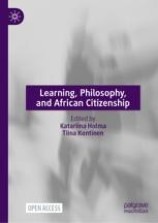
Learning, philosophy, and African citizenship
This book discusses and addresses the compelling questions concerning the ideals of citizenship, the processes of learning to fulfill these ideals, and possibilities of education in fostering citizenship. Rather than advocating for one framework, the authors demonstrate the continuously contested nature of the concept of citizenship as theoretically discussed and practically experienced. The monograph combines, in an unconventional way, selected philosophical accounts and everyday experiences from certain locations in Tanzania and Uganda.
Learning to Diagnose with Simulations : Examples from Teacher Education and Medical Education
Presents 8 novel approaches to measure and improve diagnostic competences with simulation. The book compares the effects of interventions on these diagnostic competences in both teacher and medical education. It includes analyses showing that important aspects of diagnostic competences and effects of instructional interventions aiming to facilitate them are comparable for teachers and doctors.
Knowledge and Civil Society
Focuses on the role of civil society in the creation, dissemination, and interpretation of knowledge in geographical contexts. It offers original, interdisciplinary and counterintuitive perspectives on civil society. The book includes reflections on civil and uncivil society, the role of civil society as a change agent, and on civil society perspectives of undone science. Conceptual approaches go beyond the tripartite division of public, private and civic sectors to propose new frameworks of civic networks and philanthropic fields, which take an inclusive view of the connectivity of civic agency across sectors.
