



Page 1
Page 1

Drugs Affecting Growth of Tumours
During recent years the field of effective anticancer agents has substantially increased. The use of chemotherapy has been accepted as a standard therapy for an expanding number of tumour types and stages, while many new agents are being investigated when standard therapy is lacking or failing. Apart from new targets for anticancer agents, attention is also focused on improving efficacy and tolerability of existing compounds. This topical volume provides an up-to-date overview of clinically relevant data on anticancer agents, and is not only intended for those working as a medical doctor with cancer patients, but also for medical researchers and students. The different classes of anticancer drugs are described by international authorities on the various topics.
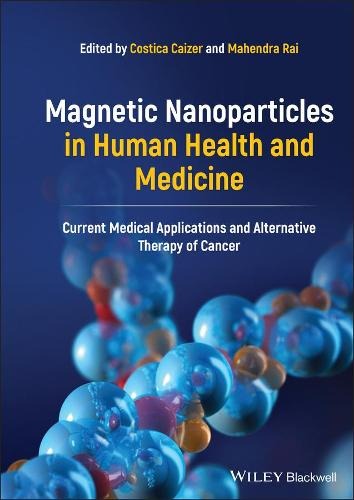
Magnetic nanoparticles in human health and medicine : Current medical applications and alternative therapy of cancer
Progress in improving diagnosis by magnetic resonance imaging (MRI) and using non-invasive and non-toxic magnetic nanoparticles for targeted drug delivery. Focusing on cancer diagnosis and therapy, the book covers both fundamental principles and advanced theoretical and experimental research on the magnetic properties, biocompatibilization, biofunctionalization, and application of magnetic nanoparticles in nanobiotechnology and nanomedicine.

Cancer immunotherapy
Defining Cancer as a disease in which some of the body's cells grow uncontrollably and spread to other parts of the body, making it an enormous medical and economic burden accounting for 9.6 million deaths in 2018. Cancer treatments were being introduced for a long time. The development of specific therapies to treat cancer really depends on the continued discovery of the molecular changes that lead to the malignant progression of human cancers. More and more drugs are being developed to block cancer pathways that lead to impaired growth and survival of cancer cells. In this dissertation, the concept of cellular and immunotherapy of cancer will be discussed briefly, taking into considerations the mechanisms of action, the advantages, challenges and drawbacks of the different types of monoclonal antibodies and CAR T-Cell therapy.
