Refine Results
Sort By
From
To



Faculties
Campus Facilities and Online Services

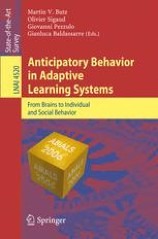
Anticipatory behavior in adaptive learning systems is steadily gaining the - terest of scientists, although many researchers still do not explicitly consider the actual anticipatory capabilities of their systems.The introductory chapter of this volume therefore does not only provide an overview of the contributions included in this volume but also proposes a taxonomy of how anticipatory mechanisms can improve adaptive behavior and learning in cognitive systems. During the workshop it became clear that ant- ipations are involved in various cognitive processes that range from individual anticipatory mechanisms to social anticipatory behavior.
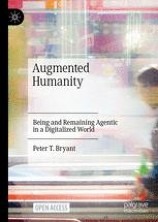
This book will examine the implications of digitalization for the understanding of humanity, conceived as a community of intelligent agency. It addresses important topics across a range of social and behavioral theories and identifies a range of novel mechanisms and their social behavioral effects. Across the book, the author highlights the expansion of intelligent processing capability brought about by digitalization and the challenges this exposes for integrating artificial and human capabilities
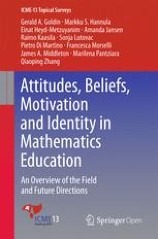
Records the state of the art in research on mathematics-related affect. It discusses the concepts and theories of mathematics-related affect along the lines of three dimensions. The first dimension identifies three broad categories of affect: motivation, emotions, and beliefs. The book contains one chapter on motivation, including discussions on how emotions and beliefs relate to motivation. There are two chapters that focus on beliefs and a chapter on attitude which cross-cuts through all these categories. The second dimension covers a rapidly fluctuating state to a more stable trait. All chapters in the book focus on trait-type affect and the chapter on motivation discusses both these dimensions. The third dimension regards the three main levels of theorizing: physiological (embodied), psychological (individual) and social. All chapters reflect that mathematics-related affect has mainly been studied using psychological
