


Refine Results
Sort By
From
To

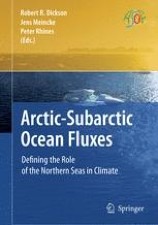
The two-way oceanic exchanges that connect the Arctic and Atlantic oceans through subarctic seas are of fundamental importance to climate. Change may certainly be imposed on the Arctic Ocean from subarctic seas, including a changing poleward ocean heat flux that is central to determining the present state and future fate of the perennial sea-ice. And the signal of Arctic change is expected to have its major climatic impact by reaching south through subarctic seas, either side of Greenland, to modulate the Atlantic thermohaline ‘conveyor’. Developing the predictive skills of climate models is seen to be the most direct way of extending the ability of society to mitigate for or adapt to 'global change' and is the main justification for continuing an intense observational effort in these waters. As records have lengthened, they have shown that important aspects of oceanic exchange through subarctic seas are currently at a long-term extreme state, providing further motivation for their study.
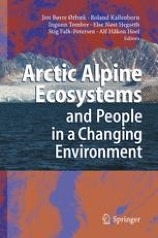
This book addresses the significant environmental changes experienced by high latitude and high altitude ecosystems at the beginning of the 21st c- tury. Increased temperatures and precipitation, reduction in sea ice and glacier ice, the increased levels of UV-radiation and the long-range tra- ported contaminants in arctic and alpine regions are stress factors that challenge terrestrial and aquatic ecosystems. The large natural variation in the physical parameters of these extreme environments is a key factor in structuring the biodiversity and biotic productivity, and the effect of the new stress factors can be critical for the population structures and the - teraction between species. These changes may also have socio-economic effects if the changes affect the bio-production, which form the basis for the marine and terrestrial food chains. The book is uniquely multidisciplinary and provides examples of va- ous aspects of contemporary environmental change in arctic and alpine - gions. The 21 chapters of the book are organised under the fields of •Climate change and ecosystem response, •Long range transport of poll- ants and ecological impacts, and •UV radiation and biological effects, each also including aspects of the •Socio-economic effects of environmental change. The introductory chapter presents and explains the internal c- nection and integration of all chapters.

At a time when the polar regions are undergoing rapid and unprecedented change, understanding exchanges of momentum, heat and salt at the ice-ocean interface is critical for realistically predicting the future state of sea ice. By offering a measurement platform largely unaffected by surface waves, drifting sea ice provides a unique laboratory for studying aspects of geophysical boundary layer flows that are extremely difficult to measure elsewhere. This book draws on both extensive observations and theoretical principles to develop a concise description of the impact of stress, rotation, and buoyancy on the turbulence scales that control exchanges between the atmosphere and underlying ocean when sea ice is present. Several interesting and unique observational data sets are used to illustrate different aspects of ice-ocean interaction ranging from the impact of salt on melting in the Greenland Sea marginal ice zone, to how nonlinearities in the equation of state for seawater affect mixing in the Weddell Sea.

Daraa Highway - Ghabagheb - Syria
+963-15 2050 - 15 860 380 /1/2/3 - 11 662 3900