



Page 1
Page 1

Congenital torch infections : torch panel
TORCH is a group of infections that can be passed from the pregnant mother to her fetus through the placenta. TORCH, includes Toxoplasmosis, Other (syphilis, varicella-zoster, parvovirus B19, Hepatitis B), Rubella, Cytomegalovirus (CMV), and Herpes infections are some of the most common infections associated with congenital anomalies. Most of the TORCH infections have serious fetal consequences and there has no impact on fetal outcome. In the present article, we wanted to discuss about the causative agents/organism, mode of infection, symptoms, treatment, vaccination, available molecular biological techniques and public awareness regarding this infection, Our objective in this project is to assess the awareness of and knowledge about mother-to-child infections and prevention

Congenital infections : Toxoplasmosis and rubella
Torch syndrome is caused by a uterine infection with one of the factors that cause Torch syndrome, which disrupts the development of the fetus. Torch syndrome can be prevented by treating the infected pregnant woman, and thus preventing transmission of the infection to the fetus. And some of the factors that cause Torch Syndrome can give the mother permanent immunity, preventing the arrival of the disease and thus fetal malformations. They include a group of symptoms caused by a congenital infection such as toxoplasmosis, rubella, CMV and herpes, or due to other organisms such as syphilis, small viruses, and varicella zoster virus. The Toxoplasma parasite and the rubella virus can provide lasting immunity if the mother was infected before pregnancy in both or if she was vaccinated before pregnancy in Rubella.
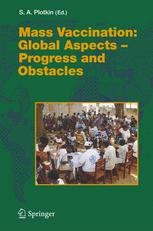
Mass Vaccination : Global Aspects - Progress and Obstacles
Mass immunization is the blitzkrieg of vaccination practice. It serves to rapidly protect populations, both because of the high coverage achieved and because of the herd immunity thereby induced. However, as in war, mass immunization campaigns must be conducted intelligently, with careful strategy and strong attention to logistics of supply and deployment. If conducted badly, mass immunization may fail or even be counter-productive. In this volume, some of the most successful practitioners of mass im- nization tell us about its art and science. David Heymann and Bruce Aylward of WHO begin the book with a theoretical and practical overview of mass immunization. Michael Lane, who participated in the successful effort to eradicate smallpox relates how this was done using mass vaccination and other strategies. Application of mass immunization by the US military is c- ered by John Grabenstein and Remington Nevin, who have a large experience in these matters. Karen Noakes and David Salisbury recount the striking s- cesses of mass immunization in the United Kingdom. The global control of the clostridia that produce diphtheria toxin is described by Charles Vitek. Hepa- tis A is decreasing dramatically under the impact of large-scale vaccination, as Francis André illustrates. The French experience with Hepatitis B vac- nation has been mixed, and François Denis and Daniel Levy-Bruhl explain the circumstances. In?uenza vaccination is an annual example of large-scale campaigns, the complexity of which is recounted by Benjamin Schwartz and Pascale Wortley.
Common Chinese materia medica ; Vol.7
Describes 247 species of 9 families of medicinal plants, which are commonly used in Chinese medicine. The most important species are Adina rubella, Gardenia jasminoides, Hedyotis diffusa, Morinda officinalis, Rubia cordifolia, Uncaria hirsuta, Uncaria macrophylla, Uncaria rhynchophylla, Uncaria sessilifructus, Uncaria sinensis of Rubiaceae; Lonicera confusa, Lonicera hypoglauca, Lonicera macranthoides, Lonicera japonica of Caprifoliaceae; Patrinia scabiosaefolia, Patrinia villosa, Nardostachys jatamansi of Valerianaceae; Dipsacus asperoides of Dipsacaceae; Arctium lappa, Artemisia annua, Artemisia argyi, Artemisia capillaris, Artemisia scoparia, Atractylodes lancea, Atractylodes macrocephala, Dendranthema indicum, Dendranthema morifolium, Eupatorium chinense, Eupatorium fortunei, Inula helenium, Saussurea costus, Saussurea involucrata, Senecio scandens, Serratula chinensis, Siegesbeckia orientalis, Solidago decurrens, Taraxacum mongolicum, Tussilago farfara、Xanthium sibiricum of Compositae; Gentiana crassicaulis, Gentiana manshurica, Gentiana rigescens, Gentiana scabra, Swertia pseudochinensis of Valerianaceae; Lysimachia christinae of Primulaceae and Plantago asiatica of Plantaginaceae.
