



Page 1
Page 1

The Environmental Movement in Ireland
Collective responses to Ireland’s dramatic transformation from a primarily agrarian and rural society to an industrialised economy obsessed by rapid growth and development occurred in two phases: Phase One took place between the "No Nukes" protests of the late 1970’s when campaigns targeted multinational plants or infrastructural projects perceived as a pollution threat during years of economic stagnation. Phase Two occurred after economic buoyancy was achieved, as the demands of rapid growth threatened communities, the environment and Irish heritage in the face of major infrastructural projects such as roads, incinerators and gas pipelines.

Protest Movements in Asylum and Deportation
Deals with contestations “from below” of legal policies and implementation practices in asylum and deportation. Consequently, it covers three types of mobilization: solidarity protests against the deportation of refused asylum seekers, refugee activism campaigning for residence rights and inclusion, and restrictive protests against the reception of asylum seekers. By applying both a longitudinal analysis of protest events and a series of in-depth case studies in three immigration countries, this edited volume provides comparative insights into these three types of movement in Austria, Germany, and Switzerland over a time span of twenty-five years. Embedded in concepts of political change, limited state sovereignty, and migration control, the findings shed light on actors, repertoires, and the effects of protest activities. The contributions illustrate how local contexts, national political settings, issue specifics, and social ties lead to distinctly different forms of protest emergence, dynamics, and strategies.

Feminist and LGBTI+ activism across Russia, Scandinavia and Turkey : Transnationalizing spaces of resistance
What do struggles for women’s and LGBTI+ rights in Russia, Turkey and the Scandinavian countries have in common? And what can actors who struggle for rights and justice in these contexts learn from each other? Based on a multisited ethnography of feminist and LGBTI+ activisms across Russia, Turkey and the Scandinavian countries, this Open Access book explores transnational struggles on various levels, from the micro-scale of the everyday to large-scale, spectacular events. Drawing on ethnographic insights and encounters from various sites, this book conceptualizes resistance as situated in the grey zone between barely perceptible, even hidden or covert, forms of mundane activist practices and highly visible street protests, gathering large crowds. Taking the reader beyond the dichotomies of visible/invisible and public/private, this book advances new understandings of resistance, solidarity, and activism in transnationalizing feminist and queer struggles, illustrated by rich ethnographic case studies from Russia, Scandinavia and Turkey.
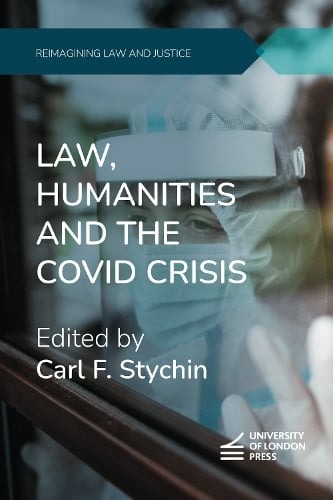
Law, Humanities and the COVID Crisis
Seeks to address the immediacy of COVID-19 by focusing on the implications of the virus in a wider interdisciplinary context Law, Humanities and the COVID Crisis</i> sets out a framework for understanding the COVID-19 virus beyond its epidemiological constraints, asking us to question the very definition of what it means to be human. Researchers from around the world offer their critical reflections on the past, present, and future of this period of sociocultural upheaval and the tremendous suffering that has laid bare fundamental imbalances in our society.
