



Page 1
Page 1

Models, Methods and Tools for Product Service Design : The Manutelligence Project
This book summarizes research being pursued within the Manutelligence project, the goal of which is to help enterprises develop smart, social and flexible products with high value added services. Manutelligence has improved Product and Service Design by developing suitable models and methods, and connecting them through a modular, collaborative and secure ICT Platform. The use of real data collected in real time by Internet of Things (IoT) technologies underpins the design of product-service systems and makes it possible to monitor them throughout their life cycle. Available data allows costs and sustainability issues to be more accurately measured and simulated in the form of Life Cycle Cost (LCC) and Life Cycle Assessment (LCA). Analysing data from IoT systems and sharing LCC and LCA information via the ICT Platform can help to accelerate the design of product-service systems, reduce costs and better understand customer needs. Industrial partners involved in Manutelligence provide a clear overview of the project's outcomes, and demonstrate how its technological solutions can be used to improve the design of product-service systems and the management of product-service life cycles.

Internal Research & Development Markets
In times of global markets, increasing competition and short product life cycles the effective and efficient management of industrial research and development (R&D) activities is of central importance for companies as well as for the whole economy. Traditionally the resources for R&D projects are allocated via planning- and budgeting procedures, evaluation methods and hierarchical decision-committees. This book presents resource allocation via internal markets as an alternative to such hierarchical decision procedures.
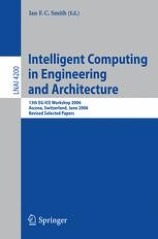
Intelligent Computing in Engineering and Architecture ; 13th EG-ICE Workshop 2006, Ascona, Switzerland, June 25-30, 2006, Revised Selected Papers
Providing computer support for tasks in civil engineering and architecture is hard. Projects can be complex, long and costly. Firms that contribute to design, construction and maintenance are often worth less than the value of their projects. Everyone in the field is justifiably risk adverse. Contextual variables have a strong influence making generalization difficult. The product life cycle may exceed one hundred years and functional requirements may evolve during the service life. It is therefore no wonder that practitioners in this area have been so reluctant to adopt advanced computing systems. After decades of research and industrial pilot projects, advanced computing s- tems are now being recognized by many leading practitioners to be strategically - portant for the future profitability of firms involved in engineering and architecture. Engineers and architects with advanced computing knowledge are hired quickly in the market place. Closer collaboration between research and practice is leading to more comprehensive validation processes for new research ideas. This is feeding devel- ment of more useful systems, thus accelerating progress. These are exciting times. th This volume contains papers that were presented at the 13 Workshop of the Eu- pean Group for Intelligent Computing in Engineering. Over five days, 70 participants from around the world listened to 59 paper presentations in a single session format.

Innovation in Life Cycle Engineering and Sustainable Development
Business models, which aims at determining how efficient can be a life cycle strategy from different point of view (customer, policy, environment, economics,…). End of life strategies, presenting recent approaches and technological solutions for end-of life treatments. Product development for sustainability, which aims at showing how designers integrate environmental conside- tions to improve their solutions. Product life cycle management, dealing with methods and tools to support life cycle considerations.

Effective entrepreneurial management : Strategy, planning, risk management, and organization
Provides a comprehensive overview of the essential issues in effective entrepreneurial management. It first introduces readers to the fundamentals of entrepreneurial management, the nature of entrepreneurial managers and business planning, before exploring the specific topics of creativity and innovation, risk management, entrepreneurial marketing and organization as well as financing. The authors then move to contemporary topics such as entrepreneurial growth strategies, e-commerce challenges, ethical and socially responsible entrepreneurial management, franchising, and managing entrepreneurial family ventures.

Dynamic Inventory Management in Reverse Logistics
The integration of product recovery into regular production processes enables new opportunities for cost savings. In case of a dynamic planning situation, for instance when dealing with seasonality or the product life cycle, new motives for keeping stock arise.

Collaborative Engineering: Theory and Practice
Collaborative Engineering: Theory and Practice offers insights into the methods and techniques involved in implementing a systematic approach to the integrated, concurrent design of products and related processes, including manufacturing, product service and support. The approach discussed here will help developers consider all elements of the product life cycle from conception through disposal, including quality, cost, schedule, and user requirements.

Managing product life cycle in a supply Chain Context : A prescription based on empirical research
The aim of this book is to provide a better understanding with as to how to coordinate and improve decisions about product life cycle, process and supply chain design to improve new product development.

Career options in the pharmaceutical and biomedical industry : An insider’s guide
Divided into five parts: Part 1 provides an academic perspective that focuses on the specific preparation required in the final years of study to embark on a successful career in the pharmaceutical and biomedical industries. In Part 2, industry experts discuss employment possibilities all along the drug or product life cycle,from discovery research and development to commercialisation. Part 3 follows, highlighting opportunities in support functions such as regulatory affairs or quality assurance. Part 4 focuses on additional opportunities in the wider biomedical sector, while Part 5 contains practical tips and training opportunities for entering the pharmaceutical and biomedical industries. In the epilogue, the authors reflect on this fascinating field and its career prospects.
