



Page 1
Page 1

Textbook of Personalized Medicine
This book is for personalized medicine as a prescription of specific treatments and therapeutics best suited for an individual and considersgenetic as well as environmental factors that influence responses to therapy. Best approaches are described for integration of all available technologies for optimizing the therapy of individual patients. This edition covers the latest advances in personalized medicine and several chapters are devoted to various specialties, particulary cancer which is the largest area of application. The book discusses the development of personalized medicine and various playersin it such as companies, academic institutions, the government, and the public as the consumer of healthcare. Additionally, the roles of bioinformatics, electronic health records, and digital technologies for personalized medicine are discussed.

Target Cancer Therapy
Cancer is known as abnormal growth of cells due to genetic mutations associated with other factors such as smocking, overweight, physical inactivity and changing reproductive pattern. Each mutation drives a wave of cellular multiplication associated with gradual increases in tumor size, disorganization and malignancy. Cancer treatment are invasive, painful, expensive and often creating long term negative side effect. The most common cancer treatment are chemotherapy, radiation therapy, surgery, hormone therapy, stem cell transplant and the modest one is targeted cancer therapy. Target cancer therapies are drugs or other substances that block the growth and spread of cancer by interfering with specific molecules that are involved in the growth, progression and spread of cancer. Targeted therapies are currently focus of much anticancer drug development, they are cornerstone of precision medicine, a form of medicine that uses information about person’s genes and proteins to prevent, diagnose and treat disease.

Semantic Web for Effective Healthcare Systems
Summarizes the trends and current research advances in web semantics, delineating the existing tools, techniques, methodologies, and research solutions. Analyzes the current status on how the semantic web is used to solve health data integration and interoperability problems, and how it provides advanced data linking capabilities that can improve search and retrieval of medical data. Chapters analyze the tools and approaches to semantic health data analysis and knowledge discovery. The book discusses the role of semantic technologies in extracting and transforming healthcare data before storing it in repositories. It also discusses different approaches for integrating heterogeneous healthcare data. This book offers: The first of its kind and highlights only the ontology driven information retrieval mechanisms and techniques being applied to healthcare as well as clinical information systems ; Presents a comprehensive examination of the emerging research in areas of the semantic web ; Discusses studies on new research areas including ontological engineering, semantic annotation and semantic sentiment analysis ; Helps readers understand key concepts in semantic web applications for the biomedical engineering and healthcare fields ; Includes coverage of key application areas of the semantic web.

Personalized medicine
The introduction of personalized medicine (PM) has been a milestone in the history of medical therapy, because it has revolutionized the previous approach of treating the disease with that of treating the patient. It is known today that diseases can occur in different genetic variants, making specific treatments of proven efficacy necessary for a given endotype. There is a growing attention towards personalized medicine. This is led by a fundamental shift from the ‘one size fits all’.. (Every year in the USA 2 million people die due to adverse drug effects, Drug efficacy is only in 60 % of the population - Other 40 % have poor drug effects or no effect at all ) paradigm for treatment of patients with conditions or predisposition to diseases, to one that embraces novel approaches, such as tailored target therapies, to achieve the best possible outcomes.

Intelligent drugs : How AI is transforming healthcare
The progress of biotechnologies and artificial intelligence allowed the development of vaccines in less than a year, thus saving millions of human lives and preserving the global economy. The emergence of intelligent drugs is highlighted, with the promise of ultra-targeted, more effective, and safer treatments against a wide range of diseases. Personalized medicine then becomes realistic, with computer-designed drugs, perfectly adapted to each individual, tested on virtual patients before their real use. In the near future, thanks to AI, new drugs will improve physical performance, stimulate cognitive abilities, prevent diseases, and slow down aging.

Impact of drug-microbiome interactions on drug response
Explains the mechanisms of drug-microbiome interactions, as well as the role of multiomic approaches, including metagenomics, metabolomics, and 16S rRNA sequencing to assess drug response variability. Findings suggest that integrating microbiome profiling into precision medicine could enhance personalized drug therapy, minimize adverse effects and optimize treatment outcomes.

High performance computing for drug discovery and biomedicine
Explores the application of high-performance computing (HPC) technologies to computational drug discovery (CDD) and biomedicine. Collects CDD approaches that, together with HPC, can revolutionize and automate drug discovery process, such as knowledge graphs, natural language processing (NLP), Bayesian optimization, automated virtual screening platforms, alchemical free energy workflows, fragment-molecular orbitals (FMO), HPC-adapted molecular dynamic simulation (MD-HPC), and the potential of cloud computing for drug discovery. And delves into computational algorithms and workflows for biomedicine, featuring an HPC framework to assess drug-induced arrhythmic risk, digital patient applications relevant to the clinic, virtual human simulations, cellular and whole-body blood flow modeling for stroke treatments, prediction of the femoral bone strength from CT data, and many more subjects.

Drug target selection and validation
Focuses on the computational aspects of early drug discovery, drug target identification, and validation. It revises current classical paradigms in target and phenotypic-based drug design with still ingrained approximations and concepts and discusses the research in the new network approach concept that include kinetic selectivity and metabolic analysis. Many often-overlooked approximations and concepts in drug discovery are fully covered. Drug Target Selection and Validation includes both introductory sections and research-based sections to be of use to both students and research scientists in drug discovery, design, kinetics and metabolic analysis. Pharmaceutical scientists, pharmaceutics, drug developers, pharmacologists, biomedical researchers in computer science, medicinal chemists, and precision medicine developers benefit from the information provided. The book concludes with a chapter on chemical and structural databases.

Critical Issues in Head and Neck Oncology : Key Concepts from the Seventh THNO Meeting
This book discusses the most current issues in head and neck cancer with a focus on current trends such as biomarkers, precision medicine and immunotherapy. New approaches in the diagnosis such as liquid biopsies and imaging biomarkers to predict radiotherapy toxicity as well as approaches in the surgical management of head and neck cancers are discussed. The book discusses medical and surgical approaches in both primary, recurrent and metastatic disease and also covers approaches for rare head neck cancers

Critical issues in head and neck oncology : Key concepts from the eighth THNO meeting
Reviews the state-of-the-art knowledge with emphasis on multidisciplinary decision and management of head and neck cancer. The book provides significant detail on a wide range of topics including: the role of new targets for treatment, immunotherapy, resistance mechanisms, standardizing molecular profiling programs, and new methods to guide therapeutic approaches.

Cancer in the Arab World
Over the past few decades, the Arab world has witnessed a swift evolution in healthcare provision. Nonetheless, Arab countries have considerable variability in economic capabilities, resource allocation, and intellectual talent that inevitably reflect on access to modern cancer care and prevention. This book is authored by experts from the Arab world who provide vital information on cancer statistics and risk factors, available clinical care pathways and infrastructure, and prevention programs in their individual countries. The chapters also address specific challenges in each country and insights into future directions to achieve optimal care with conventional and novel diagnostics and therapies to keep up with the era of precision medicine.
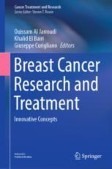
Breast cancer research and treatment : innovative concepts
Focuses on innovative treatment options for breast cancer, including surgery, radiotherapy, systemic therapy and of course immunotherapy that is changing outcomes in some aggressive breast cancer histotypes. Subsequent chapters also address the ongoing emerging research in the screening, diagnostics, and management of all subtypes of breast cancers. All current landscapes and future perspectives in each molecular subtype: luminal, HER2-positive, and triple-negative breast cancers are discussed within the different chapters. Breast cancer is still the most common cancer and cause of cancer deaths among women worldwide. The improvement of breast cancer outcome appears to be strictly related to the validation of precise biomarkers that enable us to better select personalized approaches in breast cancer management. The closing chapters deal with the challenges of low income countries of conducting research in the era of precision medicine for cancer. The book is edited and authored by leading experts in this field and will be of interest for clinicians and scientists alike
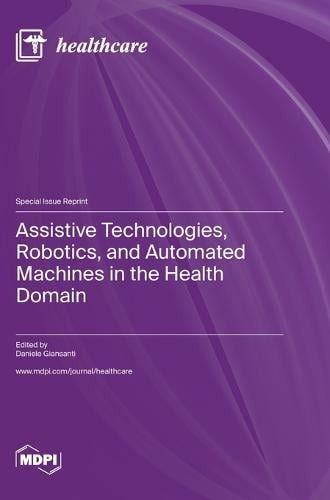
Assistive technologies, robotics, and automated machines in the health domain
The field of healthcare is constantly evolving and advancing with new technologies and innovations. Among these, assistive technologies, robotics, and automated machines are rapidly gaining ground as powerful tools to improve the quality of care and enhance patient outcomes. From wearable devices that monitor vital signs to surgical robots that assist in complex procedures, these technologies have the potential to revolutionize the way we deliver healthcare. The development and the integration of assistive technologies, care robots, and automated machines are strategic both as single components, when paired together, and when interconnected in the health domain.This reprint explores the latest developments in assistive technologies, robotics, and automated machines in the health domain, providing a comprehensive overview of their applications and potential impact. The reprint is for the benefit of healthcare professionals, researchers, engineers, and students interested in these rapidly evolving fields.
Artificial intelligence in drug design
Looks at applications of artificial intelligence (AI), machine learning (ML), and deep learning (DL) in drug design. The chapters in this book describe how AI/ML/DL approaches can be applied to accelerate and revolutionize traditional drug design approaches such as: structure- and ligand-based, augmented and multi-objective de novo drug design, SAR and big data analysis, prediction of binding/activity, ADMET, pharmacokinetics and drug-target residence time, precision medicine and selection of favorable chemical synthetic routes. How broadly are these approaches applied and where do they maximally impact productivity today and potentially in the near future.
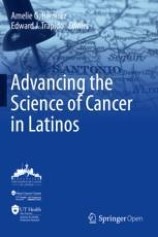
Advancing the Science of Cancer in Latinos
This book gives an overview of the sessions, panel discussions, and outcomes of the Advancing the Science of Cancer in Latinos conference, held in February 2018 in San Antonio, Texas, USA, and hosted by the Mays Cancer Center and the Institute for Health Promotion Research at UT Health San Antonio.
