



Page 1
Page 1

Natural product experiments in drug discovery
Explores a wide range of evidence-based complementary medicine and various bio-analytical techniques used to define botanical products. Collecting recent work and current developments in the field of contemporary phytomedicine as well as their future possibilities in human health care, the book includes unique contributions in the form of chapters on phytomedicine and screening biological activities explained with diverse hyphenated techniques, as well as issues related to herbal medications, such as efficacy, adulteration, safety, toxicity, regulations, and drug delivery. Written for the Springer Protocols Handbooks series, chapters feature advice from experts on how to best conduct future experiments. Extensive and practical, Natural Product Experiments in Drug Discovery serves as an ideal reference for students, professors, and researchers in universities, R&D institutes, pharmaceutical and herbal enterprises, and health organizations.

Nanotechnology applied To pharmaceutical technology
Focuses on devising innovative nanopharmaceutical products and solutions to treat such diseases as cancer, infections, eye diseases, and in tackling multi-drug resistance threats. Nanotechnology Applied to Pharmaceutical Technology consists of four sections that include coverage of biosynthesis of nanoparticles, nano-material based formulations and toxicity, and safety issues.

Messenger RNA therapeutics
Focuses on the fundamentals and applications of messenger RNA (mRNA)-based therapeutics and discusses the strengths and key challenges of this emerging class of drugs. In the past 30 years, extensive research and technological development in many areas have contributed to the emergence of in vitro transcribed mRNA as a therapeutic that has now reached clinical testing. Formulations that protect the mRNA from nucleases and accelerate its cellular uptake, combined with improvements to the mRNA molecules themselves, have been critical advancements for mRNAs to become viable therapeutics. Though once regarded as a serious impediment, the transient nature of mRNA technology is now considered a major advantage in making mRNA therapies safe and, ultimately, a potential game changer in the field of medicine. This new book in the RNA Technologies series provides a state-of-the-art overview on the emerging field of mRNA therapeutics covering essential strategies for formulation, delivery, and application. It also reviews the promising role in cancer immunotherapy, respiratory diseases, and chronic HBV infection and discusses RNA vaccines in light of the current COVID-19 pandemic. mRNA-based approaches have great potential to revolutionize molecular biology, cell biology, biomedical research, and medicine.

Medicinal plants : Bioprospecting and pharmacognosy
Touches on a diverse selection of topics related to medicinal plants. Chapters look at the use of medicinal plants in healthcare and disease management, such as to treat inflammation, anti-hyperglycemia, and obesity and as immunity boosters. The authors also address the conservation, maintenance, and sustainable utilization of medicinal plants along with postharvest management issues. Topics include consumption, supply chain, marketing, trade, and future directions of research. Some specific plants discussed include fennel, basil, clove, ginger, lavender, turmeric, ginsing, and asparagus in connection with their various therapeutic properties, including anti-rheumatic, anti-asthmatic, anti-diabetic, carminative, diuretic, fever-reducing, and hypotensive. Medicinal Plants: Bioprospecting and Pharmacognosy will prove informative for scientists and researchers in medicinal plants as well as for faculty and students, pharmaceutical researchers, and others.

Introduction to biologic and biosimilar product development and analysis
Gives a concise introduction to development and analysis of pharmaceutical biologics for those in the pharmaceutical industry who are switching focus from small molecules to biologics processing, analysis, and delivery. In order to maintain a limited focus, Introduction to Biologic and Biosimilar Product Development and Analysis, will deal only with peptides, proteins and monoclonal antibodies.

Handbook of pharmaceutical manufacturing formulations ; Vol.3 : Liquid products
An authoritative and practical guide to the art and science of formulating drugs for commercial manufacturing. With thoroughly revised and expanded content, this six-volume set compiles data from FDA new drug applications, patent applications, and other sources of generic and proprietary formulations to cover the broad spectrum of GMP formulations and issues in using these formulations in a commercial setting. A must-have collection for pharmaceutical manufacturers, educational institutions, and regulatory authorities, this is an excellent platform for drug companies to benchmark their products and for generic companies to formulate drugs coming off patent

Fundamentals of drug development
Discusses how to conduct pharmaceutical research and the context for how the industry fits into global healthcare. Holistically, the well-qualified author helps readers and students of drug development appreciate the time and expense of the process. Specifically, the work identifies the emerging trends shaping the future of drug development, along with important related topics like generic drugs, data sharing, and collaboration.

Essentials of pharmaceutical analysis
Provides detailed information on the background, basic principles, and components of techniques used for the analysis of pharmaceuticals and biopharmaceuticals. Focusing on those analytical techniques that are most frequently used for pharmaceuticals, it classifies them into three major sections and 19 chapters, each of which discusses a respective technique in detail. Chiefly intended for graduate students in the pharmaceutical sciences, the book will familiarize them with the components, working principles and practical applications of these indispensable analytical techniques.

Emerging drug delivery and biomedical engineering technologies : transforming therapy
Details the advances in drug discovery and delivery and the present need for emerging technologies. Throughout the text new micro and nanofabrication techniques are described, including methods such as electrohydrodynamic processes, additive manufacturing, and microfluidics, which have the potential to produce drug delivery systems that were not possible a few years ago. This book is of great use to both entry-level and experienced researchers in the field of emerging technologies for the manufacturing of drug delivery devices.

Drug delivery via nasal route
Over the past 10 years, the interest in intranasal drug delivery has increased. The objective of this research is to summarize recent developments on intranasal administration for local and systemic delivery, as well as for CNS indications. Nasal delivery offers many advantages over standard systemic delivery systems, nevertheless, there are still formulation limitations and side effects to be optimized. Intranasal drug delivery in the field of drug development is an interesting delivery route for the treatment of neurological disorders. Systemic approaches often fail to efficiently supply the CNS with drugs. This research describes the anatomical, histological and physiological basis and summarizes currently approved drugs for administration via intranasal delivery. Further, the research focuses on advantages and disadvantages of intranasal applied compounds and discusses formulation aspects that need to be considered for drug development.
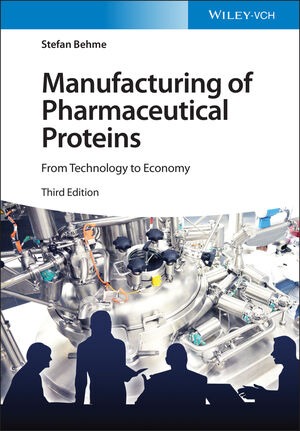
Manufacturing of Pharmaceutical Proteins: From Technology to Economy
Manufacturing of Pharmaceutical Proteins: From Technology to Economy, renowned chemical engineer Dr. Stefan Behme delivers a comprehensive text covering all aspects of biopharmaceutical manufacturing, including legal and regulatory considerations, production facility design, quality assurance, supply chain management, emerging market regulations, and cost control.

Click chemistry
In chemical synthesis, click chemistry is a class of simple atomic economy reactions commonly used to join two selected molecular entities. Click chemistry is not one specific reaction, but describes a method for generating products that follow examples in nature, which also generates substances by joining small modular units. In many applications, click interactions that join a biomolecule and a reporter molecule. Click chemistry is not limited to biological conditions: the concept of a 'click' reaction has been used in protein chemistry, pharmacokinetics, and many biomimetic applications. However, they have been made remarkably useful in the discovery, localization and qualification of biomolecules.
Biosimilars : Regulatory, clinical, and biopharmaceutical development
Provides a comprehensive overview of the biosimilar regulatory framework, the development process and clinical aspects for development of biosimilars. The development path of a biosimilar is just as unique as a development path of a new drug, tailored by the mechanism of action, the quality of the molecule, published information on the reference product, the current competitive environment, the target market and regulatory guidance, and most importantly, the emerging totality of evidence for the proposed biosimilar during development.
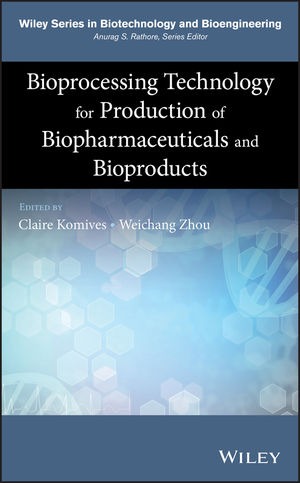
Bioprocessing Technology for Production of Biopharmaceuticals and Bioproducts
Written for industrial and academic researchers and development scientists in the life sciences industry, Bioprocessing Technology for Production of Biopharmaceuticals and Bioproducts is a guide to the tools, approaches, and useful developments in bioprocessing. This important guide: •Summarizes state-of-the-art bioprocessing methods and reviews applications in life science industries •Includes illustrative case studies that review six milestone bio-products •Discuses a wide selection of host strain types and disruptive bioprocess technologies

Aulton's pharmaceutics : The design and manufacture of medicines
A comprehensive textbook covering the design of dosage forms and all aspects of drug delivery systems. Pharmaceutics in its broadest sense is the 'art of the apothecary' or, in simple terms, pharmaceutical preparations. It remains a diverse subject in the pharmacy curriculum, encompassing design of drugs, their manufacture and the elimination of micro-organisms from the products.

Applied Physical Pharmacy
Presents an introduction to physical pharmacy. This book begins with a review of key biopharmaceutics concepts of drug liberation, absorption, distribution, metabolism, and excretion

Alginates in drug delivery
Alginates in Drug Delivery explores the vital precepts, basic and fundamental aspects of alginates in pharmaceutical sciences, biopharmacology, and in the biotechnology industry. The use of natural polymers in healthcare applications over synthetic polymers is becoming more prevalent due to natural polymers’ biocompatibility, biodegradability, economic extraction and ready availability. To fully utilize and harness the potential of alginates, this book presents a thorough understanding of the synthesis, purification, and characterization of alginates and their derivative. This book collects, in a single volume, all relevant information on alginates in health care, including recent advances in the field.
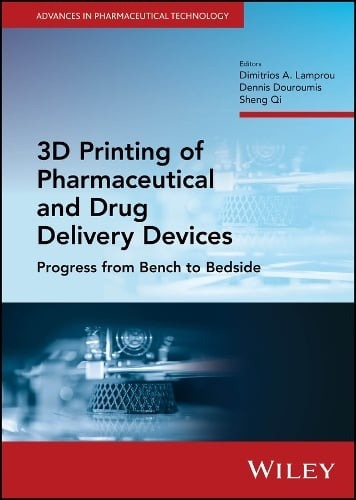
3D printing of pharmaceutical and drug delivery devices progress from bench to bedside
Discover the latest, fast-developing technology to help move towards more cost-effective, small-batch, decentralized manufacturing of personalized systems . 3D printing has revolutionized manufacturing. Its precision and flexibility have enabled the large-scale production of materials and devices too complex for conventional industrial manufacturing. This has been particularly revolutionary in the field of pharmaceutical production, where 3D printing is being integrated into the manufacture of both drugs and drug delivery devices. It has never been more important for industry professionals to understand this form of production.
