


Refine Results
Sort By
From
To


This book offers 19 detailed protocols on the use of induced mutations in crop breeding and functional genomics studies, which cover topics including chemical and physical mutagenesis, phenotypic screening methods, traditional TILLING and TILLING by sequencing, doubled haploidy, targeted genome editing, and low-cost methods for the molecular characterization of mutant plants that are suitable for laboratories in developing countries. The collection of protocols equips users with the techniques they need in order to start a program on mutation breeding or functional genomics using both forward and reverse-genetic approaches. Methods are provided for seed and vegetatively propagated crops (e.g. banana, barley, cassava, jatropha, rice) and can be adapted for use in other species.

Biogeography considers the distribution of biological units over a wide range of scales. The units range from genotypes, populations and species to families and higher taxa. Processes can be local, such as the isolation on islands due to sea-level fluctuations, or large-scale tectonic processes that separates continents and creates oceans. In all processes time is an important factor and by combining data on recent patterns with paleontological data the understanding of the distribution of extant taxa can be improved. This volume focuses on speciation due to isolation in island-like settings, and the evolution of large-scale diversity as the result of origination, maintenance and extinction.

For the past decade, there has been success in using conventional map-based strategies in identification and cloning of quantitative trait loci (QTL) in model plant species including tomato and Arabidopsis. These quantitative traits are generally the products of many loci with varying degrees of effect upon the observed phenotypes. Recently, a new approach to genetic mapping has emerged called association mapping. This new technique takes into account the thousands of genes to evaluate for QTL effect and is a more efficient approach that does not require generation of segregating populations/large numbers of progeny. As it can utilize all of the historic recombination events in a diverse population of individuals it can generate higher resolution genetic maps and, is needed to complement current map based cloning methods.
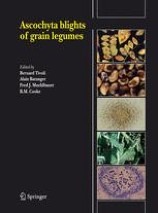
Ascochyta blights consistently affect large areas of grain legume production (pea, lentil, chickpea and faba bean) in all countries where they are cultivated. These diseases are capable of causing large yield losses under conducive environmental conditions. This book considers the state of the art by taking a comparative approach of Ascochyta blight diseases of cool season food and feed legumes. Topics considered are pathogen diversity, legume genetics and breeding, and integrated disease management.
Advances in bioinformatics and systems biology require improved computational methods for analyzing data, while progress in molecular biology is in turn influencing the development of computer science methods. This book introduces some key problems in bioinformatics, discusses the models used to formally describe these problems, and analyzes the algorithmic approaches used to solve them. After introducing the basics of molecular biology and algorithmics, Part I explains string algorithms and alignments; Part II details the field of physical mapping and DNA sequencing; and Part III examines the application of algorithmics to the analysis of biological data. Exciting application examples include predicting the spatial structure of proteins, and computing haplotypes from genotype data. This book describes topics in detail and presents formal models in a mathematically precise, yet intuitive manner, with many figures and chapter summaries, detailed derivations, and examples. It is well suited as an introduction into the field of bioinformatics, and will benefit students and lecturers in bioinformatics and algorithmics, while also offering practitioners an update on current research topics.

Daraa Highway - Ghabagheb - Syria
+963-15 2050 - 15 860 380 /1/2/3 - 11 662 3900