


Refine Results
Sort By
From
To

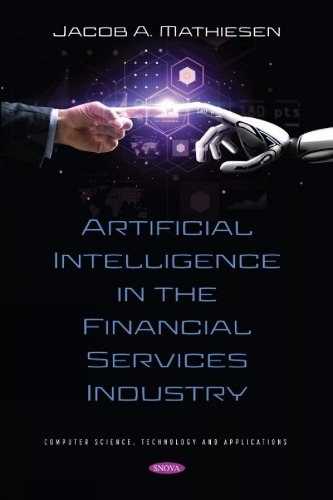
Today, the financial services sector is facing a period of rapid disruption and innovation, and artificial intelligence (AI) is at the heart of these changes. Artificial intelligence can be used to gather enormous amounts of data, detect abnormalities, and solve complex problems. Financial institutions are already experimenting extensively with AI strategies to enhance and streamline financial institutions, BSA and AML compliance, CRA requirements, fraud detection, and real estate valuations, all while reducing cost levels. This book looks at how artificial intelligence is affecting the financial services industry.

Blockchain technology is a powerful, cost-effective method for network security. Essentially, it is a decentralized ledger for storing all committed transactions in trustless environments by integrating several core technologies such as cryptographic hash, digital signature and distributed consensus mechanisms. Over the past few years, blockchain technology has been used in a variety of network interaction systems such as smart contracts, public services, Internet of Things (IoT), social networks, reputation systems and security and financial services. With its widespread adoption, there has been increased focus on utilizing blockchain technologies to address network security concerns and vulnerabilities as well as understanding real-world security implications.

This book addresses four standard business school subjects: microeconomics, macroeconomics, finance and information systems as they relate to trading, liquidity, and market structure. It provides a detailed examination of the impact of trading costs and other impediments of trading that the authors call “frictions”. It also presents an interactive simulation model of equity market trading, TraderEx, that enables students to implement trading decisions in different market scenarios and structures. Addressing these topics shines a bright light on how a real-world financial market operates, and the simulation provides students with an experiential learning opportunity that is informative and fun.

Do small developing economies, or SDEs, need a specific competition policy to create competitive markets? Against the backdrop of globalization, protectionist policies that promote state ownership and heavy regulation of key industries are proving increasingly ineffective for driving growth. Countries around the world are instituting reforms to promote competition and business creation, yet the economic and political concentration of power, feeble judicial systems, and the scarcity of human and financial resources pose special challenges to SDEs. Competition Policies in Emerging Economies features an in-depth analysis of two strategic industries — telecommunications and banking — in several Central American nations which sheds light on the dynamics of the transition to deregulation and trade liberalization. Examining the lessons learned from these experiences and presenting discussion of political, legal, economic, financial, cultural, and organizational issues, the book provides unique perspectives on competition policy and economic development.

This book tells the story of how Sweden is becoming a virtually cashless society. Its goal is to improve readers’ understanding of what is driving this transition, and of the factors that are fostering and hampering it. In doing so, the book covers the role of central banks, political factors, needs for innovation, and the stakeholders involved in developing a cashless ecosystem. Adopting a historical standpoint, and drawing on a unique dataset, it presents an academic perspective on Sweden’s leading role in this global trend. The global interest in the future of cash payments makes the Swedish case particularly interesting. As a country that is close to becoming a cashless economy, it offers a role model for many other countries to learn from - whether they want to stimulate or reduce the use of cash. This highly topical book will be of interest to politicians, researchers, businesses, financial service providers and payment service providers, as well as fintech start-ups, regulators and other authorities.
Blockchain technology and artificial intelligence (AI) have the potential to transform how the accounting and financial services industries engage with the business, stakeholder and consumer communities. Presenting a blend of technical analysis with current and future applications, this book provides professionals with an action plan to embrace and move forward with these new technologies in financial and accounting organizations.
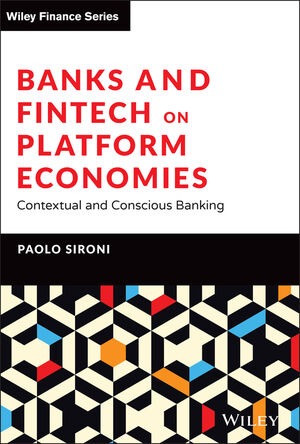
In Banks and Fintech on Platform Economies: Contextual and Conscious Banking, accomplished fintech professional and author Paolo Sironi delivers an insightful examination of how platform theory, born outside of financial services, will make its way inside banking and financial markets to radically transform the way firms do business.
Provides a tailored overview of what AI specifically means for financial services, a highly regulated yet also disrupted industry. it investigates the current state of AI applications in financial services today along with the state of funding and partnerships between tech and banking industries. it also examines the key pillars of responsible AI and the importance of keeping humans in the loop. the book takes a deep dive into the use cases in the financial services industry, the challenges and opportunities, and the fragmented regulatory landscape. how can we effectively assess risks, and balance innovation and customer centricity with trust in AI in financial services? can smaller organizations reap the benefits of the technology? how can institutions deploy AI responsibly and securely, and promote a fairer and more equitable future for more people?

Examines the corporate asset market and the mechanisms of asset sale transactions. The book then focuses on the theory of finance in asset sales (the efficiency and financing theory) and the extensive empirical literature now available. In light of recent and rapid technological and digital advances, the last section presents new perspectives on analyzing asset sales transactions. Chiefly intended as a primer for PhD students and academics, the book offers a road map of the empirical research landscape and suggests future research directions.
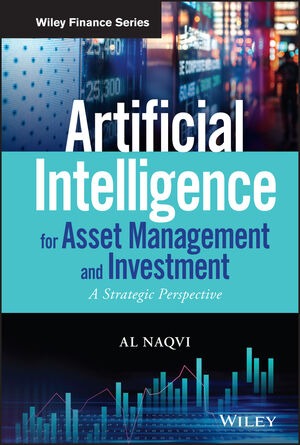
The rise of artificial intelligence is nothing short of a technological revolution. AI is poised to completely transform asset management and investment banking, yet its current application within the financial sector is limited and fragmented. Existing AI implementations tend to solve very narrow business issues, rather than serving as a powerful tech framework for next-generation finance. Artificial Intelligence for Asset Management and Investment provides a strategic viewpoint on how AI can be comprehensively integrated within investment finance, leading to evolved performance in compliance, management, customer service, and beyond.

Daraa Highway - Ghabagheb - Syria
+963-15 2050 - 15 860 380 /1/2/3 - 11 662 3900