



Page 1
Page 1

Natural Products Targeting Clinically Relevant Enzymes
Covers the full spectrum of clinically relevant enzymes that are known to be targeted by natural products. Key enzymes include acetylcholine esterase, angiotensin-I-converting enzyme, cyclooxygenase, dihydrofolate reductase, phospholipase A2, respiratory complexes, and many more. By connecting the diversity of medicinal natural product sources with their potential clinical applications, this volume serves as a companion for the medicinal chemist looking for innovative small molecule compounds as well as for pharmacologist interested in the clinical effects and mode of action of herbal and traditional medicines.

Medicinal spice and condiment crops
Spices are used in small quantities to add flavor, aroma, color, and texture in food preparation. However, spices and condiments have also been recognized as having medicinal value. They have been used traditionally as curative and preventive agents, the bioactive compounds obtained from these plants are used in herbal drug formulations in modern times.

Medical Applications of Colloids
This volume collects chapters dealing with significant topics in colloids and surfaces relevant to medical applications. The book will be of interest to scientists and practitioners in areas as diverse as medical diagnostics, drug formulations, X-ray photoelectron spectroscopy of biomaterials, and particle transport in human airways.

Introduction to Drug Disposition and Pharmacokinetics
The application of knowledge of drug disposition, and skills in pharmacokinetics, are crucial to the development of new drugs and to a better understanding of how to achieve maximum benefit from existing ones. The book takes the reader from basic concepts to a point where those who wish to will be able to perform pharmacokinetic calculations and be ready to read more advanced texts and research papers.

Integrated pharmaceutics : Applied preformulation, product design, and regulatory science
Provides a comprehensive introduction to the creation and manufacture of effective dosage forms for drug delivery. It presents its subject following the principles of physical pharmacy, product design, and drug regulations. This tripartite structure allows readers to move from theory to practice, beginning from a firm foundation ...
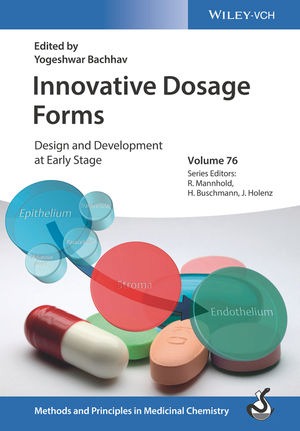
Innovative dosage forms : Design and development at early stage
Provides information that is essential for the drug development effort Presents the latest advances in the field and describes in detail innovative formulations, such as nanosuspensions, micelles, and cocrystals Describes current approaches in early pre-formulation to achieve the best in vivo results Addresses regulatory and safety aspects, which are key considerations for pharmaceutical companies Includes case studies from recent drug development programs to illustrate the practical challenges of preformulation design

In Vitro Drug Release Testing of Special Dosage Forms
Covers the in vitro release testing of: lipid based oral formulations; chewable oral drug products; injectables; drug eluting stents; inhalation products; transdermal formulations; topical formulations; vaginal and rectal delivery systems and ophthalmics. The book concludes with a look at regulatory aspects. Covers both oral and non-oral dosage forms Describes current regulatory conditions for in vitro drug release testing Features contributions from well respected global experts in dissolution testing

Fundamentals of drug delivery
A comprehensive guide to the current research, major challenges, and future prospects of controlled drug delivery systems. Provides comprehensive and up-to-date coverage of the essential principles and processes of modern controlled drug delivery systems. Featuring contributions by respected researchers, clinicians, and pharmaceutical industry professionals, this edited volume reviews the latest research in the field and addresses the many issues central to the development of effective, controlled drug delivery.

Ethnobotany : A phytochemical perspective
Explores the chemistry behind hundreds of plant medicines, dyes, fibers, flavors, poisons, insect repellants, and many other uses of botanicals. Bridging the gap between ethnobotany and chemistry, this book presents an introduction to botany, ethnobotany, and phytochemistry to clearly join these fields of study and highlight their importance in the discovery of botanical uses in modern industry and research. Part I. Ethnobotany, explores the history of plant exploration, current issues such as conservation and intellectual property rights, and a review of plant anatomy. An extensive section on plant taxonomy highlights particularly influential and economically important plants from across the plant kingdom. Part II. Phytochemistry, provides fundamentals of secondary metabolism, includes line drawings of biosynthetic pathways and chemical structures, and describes traditional and modern methods of plant extraction and analysis. The last section is devoted to the history of native plants and people and case studies on plants that changed the course of human history from five geographical regions: Africa, the Americas, Asia, Europe, and Ocean. Throughout the entire book, vivid color photographs bring science to life, capturing the essence of human botanical knowledge and the beauty of the plant kingdom.

Drug Selectivity : An Evolving Concept in Medicinal Chemistry
Provides a current overview and comprehensive compilation for medicinal chemists that discusses the effects of aiming for multiple targets on the entire drug development process. The result is a broad survey of current and future strategies for drug selectivity in medicinal chemistry with theoretical but also practical aspects. Different strategies are presented and evaluated, such as various design approaches, merged multiple ligands, discovery technologies and a broad range of successful examples of unselective drugs taken from all major disease areas. With its wide-ranging view of an emerging new paradigm in drug development, this handbook is of prime importance for every medicinal and pharmaceutical chemist.

Drug delivery systems using quantum computing
Drug delivery systems (DDS) are defined as methods by which drugs are delivered to desired tissues, organs, cells, and subcellular organs for drug release and absorption through a variety of drug carriers. By controlling the precise level and/or location of a given drug in the body, side effects are reduced, doses are lowered, and new therapies are possible. Nevertheless, there are still significant obstacles to delivering certain medications to particular cells. Drug delivery methods change pharmacokinetic, pharmacodynamic, and drug release patterns to enhance product efficacy and safety, as well as patient convenience and compliance.

Drug delivery aspects : Expectations and realities of multifunctional drug delivery systems ; Vol.4 : Expectations and realities of multifunctional drug delivery systems
Reviews additional features of drug delivery systems, along with the standard formulation development, like preclinical testing, conversion into solid dosage forms, roles of excipients and polymers used on stability and sterile processing. There is a focus on formulation engineering and related large scale (GMP) manufacturing, regulatory, and functional aspects of drug delivery systems. A detailed discussion on biologics and vaccines gives insights to readers on new developments in this direction.

Current Advances in Drug Delivery Through Fast Dissolving
Presents detailed information about FDDFs (Fast Dissolving/Disintegrating Dosage Forms) from their inception to recent developments. Readers will learn about the technical details of various FDDF manufacturing methods, formulation aspects, evaluation and methods to conduct clinical studies. The authors also give examples of marketed fast disintegrating/dissolving drug products in US, Europe, Japan, and India. This reference is ideal for pharmacology students at all levels seeking information about this specific form of drug delivery and formulation.
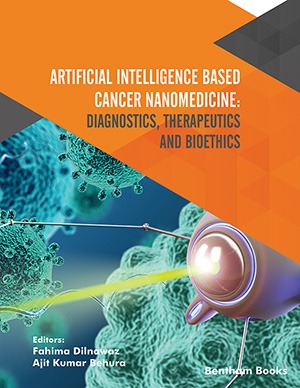
Artificial intelligence based cancer nanomedicine : Diagnostics, therapeutics and bioethics
Nanomedicine is evolving with novel drug formulations devised for multifunctional approaches towards diagnostics ad therapeutics. Nanomedicine-based drug therapy is normally explored at a fixed dose. The drug action is time-dependent, dose-dependent and patient-specific. To overcome challenges of nanomedicine testing, artificial intelligence (AI) serves as a helping tool for optimizing the drug and dose parameters. Real time conversions between these two features enables upgradation of patient data acquisition and improved design of nanomaterials. In this scenario, AI-based pattern analysis and algorithms models can greatly improve accuracy of diagnostics and therapeutics.
