



Page 1
Page 1

Design of residential tower in Swaida city
The project is a concrete design of residential tower located in Swaida city. Consisting of basement containing shelter, car parking, warehouses, guard room & service rooms such as boilers and pumps, ground floor containing four apartments, repeated eight floors each floor contains four apartments, ground tank & two upper tanks.

Design examples for high strength steel reinforced concrete columns : A Eurocode 4 approach
SRC column subjected to axial compression -- SRC column with normal strength material -- SRC column with high strength concrete -- SRC column with high strength steel -- SRC column with high strength concrete and steel -- SRC column subjected to combined compression and bending -- SRC column with normal strength material -- SRC column with high strength concrete -- SRC column with high strength steel -- SRC column

Concrete segmental bridges : Theory, design, and construction to AASHTO LRFD specifications
Presents comprehensive theory, design and key construction methods, with a simple design example based on the AASHTO LRFD Design Specifications for each of the main bridge types. It outlines design techniques and relationships between analytical methods, specifications, theory, design, construction and practice. It combines mathematics and engineering mechanics with the authors’ design and teaching experience.
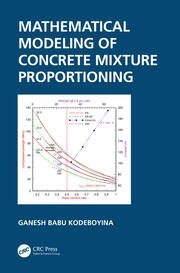
Mathematical Modeling of Concrete Mixture Proportioning
It puts together an understanding of the appropriate principles of ensuring performance and sustainability of concrete. Broadly subdivided into three parts, first part contains the fundamental aspects introducing the constituent materials, the concepts of concrete mixture designs and the mathematical formulations of the various parameters involved in these designs. The second part is dedicated to discussing approaches and recommendations of American, British and European bodies related to mathematical modelling. Lastly, it discusses perceptions and prescriptions towards both the performance assessment and insurance of the resulting concrete compositions.
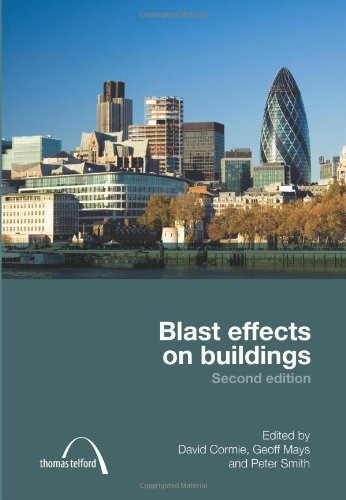
Blast effects on buildings
Provides the latest practical guidance on designing buildings to optimise their resilience to blast loading. Focused specifically on the design of commercial buildings, it is an indispensible guide to help engineers reduce the risks posed to building occupants and businesses from terrorist and other explosions. This book provides the engineer with a single and comprehensive source of reference for all the main elements of blast engineering design in modern practice. Industry-accepted methods for the design of glazing to resist blast loading are published for the first time, as well as a new chapter on hostile vehicle mitigation techniques. Guidance on structural steelwork and reinforced concrete design is extended and enhanced, supplemented with material on design in new materials such as steel-concrete-steel composites, this latter addition being published for the first time.
