


Refine Results
Sort By
From
To

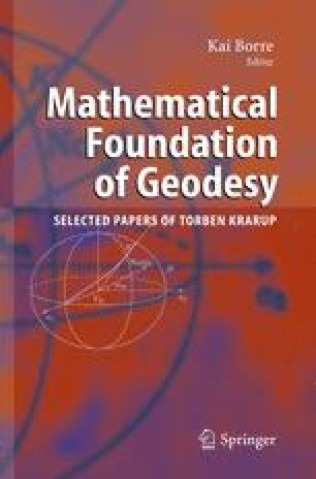
This volume contains selected papers by Torben Krarup, one of the most important geodesists of the 20th century. His writings are mathematically well founded and scientifically relevant. In this impressive collection of papers he demonstrates his rare innovative ability to present significant topics and concepts. Modern students of geodesy can learn a lot from his selection of mathematical tools for solving actual problems. The collection contains the famous booklet "A Contribution to the Mathematical Foundation of Physical Geodesy" from 1969, the unpublished "Molodenskij letters" from 1973, the final version of "Integrated Geodesy" from 1978, "Foundation of a Theory of Elasticity for Geodetic Networks" from 1974, as well as numerous trend setting papers on the theory of adjustment.
Among numerical methods applied in acoustics, the Finite Element Method (FEM) is normally favored for interior problems whereas the Boundary Element Method (BEM) is quite popular for exterior ones. That is why this valuable reference provides a complete survey of methods for computational acoustics, namely FEM and BEM. It demonstrates that both methods can be effectively used in the complementary cases. The chapters by well-known authors are evenly balanced: 10 chapters on FEM and 10 on BEM. An initial conceptual chapter describes the derivation of the wave equation and supplies a unified approach to FEM and BEM for the harmonic case. A categorization of the remaining chapters and a personal outlook complete this introduction. In what follows, both FEM and BEM are discussed in the context of very different problems.
This book aims to present meshfree methods in a friendly and straightforward manner, so that beginners can very easily understand, comprehend, program, implement, apply and extend these methods. It provides first the fundamentals of numerical analysis that are particularly important to meshfree methods. Typical meshfree methods, such as EFG, RPIM, MLPG, LRPIM, MWS and collocation methods are then introduced systematically detailing the formulation, numerical implementation and programming. Many well-tested computer source codes developed by the authors are attached with useful descriptions. The application of the codes can be readily performed using the examples with input and output files given in table form. These codes consist of most of the basic meshfree techniques, and can be easily extended to other variations of more complex procedures of meshfree methods. Readers can easily practice with the codes provided to effective learn and comprehend the basics of meshfree methods.

Daraa Highway - Ghabagheb - Syria
+963-15 2050 - 15 860 380 /1/2/3 - 11 662 3900