


Refine Results
Sort By
From
To

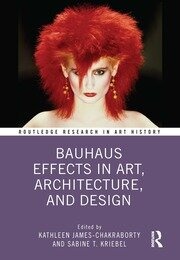
Bringing together an international team of scholars, this book offers new perspectives on the impact that the Bauhaus and its teaching had on a wide range of artistic practices.
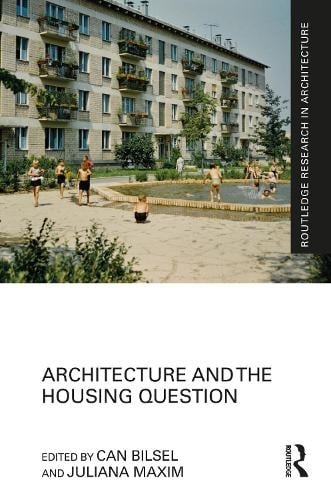
Examines how the design and provision of housing around the world have become central both to competing political projects and to the architecture profession. How have architects acting as housing experts helped alleviate or enforce class, race, and gender inequality? What are the disciplinary implications of taking on shelter for the multitude as an architectural assignment and responsibility? The book features essays in the historiography of architecture and the housing question, and a collection of historical case studies from Belgium, China, France, Ghana, the Netherlands, Kenya, the Soviet Union, Turkey, and the United States.
Architectural Colossi and the Human Body discusses the role of Platonic and Cartesian philosophy and how philosophers such as Heidegger and Merleau-Ponty, and theoreticians such as Frascari and Pallasmaa, have seen, described and analysed the human body and the role of architecture and perception. Drawing upon three key case studies and by employing theoretical ideas of Venturi and others, this book will provide an understanding of the role of anthromorphism and the relation and use of the human body with reference to selected architects and artists.
Architectonics and Parametric Thinking begins by clearly positioning the potentials of parametric design through a series of chapters written by leaders in their respective industries. This helps to situate the vast potential of parametric softwares, allowing the reader to understand the full range of what is made possible by working computationally. Following this theoretical introduction, the book presents a manual that walks readers through the step-by-step construction of parametric modeling scripts built through an architectonic lens using clear, compelling diagrams.
Introduction to the complex relationship between form making, historical analysis, and conceptual explorations. This book focuses on the relationship and interdependence between design, theory, and history for an innovative and holistic studio approach. Draws from a diverse range of thinkers and designers to highlight the many interpretations of key architectural concepts, and provides readers with the context essential for developing their own approaches to any design problem.
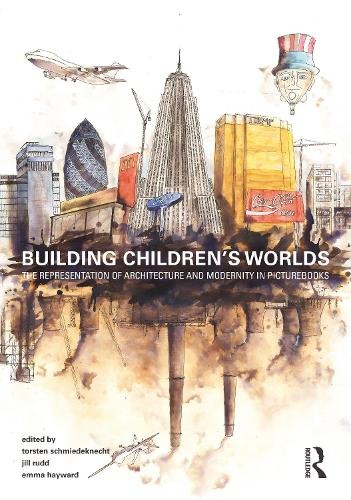
Children are the future architects, clients and users of our buildings. The kinds of architectural worlds they are exposed to in picturebooks during their formative years may be assumed to influence how they regard such architecture as adults. Contemporary urban environments the world over represent the various stages of modernism in architecture. This book reads that history through picturebooks and considers the kinds of national identities and histories they construct. Reveals what stories are told about modern architecture and shows how those stories affect future attitudes towards and expectations of the built environment.
Reveals how designers, practitioners, scholars and architects are participating in dismantling the major canons of Western architecture. The work is both literal and figural: taking buildings apart and reconstituting them, and challenging mythologies that include drawing-as-analogue, building-as object, architect-as-hero and nature-as-other.
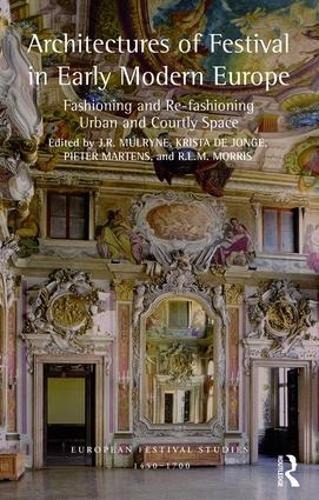
Draws on up-to-date research by a Europe-wide group of academic scholars and museum and gallery curators to provide a unique, intellectually-stimulating and beautifully-illustrated account of temporary architecture created for festivals of the sixteenth and seventeenth centuries, together with permanent architecture pressed into service for festival occasions across major European locations including Italian, French, Austrian, Scottish and German.
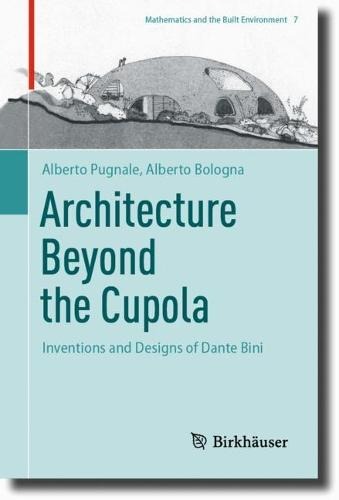
This book reviews Dante Bini’s inventions and designs, focusing on his form-resistant Binishell and other pneumatic construction systems. Dante Bini’s double profile of architect and builder underpins the narrative of the entire book. It is used to analyse the evolution of the early reinforced-concrete Binishell patent into a variety of automated construction systems based on the use of air. Dante Bini has always been quite proactive in promoting his work and disseminating the results of his experimentations and achievements via journal articles, conference presentations and public talks.
The book is divided into seven chapters, which in turn analyze the interconnections between the novel and architecture in theory and in practice. The first six chapters cover debates on State art, on the novel and on architecture, as well as their historical development and their unfolding in key journals of the period. The last chapter offers a detailed analysis of some important novels and buildings, which have in practice realized some of the key principles articulated in the theoretical disputes.
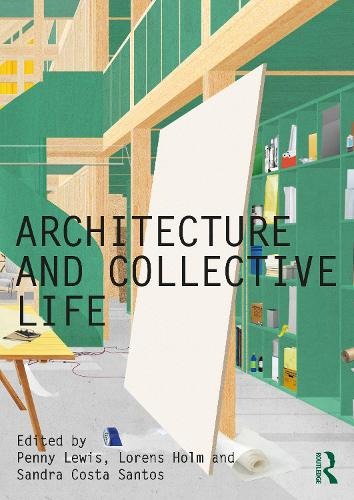
Addresses the changing nature of public life alongside an analysis of changes in the architectural profession. Contains thought-provoking chapters from some of the disciplines' leading thinkers and draws together new research that helps us to look again at the question of urban development. Focuses on the link between architecture, urban theory and societal ideas.
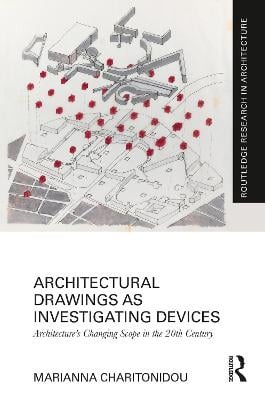
Explores how the changing modes of representation in architecture and urbanism relate to the transformation of how the addressees of architecture and urbanism are conceived. Diagnoses the dominant epistemological debates in architecture and urbanism during the 20th and 21st centuries. It traces their transformations, paying special attention to Le Corbusier and Ludwig Mies van der Rohe’s preference for perspective representation, to the diagrams of Team 10 architects, to the critiques of functionalism, and the upgrade of the artefactual value of architectural drawings in Aldo Rossi, John Hejduk, Peter Eisenman, and Oswald Mathias Ungers, and, finally, to the reinvention of architectural programme through the event in Bernard Tschumi and the Office for Metropolitan Architecture (OMA). Particular emphasis is placed on the spirit of truth and clarity in modernist architecture, the relationship between the individual and the community in post-war era architecture, the decodification of design process as syntactic analogy and the paradigm of autonomy in the 1970s and 1980s architecture, the concern about the dynamic character of urban conditions and the potentialities hidden in architectural programme in the post-autonomy era.
Provides an index of ideas, theories, projects, and definitions that string into a methodology for evaluating the contemporary language of architecture described as “contemporism” through a review of topology (form) and typology (system and elements). Trying to answer the postmodern question of how to move beyond modernism through a thread of architectural styles that tried to respond to deficiencies from the modern promise and contextual changes. Yet, the question remains, should this ongoing struggle to move beyond modernism be a stylistic battle? Has the present architectural practice ever left the modernist tendencies, and is there a structure for a contemporary language in architecture? Presents a collection of highly illustrated projects that have worked under these parameters to break away from modernism in order to present a holistic integration of topology and typology as a language for “contemporism.” The index is illustrated with individual spreads, which can be read sequentially or independently, and encourages the reader to make their own connections. It also includes interviews and contributions from Toyo Ito, Anthony Vidler, Ben van Berkel, Christian Kerez, and Greg Lynn.
Textbook on the power, condition, and expanse of contemporary fine art drawing. his textbook: Demonstrates ways contemporary issues and concerns are addressed through drawing Reveals how drawing is used to make powerful social and political statements Situates works by contemporary practitioners within the context of their historical moment Explores how contemporary art practices utilize drawing as both process and finished artifact Shows how concepts of observation, representation, and audience have changed dramatically in the digital era Establishes drawing as a mode of thought

Daraa Highway - Ghabagheb - Syria
+963-15 2050 - 15 860 380 /1/2/3 - 11 662 3900