



Page 1
Page 1

Zirconia and innovative biomaterials for dental and biomedical applications
Provides a comprehensive overview and critically explores the recent trends in the zirconia additive manufacturing process or 3D printing and various surface treatments and their characterization for application in the dental and biomedical fields. It will be a valuable resource for the researchers to design or fabricate the implants according to clinical demands.

Voice controlled robotic arm
The study presents an innovative voice-controlled prosthetic hand for amputees below the elbow to retrieve some of the hand movements of their daily life. This light weight hand is designed to enable movement of the fingers as the user commands, using artificial intelligence (AI) and a Raspberry Pi 4 computer. A speech recognition algorithm is used to detect the spoken command from the user and send it to the AI module which then drives servomotors placed inside each finger of the prosthetic hand in order to give motion. With help of a mobile application that allows the user to insert new commands with different moves among other features.

Tissue Engineering in Oral and Maxillofacial Surgery
This book provides a thorough, up-to-date description of the scientific basis and concepts of tissue engineering in the oral and maxillofacial region. Tissue Engineering in Oral and Maxillofacial Surgery will be of interest to all researchers and practitioners who wish to learn more about the potential of tissue engineering to revolutionize practice in oral and maxillofacial surgery.

Smart buildings : Technology and the design of the built environment
Explores how buildings and spaces are designed, built, used, and better understood through technology. A practical guide to technical advances including Internet of Things (IoT), 3D printing, innovative materials and robotics, Smart Buildings also outlines the opportunities for architecture including improved communication, flexibility, wellbeing, productivity and data collection.

Salivary Gland Development and Regeneration : Advances in Research and Clinical Approaches to Functional Restoration
Provides a comprehensive update on the latest information and knowledge which emerged from translational and basic science research endeavors, targeting the regeneration of salivary glands. The coverage includes salivary gland growth and development, stem cell therapy, bioengineering of salivary glands, and perspectives on and practical approaches to restoration of secretory function.

Projection-Based Clustering through Self-Organization and Swarm Intelligence : Combining Cluster Analysis with the Visualization of High-Dimensional Data
It covers aspects of unsupervised machine learning used for knowledge discovery in data science and introduces a data-driven approach to cluster analysis, the Databionic swarm(DBS). DBS consists of the 3D landscape visualization and clustering of data. The 3D landscape enables 3D printing of high-dimensional data structures.The clustering and number of clusters or an absence of cluster structure are verified by the 3D landscape at a glance. DBS is the first swarm-based technique that shows emergent properties while exploiting concepts of swarm intelligence, self-organization and the Nash equilibrium concept from game theory. It results in the elimination of a global objective function and the setting of parameters. By downloading the R package DBS can be applied to data drawn from diverse research fields and used even by non-professionals in the field of data mining.

Pharmaceutical formulations for older patients
Provides a comprehensive review in the design of formulations to meet the needs of older patients. An overview of the key clinical, social and pharmaceutical factors affecting medication optimization, safety and acceptability in older adults is included, followed by patient-centric considerations including regulatory requirements, dosage form design and human factor studies.

Novel Drug Delivery Systems for Chinese Medicines
Describes the essential and cutting-edge concepts based on the frontier of pharmaceutical research in TCM, underlying scientific principles, and current advancements of drug delivery systems for Chinese medicines, including sustained-release drug delivery systems, trans-nasal drug delivery systems, dermal and transdermal drug delivery systems, etc. Novel carriers and emerging technologies (such as 3D printing) are also covered. The book provides readers with an overall picture of drug delivery systems for Chinese medicines and also yields benefits for the pharmaceutical industry with regard to TCM-based drug development.

Medical Reprints: 3D ed.
3D printing or additive manufacturing is a novel method of manufacturing parts directly from a digital model by using layer by layer material build-up approaches. This discovery is predicted to have the greatest impact on the future industries. Additive manufacturing has numerous applications in different areas including healthcare. Applications encompass many medical fields such as dentistry, surgery, and medical devices as well as the pharmaceutical field. Due to transplant donor deficiencies, ‘bioprinting’ has been invented to print biocompatible organs. Adding ‘time’ as a 4th dimension, 4D printing uses ‘smart materials’ to initiate the ‘smart drugs’ era.

Mechanical engineering in biomedical application: bio-3D printing, biofluid mechanics, implant design, biomaterials, computational biomechanics, tissue mechanics
Explores the latest research and developments related to the interdisciplinary field of biomedical and mechanical engineering offering insights and perspectives on the research, key technologies, and mechanical engineering techniques used in biomedical applications.

Future tech : How to capture value from disruptive industry trends
In Future Tech, the author reveals that true change only results from combining the forces of science and technology, policy and regulation, new business models (i.e. sharing economy) and social dynamics (whether or not people adopt it). Whether these four forces align explains why some technologies, such as AI, blockchain, robotics, synthetic biology and 3D printing, stick and why others fail.

Digital Restorative Dentistry : A Guide to Materials, Equipment, and Clinical Procedures
Offers up-to-date, readily understandable guidance on the materials and equipment employed in digital restorative dentistry and on the specific clinical procedures that may be performed using the new technologies. The key components of digital restorative dentistry – image acquisition, prosthetic/restorative design, and fabrication – are fully addressed. Readers will find helpful information on scanners, the software for prosthetic design, and the materials and technologies for prosthesis fabrication, including laser sintering, 3D printing, CAD/CAM, and laser ablation. The section on clinical procedures explains all aspects of the use of digital technologies in the treatment of patients requiring removable partial dentures, complete dentures, fixed partial prostheses, crowns, endodontics, and implant surgery and prosthodontics. The field of restorative and prosthetic dentistry is undergoing rapid transition as these new technologies come to play an increasingly central role in everyday dental practice. In bridging the knowledge gap that this technological revolution has created in the field of dentistry, the book will satisfy the needs of both dentists and dental students.

Digital orthodontics: providing a contemporary treatment solution
A comprehensive and detailed overview of the most contemporary techniques in orthodontics. It will help readers to understand complex software systems, software integrations and the equipment needed to deliver the latest techniques to patients undergoing orthodontic treatment. The book has been written in an easy-to-understand way and includes numerous flow diagrams and images of software programs and equipment in order to facilitate the understanding of modern systems.

Dental Implants and Oral Microbiome Dysbiosis : An Interdisciplinary Perspective
A one-stop, reference manual to understand the basic concepts of dental implant design, the related microbiome, research models and current concepts as well as futuristic perspectives in implant surface modification. The manual-like design including colorful illustrations and important critical questions will help researchers and advanced students in understanding the contemporary status and in designing studies for innovative treatments of dental implant infections. Considering the microbiome of dental implant related environment in health and disease is imperative to design strategies to good practice and prevention of infections around implants.

Current techniques and materials in dentistry
Dental implants are one of the most interesting dental treatments. PEEK (polyetheretherketone) has recently been reported as a further innovation in polymer implant materials, although it has not yet met the requirements to be a biomechanical requirement. In the placement of mini-screws used in orthodontic treatments, micro-cracks caused by overtorquing in thick and hard bone, and the consequent heat production, can reduce the success rate. Computer-aided design/computer-aided manufacturing (CAD/CAM) techniques are becoming increasingly popular. Since complete dentures can be produced using an additive (3D printing) or subtractive (milling) process, CAD/CAM techniques for denture fabrication have many clinical and laboratory advantages.
Leading edge technologies in fashion innovation : Product design and development process from materials to the end products to consumers
Offers cutting-edge knowledge on various design and product development related technologies, and applications of these technologies in fashion. Further, it envisions the future of these technologies when designing and engineering apparel-related products.
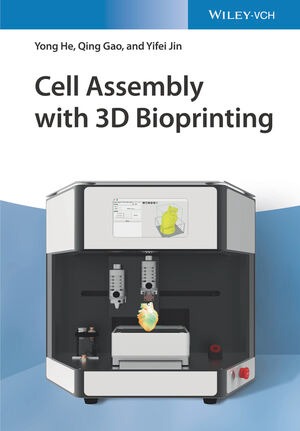
Cell assembly with 3D bioprinting
Detailed, highly illustrated chapters cover different bioprinting approaches and their applications, including coaxial bioprinting, digital light projection, direct ink writing, liquid support bath-assisted 3D printing, and microgel-, microfiber-, and microfluidics-based biofabrication. The book includes practical examples of 3D bioprinting, a protocol for typical 3D bioprinting, and relevant experimental data drawn from recent research.

Biomedical Visualisation ; Vol.9
This edited book explores the use of technology to enable us to visualise the life sciences in a more meaningful and engaging way. It will enable those interested in visualisation techniques to gain a better understanding of the applications that can be used in visualisation, imaging and analysis, education, engagement and training. The reader will also be able to learn about the use of visualisation techniques and technologies for the historical and forensic settings.In this volume, there are chapters which examine forensic and historical visualisation techniques and digital reconstruction, ultrasound, virtual learning resources and patient utilised software and hardware. The use of HoloLens as a disruptive technology is discussed as well as historical items as a feature in a modern medical curriculum. It concludes with a fascinating chapter on pulse extraction from facial videos.

Advances in frontier research on engineering structures
Focuses on the research of advanced structures and anti-seismic in civil engineering. It features the most cutting-edge research directions and achievements related to civil and structural engineering. Subjects in this book include: ·Engineering Structure and Seismic Resistance ; ·Structural Mechanics Analysis ; Components and Materials ;·Structural Seismic Design ; 3D Printing Concrete ; Other Related Topics ; The works of this book promote development of civil and structural engineering, resource sharing, flexibility, and high efficiency.

3D Recording and Interpretation for Maritime Archaeology
Includes recording and analysis of maritime archaeology through emerging technologies, including both practical and theoretical contributions. Topics include photogrammetric recording, laser scanning, marine geophysical 3D survey techniques, virtual reality, 3D modelling and reconstruction, data integration and Geographic Information Systems. This convergence of digital technologies such as underwater photography and photogrammetry, 3D sonar, 3D virtual reality, and 3D printing has highlighted a pressing need for these new methodologies to be considered together, both in terms of defining the state-of-the-art and for consideration of future directions.
