



Page 6
Page 6
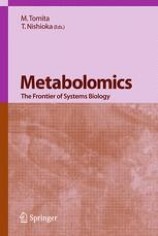
Metabolomics : The frontier of systems biology
Metabolism is the sum of the chemical reactions in cells that produce life-sustaining chemical energy and metabolites. In the post-genome era, metabolism has taken on new significance for biological scientists: metabolites are the chemical basis of phenotypes that are final expressions of genomic information. This book covers research on metabolomics, ranging from the development of specialized chemical analytical techniques to the construction of databases and methods for metabolic simulation. The authors have been directly involved in the development of all the subject areas, including capillary electrophoresis, liquid chromatography, mass spectrometry, metabolic databases, and metabolic simulation. Breakthrough achievements and the future of metabolome studies are described, making this book a valuable source for researchers in metabolomics in diverse fields, such as plant, animal, cellular, microbial, pharmaceutical, medical, and genetic sciences.

Mercury Pollution in Minamata
It overviews the poisoning which occurred in the 1950s and 1960s among the residents in Minamata who ate seafood contaminated with methylmercury discharged from the chemical factory, Chisso Corporation. It describes the history, symptoms pathogenesis and research on the causal agent, and discusses the responses of Chisso and the national and local governments to the outbreak, the victims, the compensation and environmental restructuring as well as the court ruling on claims. Based on lecture notes from a university course, it includes students’ suggestions for avoiding a repeat of the tragedy. The issue has not been settled yet, and this analysis of the incident provides useful insights into solutions to the current global mercury pollution problem.

Medicinal plants of the world ; Vol.3 : Chemical constituents, traditional and modern medicinal uses
The author's exhaustive summary of available scientific data for each plant provides detailed information on how the plant is used in different countries, describing its traditional therapeutic applications and what is known from its use in clinical trials. Additional material presented includes a botanical description with a color photo of each plant for identification, the common names used for the plant throughout the world, and a listing of the plant's known chemical constituents. A comprehensive bibliography cites the literature available from a wide range of disciplines. Medicinal Plants of the World: Chemical Constituents, Traditional and Modern Medicinal Uses, Volume 3, offers a unique collection of vital scientific information for pharmacologists, herbal medicine practitioners, drug developers, phytochemists, medicinal chemists, phytologists, toxicologists, and researchers who want to explore the many uses of plant materials for medicinal and related purposes. Its wealth of significant information will reveal little-known facts about these plants and open new horizons of application for the many novel drugs and drug candidates found in them.

Medicinal foods as potential therapies for type-2 diabetes and associated diseases : The chemical and pharmacological basis of their action
Focuses on active pharmacological principles that modulate diabetes, associated risk factors, complications and the mechanism of action of widely used anti-diabetic herbal plants—rather than just the nutritional composition of certain foods. Provides up-to-date information on acclaimed antidiabetic super fruits, spices and other food ingredients. Sections cover diabetes and obesity at the global level, the physiological control of carbohydrate and lipid metabolism, the pathophysiology of type-2 diabetes, the chemistry and pharmacology of a variety of spices, and much more. This book will be invaluable for research scientists and students in the medical and pharmaceutical sciences, medicinal chemistry, herbal medicine, drug discovery/development, nutrition science, and for herbal practitioners and those from the nutraceutical and pharm industries.

Medicinal Chemistry and Pharmacological Potential of Fullerenes and Carbon Nanotubes
Medicinal Chemistry and Pharmacological Potential of Fullerenes and Carbon Nanotubes features important insights into the applications of fullerenes and carbon nanotubes. It discusses the fullerene and nanotubes derivatives which are effective against viruses, cells, and bacteria and those which are able to interact and inhibit certain enzymes. Also covered in this book are the formation of complex structures between biologically active molecules and carbon materials. Furthermore, the application of fullerenes in certain medical therapies is explored, including the very recent discovery of new bio-compatible media which could be used as carriers in the delivery of fullerenes in vivo. An additional topic of this text is the formation of hybrids between nanotubes and biological molecules and their use as chemical sensors.
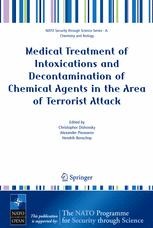
Medical Treatment of Intoxications and Decontamination of Chemical Agents in the Area of Terrorist Attack
This book includes reports which were presented at a NATO Advanced Research Workshop (ARW) entitled?Medical Treatment of Intoxications and Decontamination of Chemical Agent in the Area of Terrorist Attack?. The focus of this workshop was assessment of scientific concepts and practical means for management of chemical agent casualties in the area of terrorist attack with emphasis on improving the medical treatment and decontamination. These problems were analyzed from an interdisciplinary perspective. The primary objective of the ARW was to provide countries in which chemical-defense systems are currently under development with the experience and expertise of those that are more advanced and/or have already been exposed and responded to a chemical-terrorist attack. . The main areas covered were: 1. new approaches in pre-treatment and prophylaxis of nerve agent intoxication; 2. diagnosis of exposure to chemical agents ; 3. therapy of chemical agent intoxication; 4. development of personal decontamination; 5. decontamination of intoxication with chemical agents.
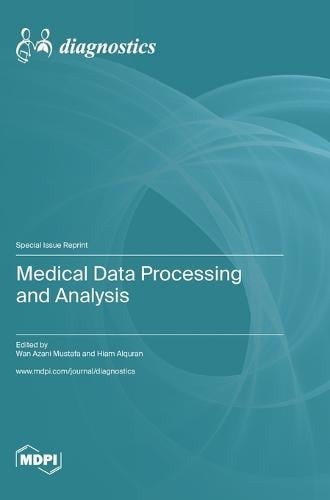
Medical data processing and analysis
Medical data can be defined as obtaining information from patients (such as signals, images, sounds, chemical components and their concentration, body temperature, respiratory rate, blood pressure, and different treatment measurements) to quantify the patient’s status and disease stage. Computer-aided diagnostic (CAD) systems use classical image processing, computer vision, machine learning, and deep learning methods for image analysis. Using image classification or segmentation algorithms, they find a region of interest (ROI) pointing to a specific location within the given image or an outcome of interest in the form of a label pointing to a diagnosis or prognosis. Computer science, with the evolution of artificial intelligence and machine learning techniques, facilitates the modeling and interpretation of results—from carrying out measurements to experiments and observations.

Medical Applications of Colloids
This volume collects chapters dealing with significant topics in colloids and surfaces relevant to medical applications. The book will be of interest to scientists and practitioners in areas as diverse as medical diagnostics, drug formulations, X-ray photoelectron spectroscopy of biomaterials, and particle transport in human airways.

Mechanosensing and Mechanochemical Transduction in Extracellular Matrix : Biological, Chemical, Engineering, and Physiological Aspects
Mechanosensing and Mechanochemical Transduction in Extracellular Matrix offers the reader recent information in addition to models of how mechanical information is transduced into genetic and biochemical changes at the cellular and tissue levels. Mechanosensing and Mechanochemical Transduction in Extracellular Matrix is intended to serve as a textbook at the graduate and advanced undergraduate level in a biomedical engineering curriculum.

Mechanochemistry in Nanoscience and Minerals Engineering
Mechanochemistry as a branch of solid state chemistry enquires into processes which proceed in solids due to the application of mechanical energy. This provides a thorough, up to date overview of mechanochemistry of solids and minerals. Applications of mechanochemistry in nanoscience with special impact on nanogeoscience are described. Selected advanced identification methods, most frequently applied in nanoscience, are described as well as the advantage of mechanochemical approach in minerals engineering. Examples of industrial applications are given. Mechanochemical technology is being applied in many industrial fields: powder metallurgy (synthesis of nanometals, alloys and nanocompounds), building industry (activation of cements), chemical industry (solid waste treatment, catalyst synthesis, coal ashes utilization), minerals engineering (ore enrichment, enhancement of processes of extractive metallurgy), agriculture industry (solubility increase of fertilizers), and pharmaceutical industry (improvement of solubility and bioavailability of drugs).

Mechanisms of mineralization of vertebrate skeletal and dental tissues
Presents a multi-disciplinary approach to understanding mechanisms regulating the formation of mineral in vertebrate skeletal and dental tissues. The focus of the book is directed toward the mineralization process, an evolutionarily conserved system in which cells synthesize a complex and unique extracellular matrix into which mineral is deposited. Regulatory control is viewed though lenses that emphasize the genetic, physical-chemical, biochemical, structural, cellular and extracellular aspects of the mineralization process as they relate to crystal nucleation, growth and maturation. Throughout the book, defects in regulation at the genetic and transcriptional levels are linked to the numerous clinical problems associated with the mineralization of bone, cartilage, tendon, tooth, and soft tissues.

Mathematics for enzyme reaction kinetics and Reactor performance ; 2 Volumes set
The second volume begins with an introduction to basic concepts in calculus, i.e. limits, derivatives, integrals and differential equations; limits, along with continuity, are further expanded afterwards, covering uni- and multivariate cases, as well as classical theorems. After recovering the concept of differential and applying it to generate (regular and partial) derivatives, the most important rules of differentiation of functions, in explicit, implicit and parametric form, are retrieved – together with the nuclear theorems supporting simpler manipulation thereof. The book then tackles strategies to optimize uni- and multivariate functions, before addressing integrals in both indefinite and definite forms.

Invariant Manifolds for Physical and Chemical Kinetics
By bringing together various ideas and methods for extracting the slow manifolds the authors show that it is possible to establish a more macroscopic description in nonequilibrium systems. The book treats slowness as stability. A unifying geometrical viewpoint of the thermodynamics of slow and fast motion enables the development of reduction techniques, both analytical and numerical. Examples considered in the book range from the Boltzmann kinetic equation and hydrodynamics to the Fokker-Planck equations of polymer dynamics and models of chemical kinetics describing oxidation reactions. Special chapters are devoted to model reduction in classical statistical dynamics, natural selection, and exact solutions for slow hydrodynamic manifolds. The book will be a major reference source for both theoretical and applied model reduction. Intended primarily as a postgraduate-level text in nonequilibrium kinetics and model reduction, it will also be valuable to PhD students and researchers in applied mathematics, physics and various fields of engineering.

Introduction to Physics and Chemistry of Combustion : Explosion, Flame, Detonation
Most of the material covered in this book deals with the fundamentals of chemistry and physics of key processes and fundamental mechanisms for various combustion and combustion-related phenomena in gaseous combustible mixture. It provides the reader with basic knowledge of burning processes and mechanisms of reaction wave propagation

Introduction to Pharmaceutical Analytical Chemistry
Enables students to gain fundamental knowledge of the vital concepts, techniques and applications of the chemical analysis of pharmaceutical ingredients, final pharmaceutical products and drug substances in biological fluids. A unique emphasis on pharmaceutical laboratory practices, such as sample preparation and separation techniques, provides an efficient and practical educational framework for undergraduate studies in areas such as pharmaceutical sciences, analytical chemistry and forensic analysis. Suitable for foundational courses, this essential undergraduate text introduces the common analytical methods used in quantitative and qualitative chemical analysis of pharmaceuticals.

Introduction to food chemistry
Bridges this gap in the relevant literature, as it employs the latest pedagogical theories in textbook writing to present the subject to students with broad range of cognitive skills. This book presents specific learning objectives for each chapter and is self-contained so students will not need to search for essential information outside the textbook. This new edition has been expanded to include chapters on sweeteners, glass transition, amino acids, proteins for major food commodities and food additives. All of the original chapters have been updated and expanded to include new research and technologies.

Introduction to basics of pharmacology and toxicology ; Vol.2 : Essentials of systemic pharmacology : From principles to practice
Describes the pharmacology of drugs acting on different systems in the human body Analyses various human diseases and the pharmacological agents governing them Provides a valuable reference resource for academicians, researchers, and clinical practitioners Offers a comprehensive overview of the pharmacology concerning the autonomic, central, and peripheral nervous systems. Presenting up-to-date information on chemical mediators and their significance, it highlights the therapeutic aspects of several diseases affecting the cardiovascular, renal, respiratory, gastrointestinal, endocrinal, and hematopoietic systems. The book also includes drug therapy for microbial and neoplastic diseases. It also comprises sections on immunopharmacology, dermatological, and ocular pharmacology providing valuable insights into these emerging and recent topics.

Intracranial Pressure and Brain Monitoring XII
88 short papers originating from the 12th International Symposium on Intracranial Pressure and Brain Monitoring held in August 2004 in Hong Kong present experimental as well as clinical research data on invasive and non-invasive intracranial pressure and brain biochemistry monitoring. The papers have undergone a peer-reviewing and are organized in nine sections: ICP management in head injury, neurochemical monitoring, intracranial hypertension, neuroimaging, hydrocephalus, clinical trails, experimental studies, brain compliance and biophysics.

International steam tables : Properties of water and steam based on the industrial formulation IAPWS-IF97 : Tables, algorithms, diagrams, and CD-ROM Electronic steam tables - All of the equations of IAPWS-IF97 including a complete set of supplementary backward equations for fast calculations of heat cycles, boilers, and steam turbines
This book contains steam tables for industrial use that have been calculated using the international standard for the thermodynamic properties of water and steam, the IAPWS-IF97 formulation, and the international standards for transport and other properties. In addition, the complete set of equations of IAPWS-IF97 is presented including all supplementary backward equations adopted by IAPWS between 2001 and 2005 for fast calculations of heat cycles, boilers, and steam turbines.

Integrated Urban Water Resources Management
Growing populations and rising standards of living exert stress on water supply and the quality of drinking water. In wastewater management, new challenges are caused by new chemicals of concern, including endocrine disrupters, pharmaceuticals, hormones, and personal care products, which often pass through wastewater treatment plants unabated, but may cause serious impacts on receiving aquatic ecosystems. Advanced wastewater treatment leads to production of biosolids, which are processed in various ways, including on-land applications in agriculture. Municipal effluents, combined with increasing withdrawals of water, lead to the worsening of receiving water quality. Expert opinions indicate that the only way to deal with the current urban water management dilemmas is by integrated management and innovative delivery of water services. This book presents important aspects of Challenges in Management of Urban Water Resources, Challenges in Urban Water Supply, Urban Drainage and Water Bodies, Wastewater Treatment and Security, and Wastewater Treatment and Reuse.
