


Refine Results
Sort By
From
To

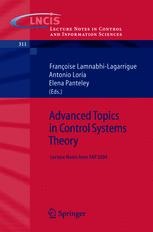
Advanced Topics in Control Systems Theory contains selected contributions written by lecturers at the second (annual) Formation dAutomatique de Paris (FAP) (Graduate Control School in Paris). It is addressed to graduate students and researchers in control theory with topics touching on a variety of areas of interest to the control community such as cascaded systems, flatness, optimal control, and Hamiltonian and infinite-dimensional systems. The reader is provided with a well-integrated synthesis of the latest thinking in these subjects without the need for an exhaustive literature review.
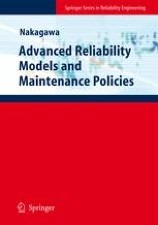
Advanced Reliability Models and Maintenance Policies introduces partition and redundant problems within reliability models, and provides optimization techniques. The book also indicates how to perform maintenance in a finite time span and at failure detection, and to apply recovery techniques for computer systems.
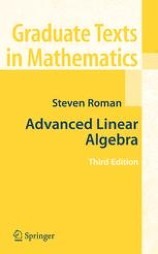
For the third edition, the author has added a new chapter on associative algebras that includes the well known characterizations of the finite-dimensional division algebras over the real field (a theorem of Frobenius) and over a finite field (Wedderburn's theorem); polished and refined some arguments (such as the discussion of reflexivity, the rational canonical form, best approximations and the definitions of tensor products); upgraded some proofs that were originally done only for finite-dimensional/rank cases; added new theorems, including the spectral mapping theorem; considerably expanded the reference section with over a hundred references to books on linear algebra.
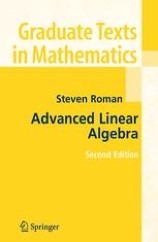
The first part of the book contains a careful but rapid discussion of the basics of linear algebra, including vector spaces, linear transformations, quotient spaces, and isomorphism theorems. The author then proceeds to modules, emphasizing a comparison with vector spaces. A thorough discussion of inner product spaces, eigenvalues, eigenvectors, and finite dimensional spectral theory follows, culminating in the finite dimensional spectral theorem for normal operators. The second part of the book is a collection of topics, including metric vector spaces, metric spaces, Hilbert spaces, tensor products, and affine geometry. The last chapter discusses the umbral calculus, an area of modern algebra with many important applications.
Basic Algebra and Advanced Algebra systematically develop concepts and tools in algebra that are vital to every mathematician, whether pure or applied, aspiring or established. Together, the two books give the reader a global view of algebra and its role in mathematics as a whole.

It includes many new recent insights and illustrations, a new appendix on Chinese primary sources and a guide to the to the bibliography. From the reviews: "This book ranks with the most erudite Asian publications, and is the most informative and most broadly informed on its topic in any language.this book apart from the usual histories of mathemathics (in any language, Chinese or Western, of any period or country) is its emphasis first on context, then on content, in describing the long history of Chinese mathematics. It is primarily the question of context that Martzloff approaches directly. Perhaps the greatest contribution his book makes is the chance it offers to consider issues of cultural context as significant, determining factors in the history of mathematics.
This book aims at a middle ground between the introductory books on derivative securities and those that provide advanced mathematical treatments. It is written for mathematically capable students who have not necessarily had prior exposure to probability theory, stochastic calculus, or computer programming. It provides derivations of pricing and hedging formulas (using the probabilistic change of numeraire technique) for standard options, exchange options, options on forwards and futures, quanto options, exotic options, caps, floors and swaptions, as well as VBA code implementing the formulas. It also contains an introduction to Monte Carlo, binomial models, and finite-difference methods.

Daraa Highway - Ghabagheb - Syria
+963-15 2050 - 15 860 380 /1/2/3 - 11 662 3900