



Page 2
Page 2

Drugs and a methodological compendium : From bench to bedside
Provides a meticulous view on methodological drug discovery and development insights from bench to bedside. Focus on computational modus operandi, pharmacological optimization approaches, modern high-throughput screening methods and in-vitro procedures, role of structural biologists in drug discovery and development, medicinal chemistry approaches for drug design, formulation and drug delivery, in-vivo evaluations of candidate molecules, clinical trial procedures and others. Covers specific case studies, regulatory approval proceedings, and industrial view point alongside the aforementioned conceptual layout. And at the same time, the volume integrates medical, biological, medicinal, pharmacological and computational streams, and it is suggested as an ideal guideline to a wide audience including molecular biologists, biochemist, pharmacologists, medicinal chemist, toxicologists, drug discovery and development researchers, and all other students interested in these disciplines.

Drug discovery and development
Presents up-to-date scientific information for maximizing the ability of a multidisciplinary research team to discover and bring new drugs to the marketplace. It explores many scientific advances in new drug discovery and development for areas such as screening technologies, biotechnology approaches, and evaluation of efficacy and safety of drug candidates through preclinical testing. This book also greatly expands the focus on the clinical pharmacology, regulatory, and business aspects of bringing new drugs to the market and offers coverage of essential topics for companies involved in drug development. Historical perspectives and predicted trends are also provided.

Drug design : A conceptual overview
The newer research areas in pharmaceutical sciences, particularly molecular modeling and simulations, prompted a more efficient drug discovery process. Informatics integrated with pharmaceutical sciences (cheminformatics and bioinformatics) became an essential component of drug research. Drug informatics such as genomics and proteomics assists in the Rational Drug Design (RDD). This emerging discipline is known as “Computer-Aided Drug Design" (CADD), which has profound application in RDD. The advanced and adequate practice in drug design informatics is essential for pharmacy graduates. Hence, a companion for acquiring knowledge on these concepts is vital. The students of B. Pharmacy, M. Pharmacy (Pharmaceutical Chemistry, Pharmacology, and Pharmaceutics), biotechnology, biomedical engineering and other interdisciplinary fields may find this book as a reference guide.

Drug delivery approaches and nanosystems ; Vol.1 : Novel drug carriers
Presents a full picture of the state-of-the-art research and development in drug delivery systems using nanotechnology and its applications. It addresses the ever-expanding application of nanotechnology or nano-sized materials in the medical field and the real-world challenges and complexities of current drug delivery methodologies and techniques.

Drug delivery : An integrated clinical and engineering approach
Offers a much needed comprehensive overview and patient-oriented approach for enhanced drug delivery optimization and advancement. Starting with an introduction to the subject and pharmacokinetics, it explores advances for such topics as oral, gastroretentive, intravitreal, and intrathecal drug delivery, as well as insulin delivery, gene delivery, and biomaterials-based delivery systems. It also describes drug delivery in cancer, cardiac, infectious diseases, airway diseases, and obstetrics and gynecology applications.

Concepts in pharmaceutical biotechnology and drug development
Provides comprehensive coverage of the development of new pharmaceuticals and the enhancement of existing ones. It offers a comprehensive understanding of pharmaceutical biotechnology, including its underlying principles and practical applications from an industrial standpoint. While introducing the roles and applications of biotechnology in drug design and development, the book describes how developments in other fields, like genomics, proteomics, and high-throughput screening, have facilitated the discovery of novel therapeutic targets and drug development methods. It included concepts that are essential to biotechnology and apply to protein therapies. And provides a thorough overview of the ways in which biotechnology influences drug development, production, and regulation, and is a valuable resource for those seeking to enhance their understanding in this area.

Computer Aided Pharmaceutics and Drug Delivery : An Application Guide for Students and Researchers of Pharmaceutical Sciences
Examines the role of computer-assisted techniques for discovering, designing, optimizing and manufacturing new, effective, and safe pharmaceutical formulations and drug delivery systems. The book discusses computational approaches, statistical modeling and molecular modeling for the development and safe delivery of drugs in humans. The application of concepts of QbD (Quality by Design), DoE (Design of Experiments), artificial intelligence and in silico pharmacokinetic assessment/simulation have been made a lot easier with the help of commercial software and expert systems. This title provides in-depth knowledge of such useful software with illustrations from the latest researches. The book also fills in the gap between pharmaceutics and molecular modeling at micro, meso and maro scale by covering topics such as advancements in computer-aided Drug Design (CADD), drug-polymer interactions in drug delivery systems, molecular modeling of nanoparticles and pharmaceutics/bioinformatics.
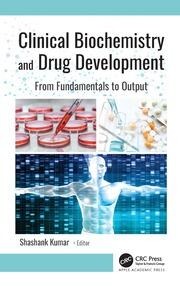
Clinical biochemistry and drug development : From fundamentals to output
Focuses on clinical biochemistry fundamentals, cell culture techniques, and drug discovery and development concepts. It deals with three different fields of clinical research: cell culture, clinical biochemistry, and drug discovery and development.
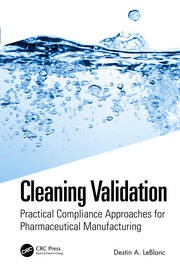
Cleaning validation : Practical compliance approaches for pharmaceutical manufacturing
Timely coverage of cleaning validation for the pharmaceutical industry, a dynamic area in terms of health-based limits. Encourages pharmaceutical manufacturers, and particularly upper management, to meet the challenges of the science-based and riskbased approaches to cleaning validation. Draws on the author’s vast experience in the field of cleaning validation and hazardous materials. Discusses EMA vs. ISPE on Cleaning Limits and revised Risk-MaPP for highly hazardous products in shared facilities. A diverse list of topics from protocol limits for yeasts and molds to cleaning validation for homeopathic drug products.
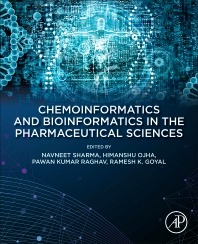
Chemoinformatics and Bioinformatics in the Pharmaceutical Sciences
Chemoinformatics and Bioinformatics in the Pharmaceutical Sciences brings together two very important fields in pharmaceutical sciences that have been mostly seen as diverging from each other: chemoinformatics and bioinformatics. As developing drugs is an expensive and lengthy process, technology can improve the cost, efficiency and speed at which new drugs can be discovered and tested. This book presents some of the growing advancements of technology in the field of drug development and how the computational approaches explained here can reduce the financial and experimental burden of the drug discovery process.
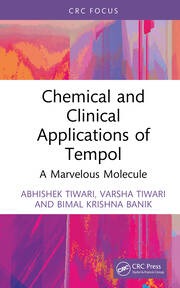
Chemical and clinical applications of tempol : A marvelous molecule
A comprehensive and authoritative exploration of Tempol (4-Hydroxy-TEMPO), an exceptional chemical compound with diverse applications in both scientific research and medical practice. This book delves into Tempol's unique properties, mechanisms of action, and its potential role in combating oxidative stress-related disorders. Includes a chapter devoted to the safe handling, storage, and disposal of Tempol in compliance with pharmaceutical regulations. The authors pay particular attention to pharmaceutical regulations in the industry.
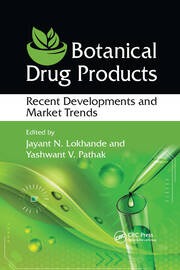
Botanical drug products : Recent developments and market trends
Botanicals, which have been part of human food and medicine for thousands of years, are perceived as being safer than synthetic pharmaceuticals. The global botanical drug market was expected to reach $26.6 billion by 2017. In terms of FDA regulations, botanical drugs are no different from non-botanical products, having to meet the safety and effectiveness standards of a new drug in accordance. This book comprises a complete start-to-end process from drug-idea conception, to drug development process.
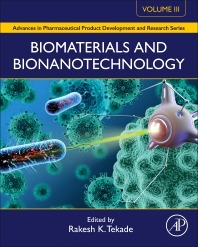
Biomaterials and bionanotechnology ; 1st ed.
Examines the current state of the field within pharmaceutical sciences and concisely explains the history of biomaterials including key developments. Written by experts in the field, this volume within the Advances in Pharmaceutical Product Development and Research series deepens understanding of biomaterials and bionanotechnology within drug discovery and drug development. Each chapter delves into a particular aspect of this fast-moving field to cover the fundamental principles, advanced methodologies and technologies employed by pharmaceutical scientists, researchers and pharmaceutical industries to transform a drug candidate or new chemical entity into a final administrable dosage form, with particular focus on biomaterials and bionanomaterials. This book provides a comprehensive examination suitable for researchers working in the pharmaceutical, cosmetics, biotechnology, food and related industries as well as advanced students in these fields.

Biomarkers in drug discovery and development : A handbook of practice, application, and strategy
Discusses biomarker characterization and validation and applications throughout drug discovery and development. Explains where proper use of biomarkers can substantively impact drug development timelines and costs, enable selection of better compounds and reduce late stage attrition, and facilitate personalized medicine. Helps readers get a better understanding of biomarkers and how to use them, for example which are accepted by regulators and which still non-validated and exploratory. Updates developments in genomic sequencing, and application of large data sets into pre-clinical and clinical testing; and adds new material on data mining, economics, and decision making, personal genetic tools, and wearable monitoring. Includes case studies of biomarkers that have helped and hindered decision making

Bacteriophage therapy : a potential solution for antibiotic resistance crisis
For many years, humans have been fighting with bacteria, in a matter of fact, bacteria have been winning for the last decade, becoming resistant to every weapon we have; The antibiotics. In order to win the fight humans had to think of alternative ways, like viruses. There is a special type of viruses that have been in a war with bacteria for millenniums, Bacteriophages. Bacteriophages (or phages), the most abundant viral entity of the planet. On the basis of their unique characteristics and anti-bacterial property, phages are being the freshly evaluated taxonomically. Phages replicate inside the host either by lytic or lysogenic mode after infecting and using the cellular machinery of a bacterium. Phage became an important agent for combating pathogenic bacteria in clinical treatments and its related research gained momentum. However, due to recent rise of bacterial resistance on antibiotics, applications of phage (phage therapy) become an unavoidable option of research. In this dissertation, the advantage and limitations of Bacteriophages for use in humans will be discussed. Furthermore, this dissertation deals with recent development of its application in the areas of biotechnology.

Aulton's pharmaceutics : The design and manufacture of medicines
Offers a complete course in one book for students in all years of undergraduate pharmacy and pharmaceutical sciences degrees. Thoroughly revised, updated and extended by experts in their fields and edited by Professors Kevin Taylor and Michael Aulton, this new edition includes the science of formulation, pharmaceutical manufacturing and drug delivery. All aspects of pharmaceutics are covered in a clear and readily accessible way and extensively illustrated throughout, providing an essential companion to the entire pharmaceutics curriculum from day one until the end of the course. Fully updated throughout, with the addition of new chapters, to reflect advances in formulation and drug delivery science, pharmaceutical manufacturing and medicines regulation Designed and written for newcomers to the design and manufacture of dosage forms Relevant pharmaceutical science covered throughout Includes the science of formulation and drug delivery Reflects current practices and future applications of formulation and drug delivery science to small drug molecules, biotechnology products and nanomedicines Key points boxes throughout Over 400 online multiple choice questions
Anti-viral metabolites from medicinal plants
Covers general concepts of anti-viral metabolites, classifications, ethnopharmacology, chemistry, clinical and preclinical studies focusing on different medicinal plants against various types of viral infections. Various plants have been used in medicine since ancient times and are known for their strong therapeutic effects. The book will describe potential antiviral properties of medicinal plants against a diverse group of viruses, and provide an insight to the potential plants possess for broad-spectrum antiviral effects against emerging viral infections.The book aims to target a broad audience including virologists, molecular biologist, microbiologist and scientists working with natural products as well as researchers, students, healthcare experts involved in pharmaceutical and medical field.

Antimalarial natural products
Begins with a short history of malaria and follows with a summary of its biology. It then traces the fascinating history of the discovery of quinine for malaria treatment, and then describes quinine’s biosynthesis, its mechanism of action, and its clinical use, concluding with a discussion of synthetic antimalarial agents based on quinine’s structure. It also covers the discovery of artemisinin and its development as the source of the most effective current antimalarial drug, including summaries of its synthesis and biosynthesis, its mechanism of action, and its clinical use and resistance. A short discussion of other clinically used antimalarial natural products leads to a detailed treatment of additional natural products with significant antiplasmodial activity, classified by compound type.
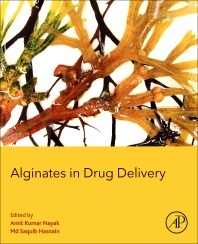
Alginates in drug delivery
Alginates in Drug Delivery explores the vital precepts, basic and fundamental aspects of alginates in pharmaceutical sciences, biopharmacology, and in the biotechnology industry. The use of natural polymers in healthcare applications over synthetic polymers is becoming more prevalent due to natural polymers’ biocompatibility, biodegradability, economic extraction and ready availability. To fully utilize and harness the potential of alginates, this book presents a thorough understanding of the synthesis, purification, and characterization of alginates and their derivative. This book collects, in a single volume, all relevant information on alginates in health care, including recent advances in the field.

A short guide to clinical pharmacokinetics
Consists of seven chapters that cover various aspects of pharmacokinetics and its clinical applications. The chapters are structured to provide clear objectives and keywords are bolded throughout the text to facilitate understanding. The topics covered include the significance of pharmacokinetics in clinical practice, factors affecting pharmacokinetic parameters, pharmacokinetic drug interactions, therapeutic drug monitoring, dosage adjustment in different population groups, the influence of hepatic diseases on pharmacokinetics and the impact of pharmacogenomics on pharmacokinetics and pharmacodynamics.
