



Page 2
Page 2

Children in Tort Law Part II : Children as Victims
Since children are not as capable as adults to perceive the risks involved in many situations of daily life, they are at a high risk of suffering personal injuries, mainly resulting from home, school and traffic accidents. From the tort law perspective, this requires a specific treatment of children as victims. For the last few decades some legal systems have been trying to find new solutions for a better protection of children, while other legal systems still follow more traditional rules. After having tackled the problems concerning the position of children as tortfeasors in a previous book, in this book the same working team deals with the problems related to the position of children as victims. This book analyses both the traditional solutions found in some legal systems and the newer solutions offered by others and devotes specific attention to damage issues, apportionment of damage and insurance problems when the victim is a child.

Child soldiers and the defence of duress under International criminal law
Investigates the use of duress as a defence in international criminal law, specifically in cases of child soldiers. The prosecution of children for international crimes often only focuses on whether children can and should be prosecuted under international law. However, it is rarely considered what would happen to these children at the trial stage. This work offers a nuanced approach towards international prosecution and considers how children could be implicated and defended in international courts.
Cases & materials on international law
A topical and engaging companion for study; placing international law directly in the context of contemporary debate. The book offers broad coverage of international law, and is an appropriate match for a range of courses and teaching styles.

Capital Punishment and the Criminal Corpse in Scotland, 1740–1834
This book provides the most in-depth study of capital punishment in Scotland between the mid-eighteenth and early nineteenth century to date. Based upon an extensive gathering and analysis of previously untapped resources, it takes the reader on a journey from the courtrooms of Scotland to the theatre of the gallows. It introduces them to several of the malefactors who faced the hangman’s noose and explores the traditional hallmarks of the spectacle of the scaffold. It demonstrates that the period between 1740 and 1834 was one of discussion, debate and fundamental change in the use of the death sentence and how it was staged in practice. In addition, the study provides an innovative investigation of the post-mortem punishment of the criminal corpse. It offers the reader an insight into the scene at the foot of the gibbets from which criminal bodies were displayed, and around the dissection tables of Scotland’s main universities where criminal bodies were used as cadavers for anatomical demonstration. In doing so it reveals an intermediate stage in the long-term disappearance of public bodily punishment.
Business criminal law: A primer for management and economics
Deals with business criminal law from the perspective of Germany, Austria, Liechtenstein and Switzerland. It primarily addresses students in business and economics (master's programme) as well as business practitioners, but is also meant for lawyers and law students. As criminal law legislators exert considerable influence on economic life, raising and growing awareness in the area of criminal law seems compulsory for future managers and executives. This textbook approaches the legal field less normatively and rather in a practical and entrepreneurial way. Its contents are based on the master level class "Business Criminal Law
Building the judiciary : law, courts, and the politics of institutional development
Building the Judiciary uncovers the causes and consequences of judicial institution-building in the United States from the commencement of the new government in 1789 through the close of the twentieth century.Explaining why and how the federal judiciary became an independent, autonomous, and powerful political institution.
Buddhism and comparative constitutional law
The first comprehensive account of the entanglements of Buddhism and constitutional law,The authors also highlight the important ways in which Buddhist actors have (re)conceived Western liberal ideals such as constitutionalism, rule of law, and secularism.

Brownlie's principles of public international law
A definitive guide to international law for over 40 years. This eighth edition, updated by James Crawford, builds on the reputation of its predecesors, providing outstanding, lucid and up-to-date treatment of all of the main issues in international law today
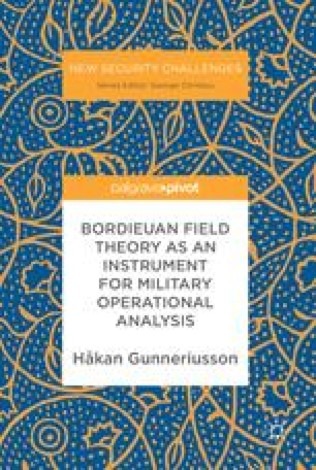
Bordieuan Field Theory as an Instrument for Military Operational Analysis
This book uses Pierre Bourdieu’s field theory as a lens through which to examine military operations. Novel in its approach, this innovative text provides a better, more nuanced understanding of the modern ‘battlespace’, particularly in instances of prolonged low-intensity conflict. Formed in two parts, this book primarily explores the scope of Bourdien theory before secondly providing a detailed case study of the Yugoslavian succession war of 1990-1992. Gunneriusson suggests that although theories do not necessarily provide answers, they do help us ask better questions. This volume suggests news lines of interdisciplinary investigation that will be of interest to members of armed forces, practitioners from NGOs, and policymakers.
Big Data and Global Trade Law
Explores the relevance of global trade law for data, big data and cross-border data flows. Contributing authors from different disciplines including law, economics and political science analyze developments at the World Trade Organization and in preferential trade venues by asking what future-oriented models for data governance are available and viable in the area of trade law and policy. The collection paints the broad picture of the interaction between digital technologies and trade regulation as well as provides in-depth analyses of critical to the data-driven economy issues, such as privacy and AI, and different countries' perspectives.
Between Peace and Conflict in the East and the West : Studies on Transformation and Development in the OSCE Region
This book features various studies on democratization, transformation, socio-economic development, and security issues in the Organization for Security and Cooperation in Europe (OSCE) geographical region and beyond. Written by experts and scholars working in the field of human dimension, security, transformation and development in Europe and Asia, particularly in post-soviet and communist countries, it examines the connectivity that the OSCE provides between the East and the West.
Asylum Matters : On the Front Line of Administrative Decision-Making
This book examines everyday practices in an asylum administration. Asylum decisions are often criticised as being ‘subjective’ or ‘arbitrary’. Asylum Matters turns this claim on its head.

Asylum Determination in Europe : Ethnographic Perspectives
The book includes a legal overview of European asylum determination procedures, followed by sections on the diverse actors involved, the means by which they communicate, and the ways in which they make life and death decisions on a daily basis. It offers a contextually rich account that moves beyond doctrinal law to uncover the gaps and variances between formal policy and legislation, and law as actually practiced.
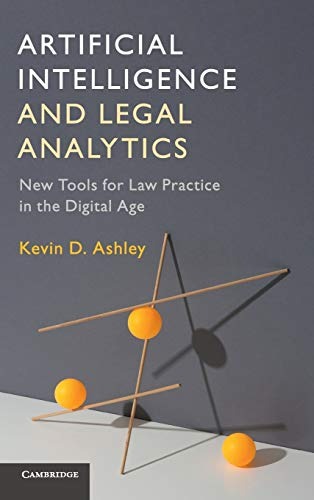
Artificial intelligence and legal analytics : new tools for law practice in the digital age
The field of artificial intelligence (AI) and the law is on the cusp of a revolution. This book - designed to explain computational processes to non-programmers - describes how text analytic programs will change the practice of law, specifically by connecting computational models of legal reasoning directly with legal text.
Artificial Intelligence and International Economic Law : Disruption, Regulation, and Reconfiguration
This book was finalized while countries around the world were still confronting a global public health crisis caused by the COVID-19 pandemic. Many came to rely on digital services as an infrastructure for social interaction and professional endeavors, including academic and educational work. The pandemic seems to have precipitated a further shift towards digital technologies and artificial intelligence. It is our hope that this book will contribute to an informed discussion about the relevance of and implications for international economic law beyond the pandemic"
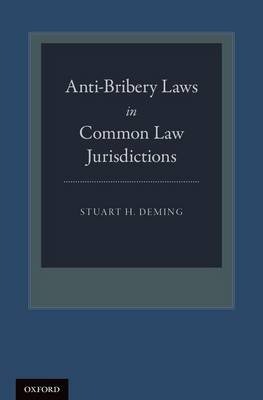
Anti-bribery laws in common law jurisdictions
The legal regimes adopted and being implemented by parties to the OECD Convention flow from a common framework. Yet even when the anti-bribery legal regimes are virtually identical, the differences can still be significant in the context of a range of factors that are unique to each legal system.

An introduction to law
this book addresses the ways in which rules and the structures of law respond to and impact upon changes in economic and political life. The title has been extensively updated and explores recent high profile developments such as the Civil Partnership Act 2005 and the Racial and Religious Hatred Bill.
An Introduction to international criminal law and Procedure
Offers readers comprehensive coverage and a high level of academic rigour while maintaining its signature accessible and engaging style. Introducing the readers to the fundamental concepts of international criminal law, as well as the domestic and international institutions that enforce that law, this book engages with critical questions, political and moral challenges, and alternatives to international justice.
An assessment framework for compliance with international space law and norms : Promoting equitable access and Use of space for emerging actors
proposes a framework for assessing countries’ levels of compliance with international space law and norms. It begins by exploring the development of two movements – the evidence-based policymaking and programming movement, and the rise of ratings and rankings research – and their growth across various disciplines. The analysis suggests that such efforts are useful in gauging the behavior of countries in space according to how well they adhere to existing space law and norms. To date, there is no comprehensive, periodic, and systematic measure of countries’ efforts to comply with space law and norms; this work endeavors to fill that gap by offering a framework in which to assess compliance.
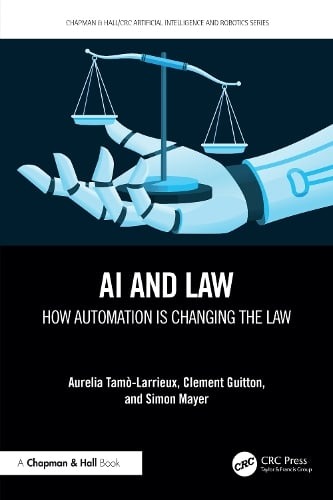
AI and law : How automation is changing the law
Provides insights into how AI is changing legal practice, government processes, and individuals’ access to those processes, encouraging each of us to consider how technological advances are changing the legal system. Particularly, and distinct from current debates on how to regulate AI, this books focuses on how the progressive merger between computational methods and legal rules changes the very structure and application of the law itself.
