




Designing Democracy : Ideas for Better Rules
While liberal democracies are the best systems of self-governance for societies, they rarely invoke great enthusiasm. On the one hand, democracies have been known to fail in achieving efficient or fair allocations. On the other hand, many citizens take the democratic system for granted as they have yet to experience an alternative. In this book the vision we propose is that the potential of democ racies has not yet been exhausted, and that optimal democracies are both the Utopia for societies and the aim that scientists should be committed to. We present a number of ideas for drawing up new rules to im prove the functioning of democracies. The book falls into two parts. The first part examines ways of combining incentive contracts with democratic elections. We suggest that a judicious combina tion of these two elements as a dual mechanism can alleviate a wide range of political failures, while at the same time adhering to the founding principles of democracies. The second part presents new rules for decision-making and agenda setting. Together with modern communication devices, these rules can sometimes transcend the limitations of liberal VI Preface democracies in achieving desirable outcomes. Examples of such rules include the flexible majority rule where the size of the ma jority required depends on the proposal, or the rule that only those belonging to the winning majority can be taxed.
Related Books

Global perspectives on AI, ethics, and business economics : Charting the future
Offers an in-depth exploration of the complex and rapidly evolving world of artificial intelligence (AI), focusing on its ethical, economic, and business dimensions. it provides a comprehensive analysis that intertwines historical context, philosophical ethics, global economic impacts, regulatory landscapes, workforce dynamics, corporate governance, consumer behavior, data ethics, and the use of AI for the good of society. after reviewing the evolution of AI, it offers insights into its historical milestones and the trajectory it may take in the future. this sets the stage for a broader discussion on how AI is not just a technological phenomenon but also a catalyst for ethical, economic, and societal transformation. the book emphasizes the importance of understanding AI’s historical development in order to gauge its potential impacts on our future.

Factors influencing the readiness of adoption of ISSB standards in Syrian companies : An applied Study at Damascus securities exchange
Aims to identify the main factors influencing this readiness, with particular emphasis on the relationship between company size and profitability and the preparedness to implement these standards. Data was collected from a sample of companies listed on the Damascus Securities Exchange, and the analysis was conducted using logistic regression to understand the impact of various factors. The findings of this study will provide valuable insights for policymakers, corporate leaders, and stakeholders on the critical role of company size and profitability in the adoption of ISSB standards.

Entrepreneurship : Digital transformation, education, opportunities and challenges ; Vol. 28
Digital transformation and artificial intelligence play an important role in entrepreneurship. this book adopts a multidisciplinary approach to entrepreneurship, exploring how entrepreneurial processes contribute to developing new products and services and innovative business models. recent shifts in business models focus on digital transformation and well-being. entrepreneurship is evolving with innovative approaches, and artificial intelligence is revolutionizing marketing strategies and market engagement. this volume presents a comprehensive overview of entrepreneurship, digital transformation, and entrepreneurial education.
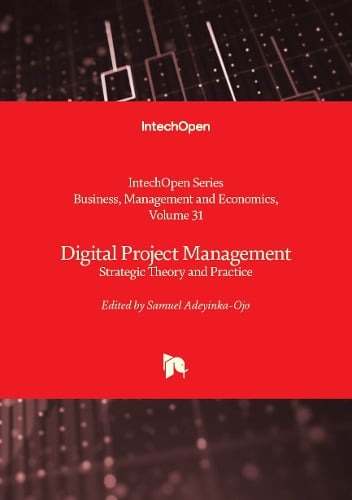
Digital project management strategic theory and practice ; Vol 31
Foundational resource for courses on digital project management methods, offering step-by-step guidance and real-world examples. It provides actionable insights into implementing digital tools in project management studies, from data collection to visualization. The book also highlights the role of strategic theory and practice in project management strategic decision-making across project planning, execution, monitoring and control management.
