



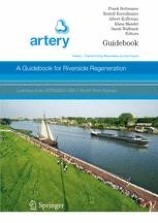
Artery guidebook : Artery - transforming riversides for the future
"Artery" is an initiative on a European scale, funded by the INTERREG IIIB NWE programme, which puts riverside restoration and regeneration at the heart of regional strategies, helping communities across Europe ‘turn back to face the water’. In this book the implemented strategies will be discussed, including public-private-partnership, public participation, awareness programs and regional development strategies. The book functions as a guide to facilitate similar future projects in other regions. The valuable experience and methods of trans-national cooperation should be made available to other developers, regional planners, project managers and politicians.
Related Books
China's Long-Term Low-Carbon Development Strategies and Pathways : Comprehensive Report
This book introduces a multi-disciplinary and comprehensive research on China's long-term low-carbon emission strategies and pathways. After comprehensively considering China’s own socioeconomic conditions, policy design, energy mix, and other macro-development trends and needs, the research team has proposed suggestions on China’s low-carbon development strategies and pathways until 2050, with required technologies and policies in order to realize the goals of building a great modern socialist country and a beautiful China.
Climate Change and Community Resilience : Insights from South Asia
Documents myriads of ways community-based climate change adaptation and resilience programs are being implemented in South Asian countries. The narrative style of writing in this volume makes it accessible to a diverse audience from academics and researchers to practitioners in various governmental, non-governmental and international agencies. At a time when climate change presents humanity with a gloomy future, the stories of innovation, creativity, grassroots engagement and locally applicable solutions highlighted in this book provides insights into hopeful ways of approaching climate solutions.

Achieving the Paris Climate Agreement goals ; Part 2 : Science-based target setting for the finance industry — Net-Zero Sectoral 1.5˚C pathways for real economy sectors
Provides an in-depth analysis of industry sectors globally, and its purpose is to present emission reduction targets in 5-year steps (2025 to 2050) for the main twelve finance sectors per the Global Industry Classification System. This scientific analysis aims to support the United Nations Principles for Responsible Investment initiative to give sustainability guidance for the global finance industry. The industry sector pathways presented here are based on the latest global and regional 100% renewable energy and non-energy greenhouse gas Representative Concentration Pathways in order to keep climate change significantly under +1.5 C and thereby achieve the Paris Climate Agreement goals. The heart of this book is three chapters presenting the results of industry scenario modelling. These chapters cover twelve industry and service sectors as well as transportation and buildings. The specific energy demand and specific emissions are presented based on the emission accounting concept of “Scope 1, Scope 2 and Scope 3” emission pathways. This methodology has been developed to measure the climate and sustainability index for companies, and this research project expands the methodology to apply it to entire industry sectors ...

African Handbook of Climate Change Adaptation
discusses current thinking and presents the main issues and challenges associated with climate change in Africa. It introduces evidences from studies and projects which show how climate change adaptation is being - and may continue to be successfully implemented in African countries. Thanks to its scope and wide range of themes surrounding climate change, the ambition is that will be a lead publication on the topic, which may be regularly updated and hence capture further works.
