




A Dictionary of World History
This wide-ranging dictionary contains a wealth of information on all aspects of history, from prehistory right up to the present day. Accessible, clear, and concise entries include biographies of key figures in world history (living and dead), separate entries for every country in the world (summarising key historical events), and in-depth entries on religious and political movements, international organizations, and major conflicts and events and their after-effects.
Related Books
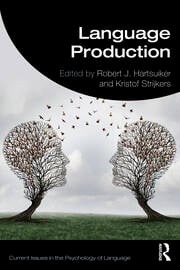
Language Production
This comprehensive text presents an up-to-date overview of the key topics in the field, providing important theoretical and empirical challenges to the traditional and accepted modal view of language production. Each chapter explores in detail a different aspect of language production, covering traditional methods including written and signed production alongside emerging research on joint action production. Emphasizing the neurobiological underpinnings of language, chapter authors showcase research that moves from a monologue-only approach to one that that considers production in more ecologically valid circumstances.
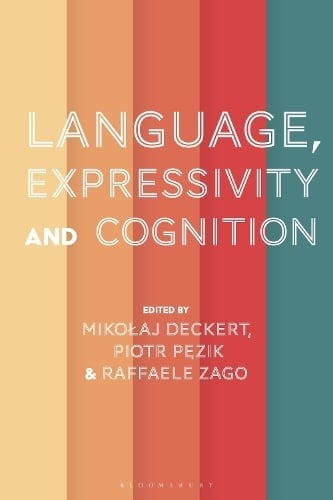
Language, Expressivity and Cognition
The book presents how language shapes communicative and cognitive processes but at the same time is also shaped by those processes. The chapters put forward a number of disciplinary and methodological perspectives encompassing insights from cognitive and social psychology, (critical) discourse analysis, cognitive linguistics, corpus linguistics and sociolinguistics. Both intralingual as well as contrastive, each chapter also engages with qualitative and quantitative methods.
Multilingualism: Understanding Linguistic Diversity
Multilingualism is everywhere in our globalised society. Delving into the 'social life' of languages, John Edwards provides a brief yet compelling overview of multilingualism and its sociocultural implications and consequences. Covering major topics including language origins, language death, lingua francas, pidgins, creoles and artificial languages, this book provides a complete introduction to what happens when languages meet.

The Cambridge Handbook of Intercultural Pragmatics
Intercultural pragmatics addresses one of the major issues of human communication in the globalized world: how do people interact with each other in a language other than their native tongue, and with native speakers of the language of interaction? Bringing together a globally-representative team of scholars, this Handbook provides an authoritative overview to this fascinating field of study, as well as a theoretical framework. Chapters are grouped into 5 thematic areas: theoretical foundation, key issues in Intercultural Pragmatics research, the interface between Intercultural Pragmatics and related disciplines, Intercultural Pragmatics in different types of communication, and language learning.
