



Page 1
Page 1

Good pharmacovigilance practice (GVP) : Focus on risk mangement plan (RMP)
Pharmacovigilance which is the science and activities relating to the detection, assessment, understanding and prevention of adverse drug reactions or any other possible drug related problems and Risk Management Strategies which provides a structured and coherent approach to identifying, assessing and managing risk and builds in a process for regularly updating and reviewing the assessment based on new developments or actions taken, conference provides the foundation for strong strategic planning and practical decision-making in pharmacovigilance programs. Stakeholders from medicines research, global regulation, and healthcare will join together to analyse the challenges for safety and pharmacovigilance efforts in this uncertain environment and examine effective strategies for addressing gaps and needs.
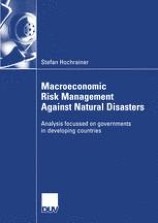
Macroeconomic Risk Management Against Natural Disasters : Analysis focussed on governments in developing countries
Natural disasters cause considerable economic damage. While developed countries usually are able to cope with the impacts of natural hazards, developing countries are faced with severe consequences for their resources. In order to prevent long-term macroeconomic repercussions, governments need a comprehensive disaster risk management strategy.Budgetary resources are allocated to pre-disaster risk management strategies to reduce the probability of financing gaps. The framework and model approach allows cross country comparisons as well as the assessment of financial vulnerability, macroeconomic risk, and risk management strategies.
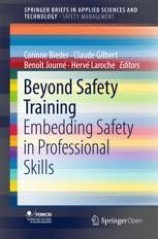
Beyond Safety Training : Embedding Safety in Professional Skills
Investigates why, despite more and more resources devoted to safety training, expectations are not entirely met, particularly in the industrial sectors that have already achieved a high safety level. It not only reflects the most precious viewpoints of experts from different disciplines, different countries, with experiences in various industrial fields at the cutting edge of theories and practices in terms of safety, professionalization and their relationships. It also consolidates the positioning of the Foundation for an Industrial Safety Culture, highlighting what is currently considered at stake in terms of safety training, taking into account the system of constraints the different stakeholders are submitted to. It reports some success stories as well as elements which could explain the observed plateau in terms of outcome. It identifies some levers for evolution for at-risk industry and outlines a possible research agenda to go further with experimental solutions.
