



Page 1
Page 1

Organocatalysis
Due to the emergence of organocatalysis as a highly active and very exciting field of research both in academia and the life sciences industry, an Ernst Schering Research Foundation Symposium was organized in 2007 to bring together the scientific leaders in this field and to discuss the basics and current progress of organocatalysis and its application in drug discovery. Various aspects of organocatalysis are addressed in this volume, covering a broad range of synthetic transformations such as functional group interconversions as well as CC- and CX-bond formations and their applications in natural product and drug syntheses. In addition, the design and scope of various catalyst systems are discussed, from small molecules, to peptides, to genetically engineered enzymes.

Efficiency in Natural Product Total Synthesis
Uniting the key organic topics of total synthesis and efficient synthetic methodologies, this book clearly overviews synthetic strategies and tactics applied in total synthesis, demonstrating how the total synthesis of natural products enables scientific and drug discovery. • Focuses on efficiency, a fundamental and important issue in natural products synthesis that makes natural product synthesis a powerful tool in biological and pharmaceutical science • Describes new methods like organocatalysis, multicomponent and cascade reactions, and biomimetic synthesis
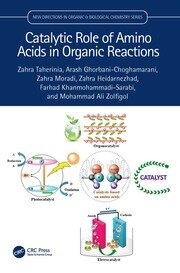
Catalytic role of amino acids in organic reactions
Asymmetric organometallic and organocatalytic processes have attracted great interest. Asymmetric synthesis using both natural and unnatural amino acids has been tremendously important from synthetic as well as industrial viewpoints, and numerous new methodologies have been developed in the last decades. Herein we provide an overview of old and very recent (since 1900 till now) advances and applications in the area of heterogeneous catalysis, homogeneous catalysis, electrocatalysis, photocatalysis, organocatalysis, thermal catalysis using amino acids [proline, glycine, alanine, valine, serine, threonine, cysteine, methionine, asparagine, glutamine, lysine, arginine, histidine, aspartate, glutamate, phenylalanine, and tryptophan], (supported or unsupported), an amino acid containing materials or amino acids derivatives as an essential component of catalysts, this book highlights the most important and recent developments to immobilize or support amino acids on various support materials. This book is suitable as supplementary reading for courses targeting the design, synthesis, and application of chiral catalysts, asymmetric catalysis, and sustainable production.
