



Page 1
Page 1

Rising Powers and Peacebuilding : Breaking the Mold?
Examines the policies and practices of rising powers on peacebuilding. It analyzes how and why their approaches differ from those of traditional donors and multilateral institutions. The policies of the rising powers towards peacebuilding may significantly influence how the UN and others undertake peacebuilding in the future. This book is an invaluable resource for practitioners, policy makers, researchers and students who want to understand how peacebuilding is likely to evolve over the next decades.

New Horizons for Asian Museums and Museology
This book presents up-to-date information about museums and museology in present-day Asia, focusing on Japan, Mongolia, Myanmar, and Thailand. Asian countries today have developed or are developing their own museology and museums, which are not simple copies of European or North American models. This book provides readers with carefully chosen examples of museum activities—for example, exhibition and sharing information, database construction, access to and conservation of museum collections, relationships between museums and local communities, and international cooperation in the field of cultural heritage.
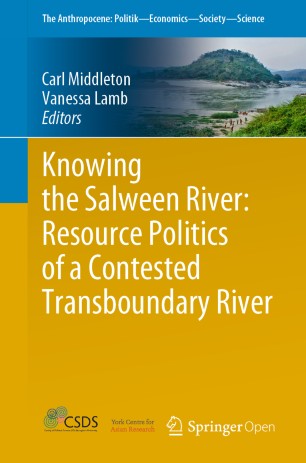
Knowing the Salween River : Resource Politics of a Contested Transboundary River
Focuses on the Salween River, shared by China, Myanmar, and Thailand, that is increasingly at the heart of pressing regional development debates. The basin supports the livelihoods of over 10 million people, and within it there is great socio-economic, cultural and political diversity. The basin is witnessing intensifying dynamics of resource extraction, alongside large dam construction, conservation and development intervention, that is unfolding within a complex terrain of local, national and transnational governance. With a focus on the contested politics of water and associated resources in the Salween basin, this book offers a collection of empirical case studies that highlights local knowledge and perspectives. Given the paucity of grounded social science studies in this contested basin, this book provides conceptual insights at the intersection of resource governance, development, and politics of knowledge relevant to researchers, policy-makers and practitioners at a time when rapid change is underway.
