Refine Results
Sort By
From
To



Faculties
Campus Facilities and Online Services

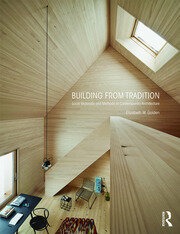
Examines the recent resurgence of interest in the handmade building and the use of local and renewable materials in contemporary construction. In the past, raw materials were shaped to provide shelter and to accommodate the cultural, social, and economic needs of individuals and communities. This is still true today as architects, engineers, and builders turn once again to local resources and methods, not simply for constructing buildings, but also as a strategy for supporting social engagement, sustainable development, and cultural continuity. Building from Tradition features global case studies that allow readers to understand how building practices-developed and refined by previous generations-continue to be adapted to suit a broad range of cultural and environmental contexts. The book provides: a survey of historical and technical information about geologic and plant-based materials such as: stone, earth, reed and grass, wood, and bamboo; 24 detailed case studies examining the disadvantages and benefits to using traditional materials and methods and how they are currently being integrated with contemporary construction practices
A result of the first ever study of the transformations of the higher education institutional landscape in fifteen former USSR countries after the dissolution of the Soviet Union in 1991. It explores how the single Soviet model that developed across the vast and diverse territory of the Soviet Union over several decades has evolved into fifteen unique national systems, systems that have responded to national and global developments while still bearing some traces of the past. The book is distinctive as it presents a comprehensive analysis of the reforms and transformations in the region in the last 25 years; and it focuses on institutional landscape through the evolution of the institutional types established and developed in Pre-Soviet, Soviet and Post-Soviet time. It also embraces all fifteen countries of the former USSR, and provides a comparative analysis of transformations of institutional landscape across Post-Soviet systems.
