


Refine Results
Sort By
From
To

Offers contributions to a philosophical and realistic approach to the place of adjudication in contemporary constitutional democracies. Bringing together scholars from different legal and philosophical backgrounds, purports to cast light on the role(s) of judges and the function of judicial interpretation inside of constitutional states, from the standpoint of legal realism as a revisited and sophisticated jurisprudential outlook. In so doing, also copes with a few major jurisprudential issues, like, e.g., determining the ideas that make up the core of legal realism, exploring the relation between legal realism and legal positivism, identifying the boundaries of judicial interpretation as they appear from a realist standpoint, as well as considering some skeptical outlooks on the very claims of contemporary legal realism.
Explores both the content and role of individual common law constitutional rights alongside the constitutional significance and broader implications of these developments. It therefore contributes not only to ourunderstanding of what the common law might be capable of offering in terms of the protection of rights, but also to our understanding of the nature of the constitutional order of which such rights are an integral part.
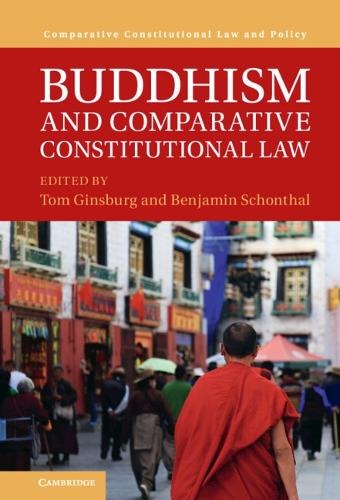
The first comprehensive account of the entanglements of Buddhism and constitutional law,The authors also highlight the important ways in which Buddhist actors have (re)conceived Western liberal ideals such as constitutionalism, rule of law, and secularism.
The legal regimes adopted and being implemented by parties to the OECD Convention flow from a common framework. Yet even when the anti-bribery legal regimes are virtually identical, the differences can still be significant in the context of a range of factors that are unique to each legal system.
In this work Dr. Taylor surveys the federal countries of the world and asks how they divide power among the constituent units of the federation. In so doing, he considers not only the formal constitutional text, but, far more importantly, the case law that has grown up around it as the Courts develop approaches to interpreting provisions for the distribution of powers. This enables conclusions to be drawn about the effectiveness of various structural and interpretative approaches to the distribution of powers within federations.
The book is unique in combining a challenging interpretation of one the foremost European conceptions of fundamental rights with the discussion of the pragmatics of constitutional adjudication.

Daraa Highway - Ghabagheb - Syria
+963-15 2050 - 15 860 380 /1/2/3 - 11 662 3900