


Refine Results
Sort By
From
To

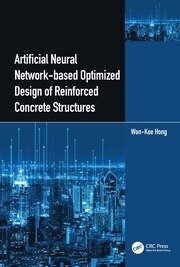
Introduces AI-based Lagrange optimization techniques that can enable more rational engineering decisions for concrete structures while conforming to codes of practice. It shows how objective functions including cost, CO2 emissions, and structural weight of concrete structures are optimized either separately or simultaneously while satisfying constraining design conditions using an ANN-based Lagrange algorithm. Any design target can be adopted as an objective function. Many optimized design examples are verified by both conventional structural calculations and big datasets. Uniquely applies the new powerful tools of AI to concrete structural design and optimization Multi-objective functions of concrete structures optimized either separately or simultaneously Design requirements imposed by codes are automatically satisfied by constraining conditions Heavily illustrated in color with practical design examples
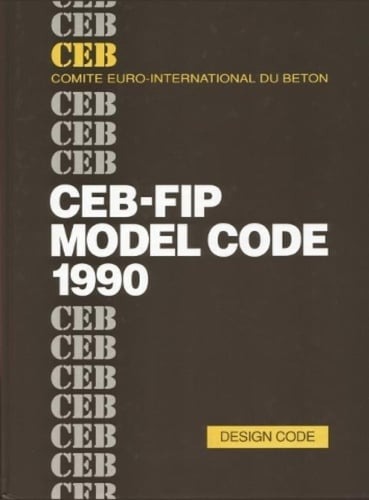
This document is a comprehensive design code for concrete. It is the result of a comprehensive revision to the original model code of 1978, which was produced jointly by the Comite Euro-International du Beton (CEB) and the Federation Internationale de la Precontrainte (FIP). Model Code 1990 has more detailed guidelines and explanations than national codes and can be used as a basis for them. It has already influenced the codification work that is being carried out both nationally and internationally and will continue to do so. With the publication of Eurocode 2: Part 1 as a draft pre-standard, this document is a useful reference during the consultative period before Eurocode 2 becomes a European standard. It may be of use to anyone involved in codification work on concrete.
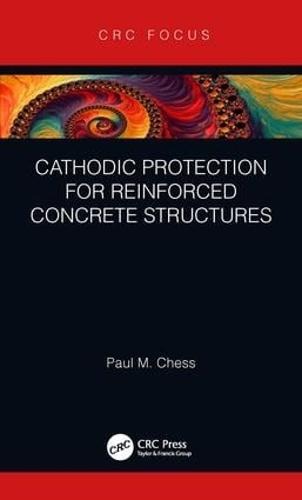
For specialist contractors, large consultants and owners of corrosion damaged structures, and looks at international experience with this technique. It examines why corrosion is occurring, the differences in the application of CP with the stark dichotomy in its success and failure, and finally ways in which its performance can be improved on future installations.
Recent studies highlight the application of artificial intelligence, machine learning, and simulation techniques in engineering. This book covers the successful implementation of different intelligent techniques in various areas of engineering focusing on common areas between mechatronics and civil engineering. The power of artificial intelligence and machine learning techniques in solving some examples of real-life problems in engineering is highlighted in this book. The implementation process to design the optimum intelligent models is discussed in this book.
Offers state-of-the-art contributions in the area of AI and its applications in the field of civil engineering presenting methods and implementation of AI and machine learning in multiple facets of civil engineering
Focuses on the safety assessment of existing structures subjected to multi-hazard scenarios through advanced numerical methods. Whereas the focus is on concrete dams and nuclear containment structures, the presented methodologies can also be applied to other large-scale ones. This book is composed of seven sections: Fundamentals: theoretical coverage of solid mechnics, plasticity, fracture mechanics, creep, / seismology, dynamic analysis, probability and statistics / Damage: that can affect concrete structures, such as cracking of concrete, AAR, chloride ingress, and rebar corrosion, / Finite Element: formulation for both linear and nonlinear analysis including stress, heat and fracture mechanics, / Engineering Models: for soil/fluid-structure interaction, uncertainty quantification, probablilistic and random finite element analysis, machine learning, performance based earthquake engineering, ground motion intensity measures, seismic hazard analysis, capacity/fragility functions and damage indeces, / Applications to dams through potential failure mode analyses, risk-informed decision making, deterministic and probabilistic examples, / Applications to nuclear structures through modeling issues, aging management programs, critical review of some analyses, / Other applications and case studies: massive RC structures and bridges, detailed assessment of a nuclear containment structure evaluation for license renewal.

Daraa Highway - Ghabagheb - Syria
+963-15 2050 - 15 860 380 /1/2/3 - 11 662 3900