Refine Results
Sort By
From
To



Faculties
Campus Facilities and Online Services

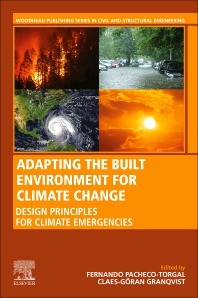
Adapting the Built Environment for Climate Change: Design Principles for Climate Emergencies analyzes several scenarios and proposes various adaptation strategies for climate emergencies (heat waves, wildfires, floods, and storms). Divided into three themes, the book offers an organized vision of a complex and multi-factor challenge. It covers climatic resilience and building refurbishment, implications for service life prediction and maintainability, and climate adaptation in the maintenance and management of buildings. Sections cover infrastructure materials, climate emergency adaptation and building adaptation to heat waves, wildfires, floods and storms.
Interactions between agriculture, climate and patterns of land use are complex. Major changes in agriculture, and land use patterns are foreseen in the next couple of decades in response to shifts in climate, greenhouse gas management initiatives, population growth and other forces. The book explores key interactions between changes in agriculture, patterns of land use and efforts to reduce greenhouse emissions from agriculture. The volume is based on inter-disciplinary science and policy interactions, exploring the way land use may aid in addressing or be affected by the onset of climate change and alterations in food demand. Future forces shaping land use decisions are examined, and its sensitivity to climate change is highlighted. Patterns of land use and the agricultural role in climate change mitigation are explored. Also, policy and social responses to the new perspectives on future land use patterns are identified. The perspective of the book is beyond the year 2015.
