



Page 1
Page 1

New Business Models for the Reuse of Secondary Resources from WEEEs : The FENIX Project
This book summarizes research being pursued within the FENIX project, funded by the EU community under the H2020 programme, the goal of which is to design a new product service paradigm able to promote innovative business models, to open added value to the vessels and to create new market segments. It experiments and validates its approach on three new concepts of added-value specialized vessels able to run requested services for several maritime sectors in the most effective, efficient, economic valuable and eco-friendly way. The three vessels share the same lean design methodology, IoT tools and HPC simulation strategy: a lean fact-based design model approach, which combines real operative data at sea with lean methodology, to support the development and implementation of the vessel concepts; IT customized tools to enable the acquisition, processing and usage of on board and local weather data, through an IoT platform, to provide business services to different stakeholders; HPC simulation, providing a virtual towing tank environment, for early vessel design improvement and testing. The book demonstrates that an integrated LCC analysis and LCC strategy to guarantee sustainability to vessels concepts and the proper environmental attention inside the maritime industry.

Designing sustainability for all : The design of sustainable product-service systems applied to distributed economies
This book introduces design for Sustainable Product-Service Systems (S.PSS) and for Sustainable Distributed Economies (S.DE). These are introduced as technical and operative tools for the development of a new generation of designers, responsible and capable of designing environmentally-sustainable products.
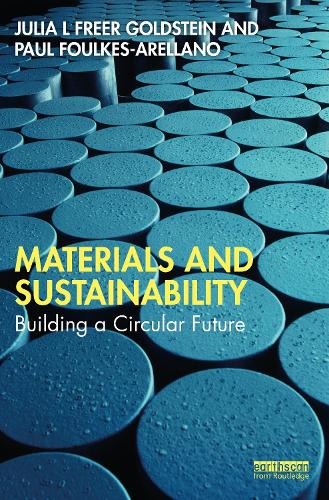
Materials & sustainability building a circular future
Examines sustainable manufacturing, from the extraction of materials to processing, use, and disposal, and argues that significant changes in all of the above are needed for the world to progress toward a more circular economy. Materials and processing methods are usually chosen with performance as the key metric.
Circular entrepreneurship : Creating responsible enterprise
Investigation reveals enterprises small and large delivering a stimulating message, from changes in entrepreneurial mindsets to the inclusive use of new technologies and a push for innovation. Zucchella and Urban explore the novel concept of circular enterprise, showing how, with their capacity to innovate, these firms are becoming the most powerful actors of a new, sustainable social order.

Advances in production management systems : Towards smart and digital manufacturing ; IFIP WG 5.7 International Conference, APMS 2020, Novi Sad, Serbia, August 30 – September 3, 2020, Proceedings, Part II
Part II: the Operator 4.0: new physical and cognitive evolutionary paths; digital transformation approaches in production management; digital transformation for more sustainable supply chains; data-driven applications in smart manufacturing and logistics systems; data-driven services: characteristics, trends and applications; the future of lean thinking and practice; digital lean manufacturing and its emerging practices; new reconfigurable, flexible or agile production systems in the era of industry 4.0; operations management in engineer-to-order manufacturing; production management in food supply chains; gastronomic service system design; product and asset life cycle management in the circular economy; and production ramp-up strategies for product
