



Page 1
Page 1
Manufacturing of Pharmaceutical Proteins: From Technology to Economy
Manufacturing of Pharmaceutical Proteins: From Technology to Economy, renowned chemical engineer Dr. Stefan Behme delivers a comprehensive text covering all aspects of biopharmaceutical manufacturing, including legal and regulatory considerations, production facility design, quality assurance, supply chain management, emerging market regulations, and cost control.

Management of Early Stage Breast Cancer : Basics and Controversies
Breast cancer, its causes, early detection and treatment have received considerable attention, since this widespread disease is one of the most important health concerns for women. This book provides a comprehensive overview of the diagnostic and therapeutic aspects of the management of early-stage breast cancer, including essential information on basic topics like pathology, and radiology, as well as the latest developments. Further, it discusses all aspects of surgical care, chemotherapy and radiation therapy, together with the controversies and current management guidelines.

Making Healthcare Safe : The Story of the Patient Safety Movement
This unique and engaging open access title provides a compelling and ground-breaking account of the patient safety movement in the United States, told from the perspective of one of its most prominent leaders, and arguably the movement’s founder, Lucian L. Leape, MD. Covering the growth of the field from the late 1980s to 2015, Dr. Leape details the developments, actors, organizations, research, and policy-making activities that marked the evolution and major advances of patient safety in this time span. In addition, and perhaps most importantly, this book not only comprehensively details how and why human and systems errors too often occur in the process of providing health care, it also promotes an in-depth understanding of the principles and practices of patient safety, including how they were influenced by today’s modern safety sciences and systems theory and design. Indeed, the book emphasizes how the growing awareness of systems-design thinking and the self-education and commitment to improving patient safety, by not only Dr. Leape but a wide range of other clinicians and health executives from both the private and public sectors, all converged to drive forward the patient safety movement in the US.
Lehninger Principles of Biochemistry
Help students navigate the complex discipline of biochemistry with a clear and coherent presentation. Renowned authors David Nelson, Michael Cox, and new co-author Aaron Hoskins have focused this eighth edition around the fundamental principles to help students understand and navigate the most important aspects of biochemistry. Text features and digital resources in the new Achieve platform emphasize this focus on the principles, while coverage of recent discoveries and the most up-to-date research provide fascinating context for learning the dynamic discipline of biochemistry.
Katzung & Trevor's pharmacology : Examination & board review
Excellent Q & A and rationales for course exams and USMLE Step 1. With 1,000+ board-style questions/answers and fully up-to-date content, this is the most popular review in pharmacology. Organized to reflect the syllabi in pharmacology courses, Katzung & Trevor's Pharmacology Exam and Board Review covers all current drugs and retrovirals, immunologic agents, and chemotherapies. Each chapter begins with 20 pages of informative text, followed by questions and answers, and includes concise discussions of the concepts underlying basic principles or specific drug groups. Edited by the world leading figures in pharmacology and medicine, this high-yield text focuses on basic principles, autonomic drugs, cardiovascular-renal drugs, and drugs with actions on smooth muscle, central nervous system drugs, and drugs used to treat chemotherapeutic drugs, and toxicology.
Common Chinese materia medica ; Vol.2
Contains 231 species of 40 families of medicinal plants. The most important family of which are Magnoliaceae, such as Magnolia officinalis and Magnolia officinalis subsp. biloba; Schisandra chinensis of Schisandraceae; Cinnamomum aromaticum of Lauraceae, Coptis chinensis Franch., Coptis omeiensis and Coptis teeta of Berberidaceae; Isatis indigotica, Lepidium apetalum and Raphanus sativus of Cruciferae; Rheum palmatum, Rheum officinale and Rheum taguticum of Polygonaceae, etc. In each specie, it introduces the scientific names, herbal medicine names, characteristics, habitats, distributions, Acquisition and processing methods, medicinal traits, tastes, functions, use and dosages, and other information of medicinal plants, and attaches unedited color pictures and pictures of part herbal medicines for each species. This book series has totally 10 volumes, which covers 2000 kinds of Chinese medicines that are commonly seen or used. These volumes not only introduce the efficacy, function and some prescriptions of the medicines, but also introduce the biological characteristics of them in detail with clear photos of the habitats, so that readers can identify them in the field. Apart from the growing environment, the books expound the distribution areas and other information to facilitate researches and other applications. The volumes are targeted at readers of general interests and it is also of high referential value for scientific researcher and teachers. It can be used as a guide to researchers, clinical doctors, and students in the department of pharmaceutics and traditional Chinese medicine.
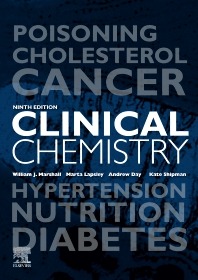
Clinical Chemistry
Clinical Chemistry considers what happens to the body’s chemistry when affected by disease. It provides introductory coverage of the scientific basis for biochemistry tests routinely used in medicine - including tests for the assessment of organ function, diagnosis and monitoring disease activity and therapy efficacy. Each topic area begins with a concise description of the underlying physiological and biochemical principles and then applies them to patient investigation and management. The regular use of case histories helps further emphasise clinical relevance and chapter key points, as well as provide a useful starting point for examination revision.
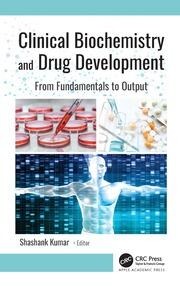
Clinical biochemistry and drug development : From fundamentals to output
Focuses on clinical biochemistry fundamentals, cell culture techniques, and drug discovery and development concepts. It deals with three different fields of clinical research: cell culture, clinical biochemistry, and drug discovery and development.
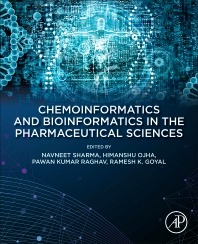
Chemoinformatics and Bioinformatics in the Pharmaceutical Sciences
Chemoinformatics and Bioinformatics in the Pharmaceutical Sciences brings together two very important fields in pharmaceutical sciences that have been mostly seen as diverging from each other: chemoinformatics and bioinformatics. As developing drugs is an expensive and lengthy process, technology can improve the cost, efficiency and speed at which new drugs can be discovered and tested. This book presents some of the growing advancements of technology in the field of drug development and how the computational approaches explained here can reduce the financial and experimental burden of the drug discovery process.
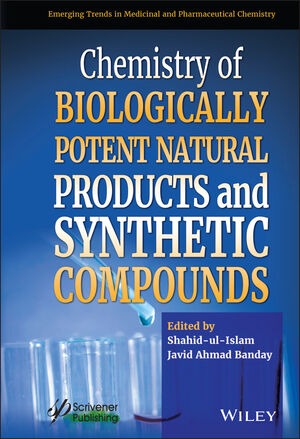
Chemistry of Biologically Potent Natural Products and Synthetic Compounds
Several novel natural product derivatives, heterocyclic and other synthetic compounds, have been reported to have shown interesting biological activities including anticancer, antimicrobial, anti-inflammatory, anti-glycemic, anti-allergy and antiviral etc. Provides up-to-date information on new developments and most recent medicinal applications of the natural products and derivatives, as well as the chemistry and synthesis of heterocyclic and other related compounds.
Cannabinoids and sleep : Molecular, functional and clinical aspects
Offers a comprehensive overview on cannabinoids and their effects on sleep Provides novel research findings on the therapeutic potential of cannabinoids Discusses the effect of cannabinoids in several neurological disorders

Blood traces : Interpretation of deposition and distribution
Blood Traces provides an authoritative resource that reviews many of the aspects of the interpretation of blood traces that have not been treated with the thoroughness they deserve. With strict adherence to the scientific method, the authors — noted experts on the topic — address the complexities encountered when interpreting blood trace configurations. The book provides an understanding of the scientific basis for the use of blood trace deposits, i.e. bloodstain patterns, at crime scenes to better reconstruct a criminal event.
Biosurfactants for a sustainable future : Production and applications in the environment and biomedicine
The book emphasizes the different techniques that are used for the production of biosurfactants from microorganisms and their characterization. Various aspects of biosurfactants, including structural characteristics, developments, production, bio-economics and their sustainable use in the environment and biomedicine, are addressed, and the book also presents metagenomic strategies to facilitate the discovery of novel biosurfactants producing microorganisms.
Biopharmaceutics : From fundamentals to industrial practice
Beginning with an expansive introduction to the basics of biopharmaceutics and the context that underpins the field, the included resources go on to discuss how biopharmaceutics are integrated into product development within the pharmaceutical industry. Explorations of how the regulatory aspects of biopharmaceutics function, as well as the impact of physiology and anatomy on the rate and extent of drug absorption, follow.
Biomarkers as targeted herbal drug discovery : A pharmacological approach to nanomedicines
Looks at the applications of biomarkers as important tools for herbal drug discovery, presenting research on phytoconstituents with advanced nanotechnological applications for healthcare benefits. Herbal drug discovery based on biomarkers is an emerging area in complementary and alternative medicine that has tremendous potential in healthcare. Conventional medications have limited efficacy and high toxicity, whereas herbal drugs are said to provide wide structural diversity that is not usually seen with conventional/synthetic drug molecules. Recognition of various herbal constituents, such as terpenoids, fatty acids, flavonoids and steroids, are well explored in the management and treatment of various disorders in this volume. These agents target various biomarkers such as nitric oxide (NO), cytokines, chemokines, adhesion molecules, NF- kβ, lipoxygenase (LOX), and arachidonic acid. Reviews the literature on inflammatory biomarkers in the treatment of diseases Looks at the development of herbal drug discovery based on biomarkers Explores emerging concepts of nanomedicines for herbal drug delivery Takes an interdisciplinary approach, with application to disciplines related to medical, pharmaceutical, biotechnological, Ayurvedic, Unani and biomedical engineering fields
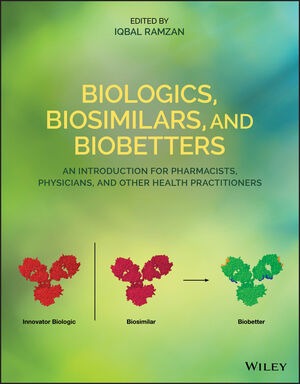
Biologics, biosimilars, and biobetters : An introduction for pharmacists, physicians and other health practitioners
Explains what pharmacists need to discuss the equivalence, efficacy, safety, and risks of biosimilars with physicians, health practitioners, and patients about Guides regulators on pragmatic approaches to dealing with these drugs in the context of rapidly evolving scientific and clinical evidence Balances scientific information on complex drugs with practical information, such as a checklist for pharmacists
Basiswissen pharmakologie = Basic knowledge of pharmacology
Offers a clear and concise overview of all exam-relevant pharmacology content. It guides you through the entire foundational knowledge, from the basics to the most important clinical pictures, in an easily understandable way and aligned with the German National Competency-Based Learning Objectives for Medicine (GK) and National Competency-Based Learning Objectives for Medicine (NKLM). Benefit from the lecturer's many years of experience, who has carefully selected and presented the essential information for you.
Basic principles of drug discovery and development ; 2nd ed.
Presents the multifaceted process of identifying a new drug in the modern era, which requires a multidisciplinary team approach with input from medicinal chemists, biologists, pharmacologists, drug metabolism experts, toxicologists, clinicians, and a host of experts from numerous additional fields. Enabling technologies such as high throughput screening, structure-based drug design, molecular modeling, pharmaceutical profiling, and translational medicine are critical to the successful development of marketable therapeutics. Given the wide range of disciplines and techniques that are required for cutting edge drug discovery and development, a scientist must master their own fields as well as have a fundamental understanding of their collaborator’s fields.
Basic & Clinical Pharmacology
Covers the important concepts students need to know about the science of pharmacology and its application to clinical practice. This edition has been extensively updated to provide expanded coverage of transporters, pharmacogenomics, and new drugs Delivers the knowledge and insight needed to excel in every facet of pharmacology!. Encompasses all aspects of medical pharmacology, including botanicals and over-the-counter drugs Major revisions of the chapters on immunopharmacology, antiseizure, antipsychotic, antidepressant, antidiabetic, anti-inflammatory, and antiviral drugs, prostaglandins, and central nervous system neurotransmitters New chapter on the increasingly relevant topic of cannabis pharmacology Each chapter opens with a case study, covers drug groups and prototypes, and closes with summary tables and diagrams that encapsulate important information Revised full-color illustrations provide more information about drug mechanisms and effects and help clarify important concepts Trade Name/Generic Name tables are provided at end of each chapter for easy reference when writing a chart order or prescription Includes descriptions of important new drugs released through May 2019 New and updated coverage of general concepts relating to recently discovered receptors, receptor mechanisms, and drug transporters
Axially chiral compounds : Asymmetric synthesis and applications
Appearing widely in natural products, biologically active molecules, asymmetric chemistry, and material science, axially chiral motifs constitute the core backbones of the majority of chiral ligands and organocatalysts in asymmetric catalysis. In a new work of particular relevance to synthetic chemists, Axially Chiral Compounds: Asymmetric Synthesis and Applications delivers a clearly structured and authoritative volume covering the classification, characteristics, synthesis, and applications of axial chirality.
