




Ethical Dimensions of the Economy : Making Use of Hegel and the Concepts of Public and Merit Goods
This book reflects philosophically about the socio-political dimension of economics. Part I provides normative reflections on the economy: Section I reflects on the interconnections between the multiple discourses on the economy, section II presents Hegel's claim that the economic order is an ethical institution and defends his ontological view of the economy against the one of Adam Smith. Section III dialogues with economists about their concepts of public and merit goods. This section defends a Hegelian ontology of the economy through an analysis of technical concepts used by economists. Part II provides applications derived from the normative analysis: Section I presents the views of authors in different academic disciplines pointing to failures in late capitalism, in particular failures of American capitalism and section II asks the question: " What must one pay attention to in a transition from a command economy to a free market?" Section III draws attention to an overlap of ideas found in Catholic Social Thought and in the publications of some recent Nobel prize winners in economics (Buchanan, Sen, Stiglitz).
Related Books

Global perspectives on AI, ethics, and business economics : Charting the future
Offers an in-depth exploration of the complex and rapidly evolving world of artificial intelligence (AI), focusing on its ethical, economic, and business dimensions. it provides a comprehensive analysis that intertwines historical context, philosophical ethics, global economic impacts, regulatory landscapes, workforce dynamics, corporate governance, consumer behavior, data ethics, and the use of AI for the good of society. after reviewing the evolution of AI, it offers insights into its historical milestones and the trajectory it may take in the future. this sets the stage for a broader discussion on how AI is not just a technological phenomenon but also a catalyst for ethical, economic, and societal transformation. the book emphasizes the importance of understanding AI’s historical development in order to gauge its potential impacts on our future.

Factors influencing the readiness of adoption of ISSB standards in Syrian companies : An applied Study at Damascus securities exchange
Aims to identify the main factors influencing this readiness, with particular emphasis on the relationship between company size and profitability and the preparedness to implement these standards. Data was collected from a sample of companies listed on the Damascus Securities Exchange, and the analysis was conducted using logistic regression to understand the impact of various factors. The findings of this study will provide valuable insights for policymakers, corporate leaders, and stakeholders on the critical role of company size and profitability in the adoption of ISSB standards.

Entrepreneurship : Digital transformation, education, opportunities and challenges ; Vol. 28
Digital transformation and artificial intelligence play an important role in entrepreneurship. this book adopts a multidisciplinary approach to entrepreneurship, exploring how entrepreneurial processes contribute to developing new products and services and innovative business models. recent shifts in business models focus on digital transformation and well-being. entrepreneurship is evolving with innovative approaches, and artificial intelligence is revolutionizing marketing strategies and market engagement. this volume presents a comprehensive overview of entrepreneurship, digital transformation, and entrepreneurial education.
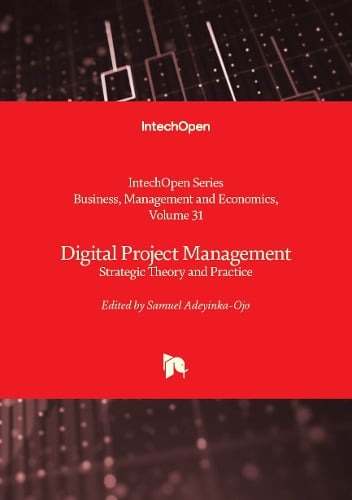
Digital project management strategic theory and practice ; Vol 31
Foundational resource for courses on digital project management methods, offering step-by-step guidance and real-world examples. It provides actionable insights into implementing digital tools in project management studies, from data collection to visualization. The book also highlights the role of strategic theory and practice in project management strategic decision-making across project planning, execution, monitoring and control management.
