



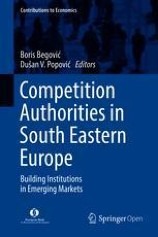
Competition Authorities in South Eastern Europe : Building Institutions in Emerging Markets
Provides answers to key open questions concerning competition policy in emerging economies, with a focus on South Eastern Europe. The contributions address two major issues. One is the design of competition policy and the national competition authorities that enforce it, including the topics of competition advocacy and state aid control; the other is the use of economic methods in competition law enforcement, especially in the cases of relevant market definition and merger control. Many lessons learned in the countries of South Eastern Europe can be applied to the emerging markets of other regions. As such, the findings presented here will be highly relevant for officials and staff at national competition authorities, advisers to legislators shaping national competition policy, competition law professionals, and university students alike.
Related Books

Dynamic business law : The essentials
The importance and excitement of the law. We want them to be aware that business resides in an atmosphere of legal rights and responsibilities. The more they have an understanding of relevant law, the more their business activities will flourish. We tried to construct a book that contains the basics of business law but does not get bogged down in the kind of details that would be more appropriate in an upper-level law class.

International legal theory and the cognitive turn
Significant changes in social sciences often herald changes in legal theory, including in international legal theory. In light of the cognitive turn in social sciences, this volume seeks to explore the implications of this ‘turn’ for international legal theories. Cognitive and behavioural studies are making inroads into international law literature and international policy-making,
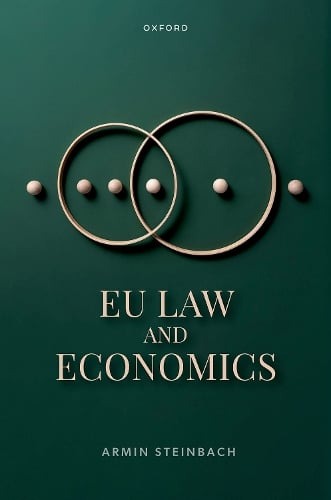
EU law and economics
Examines the design and evolution of European law from the perspective of economics. It draws on various branches of the economic sciences including rational choice and game theory, and institutional and behavioural economics to expand our understanding of EU law and its effects. It seeks to complement doctrinal research on EU law by generating insights.

Global antitrust and sustainability : Law, economics, enforcement
Investigates how competition law and competition authorities around the world deal with sustainability. It covers, economics, law, and enforcement matters. The book also sets out the basics of the concept of sustainability that are necessary for competition lawyers to work with such matters. It explores what economics has to say about the relationship between sustainability and competition.
