



Page 1
Page 1

Transactions on Aspect-Oriented Software Development I
This book, the first volume in the Transactions on Aspect-Oriented Software Development series, presents nine revised papers that have been through a careful peer reviewing process by the journal's Editorial Board. The papers cover a wide range of topics from software design to implementation of aspect-oriented languages. The first four articles address various issues of aspect-oriented modeling at the design level; the following four articles discuss various programming language issues. The final article in this volume describes a workbench for implementing aspect-oriented languages, so that easy experimentation with new language features and implementation techniques are possible.

The Everyday Life of an Algorithm
This book begins with an algorithm–a set of IF…THEN rules used in the development of a new, ethical, video surveillance architecture for transport hubs. Readers are invited to follow the algorithm over three years, charting its everyday life. Questions of ethics, transparency, accountability and market value must be grasped by the algorithm in a series of ever more demanding forms of experimentation. Here the algorithm must prove its ability to get a grip on everyday life if it is to become an ordinary feature of the settings where it is being put to work. Through investigating the everyday life of the algorithm, the book opens a conversation with existing social science research that tends to focus on the power and opacity of algorithms. In this book we have unique access to the algorithm’s design, development and testing, but can also bear witness to its fragility and dependency on others.

The Death of Metaphysics ; The Death of Culture : Epistemology, Metaphysics, and Morality
Critically explores the nature and depth of our contemporary cultural crisis: its lack of traditional orientation and moral understanding. Prime among the issues at stake are the meaning and significance of birth, copulation, suffering, and death, expressed in debates regarding human embryo-experimentation and stem cell research, the character of moral and scientific norms, as well as more fundamentally, the character of an adequate epistemology for coming to appreciate the deep nature of reality and its normative implications.

Simulation : Pragmatic Constructions of Reality
Examines the historical roots and evolution of simulation from an epistemological, institutional and technical perspective. Rich case studies go far beyond documentation of simulation’s capacity for application in many domains, they also explore the "functional" and "structural" debate that continues to traverse simulation thought and action. One here asks if simulation deeply transforms science, or instead constitutes a limited tool that principally extends the repertory of erstwhile practice. Does simulation comprise a novel form of experiment, or rather operate as a mechanism which extends standing forms of experimentation? What are simulation’s relations with models or theory, for example These studies further query to what extent and in what ways simulation may be regarded as a discipline, a special species of instrument, or as transdisciplinary.

Screening : Methods for Experimentation in Industry, Drug Discovery, and Genetics
This book brings together accounts by leading international experts that are essential reading for those working in fields such as industrial quality improvement, engineering research and development, genetic and medical screening, drug discovery, and computer simulation of manufacturing systems or economic models. Our aim is to promote cross-fertilization of ideas and methods through detailed explanations, a variety of examples and extensive references.

Revisiting Discovery and Justification : Historical and philosophical perspectives on the context distinction
The contributions to this volume provide close readings and detailed analyses of the original textual sources for the context distinction. They revise those accounts of ‘forerunners’ of the distinction that have been written through the lens of Logical Empiricism. They map, clarify, and analyse the derivations and mutations of the context distinctions as we encounter them in current history and philosophy of science. The re-evaluation of the distinction helps us deal with the philosophical challenges that the New Experimentalism and historically, socio-politically and economically oriented science studies have placed before us. This volume thus clears the ground for the productive and fruitful integration of these new developments into philosophy of science.

Quantum Theory of Conducting Matter : Newtonian Equations of Motion for a Bloch Electron
Quantum Theory of Conducting Matter: Newtonian Equations of Motion for a Bloch Electron targets scientists, researchers and graduate-level students focused on experimentation in the fields of physics, chemistry, electrical engineering, and material sciences.

Psychiatry and Decolonisation in Uganda
Investigates psychiatry in Uganda during the years of decolonisation. It examines the challenges facing a new generation of psychiatrists as they took over responsibility for psychiatry at the end of empire, and explores the ways psychiatric practices were tied to shifting political and development priorities, periods of instability, and a broader context of transnational and international exchange. At its heart is a question that has concerned psychiatrists globally since the mid-twentieth century: how to bridge the social and cultural gap between psychiatry and its patients? Bringing together archival research with oral histories, Yolana Pringle traces how this question came to dominate both national and international discussions on mental health care reform, including at the World Health Organization, and helped spur a culture of experimentation and creativity globally. As Pringle shows, however, the history of psychiatry during the years of decolonisation remained one of marginality, and ultimately, in the context of war and violence, the decolonisation of psychiatry was incomplete.

Principles of Distributed Systems ; 12th International Conference, OPODIS 2008, Luxor, Egypt, December 15-18, 2008. Proceedings
The 30 full papers and 11 short papers presented were carefully reviewed and selected from 102 submissions. The conference focused on the following topics: communication and synchronization protocols; distributed algorithms and multiprocessor algorithms; distributed cooperative computing; embedded systems; fault-tolerance, reliability and availability; grid and cluster computing; location- and context-aware systems; mobile agents and autonomous robots; mobile computing and networks; peer-to-peer systems and overlay networks; complexity and lower bounds; performance analysis of distributed systems; real-time systems; security issues in distributed computing and systems; sensor networks; specification and verification of distributed systems; and testing and experimentation with distributed systems.

Practical Methods in Cardiovascular Research
The emphasis of the book is placed firmly on practical aspects of cardiovascular research. Divided into three sections, the book presents techniques for in vivo, in vitro and molecular level experimentation techniques. Within each chapter, general aspects of cardiovascular research are well presented in addition to detailed descriptions of methods, protocols and practical examples. Written by leading scientists in their field, chapters cover classical methods such as the Langendorff heart or working heart models as well as numerous new techniques and methods. Readers will benefit from the troubleshooting guide in each chapter, and the extensive reference lists for advanced reading.

Performing Citizenship : Bodies, Agencies, Limitations
Discusses how citizenship is performed today, mostly through the optic of the arts, in particular the performing arts, but also from the perspective of a wide range of academic disciplines such as urbanism and media studies, cultural education and postcolonial theory. It is a compendium that includes insights from artistic and activist experimentation. Each chapter investigates a different aspect of citizenship, such as identity and belonging, rights and responsibilities, bodies and materials, agencies and spaces, and limitations and interventions. It rewrites and rethinks the many-layered concept of citizenship by emphasising the performative tensions produced by various uses, occupations, interpretations and framings.

Non-Linear Optical Properties of Matte : From molecules to condensed phases
Non-Linear Optical Properties of Matter: From Molecules to Condensed Phases attempts to draw together both theory and application in this field. As such it will be of interest to both experimentalists and theoreticians alike. Divided into two parts, Part 1 is concerned with the theory and computing of non-linear optical (NLO) properties while Part 2 reviews the latest developments in experimentation.This book will be invaluable to researchers and students in academia and industry. It will be of particular interest to anyone involved in materials science, theoretical and computational chemistry, chemical physics, and molecular physics.

Matter and Methods at Low Temperatures
Matter and Methods at Low Temperatures contains a wealth of information essential for successful experiments at low temperatures, which makes it suitable as a reference and textbook. This third edition also describes newly developed low-temperature experimentation techniques and new materials properties; it also contains many additional references and a list of suppliers of cryogenic equipment.
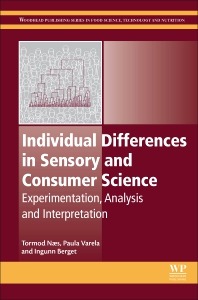
Individual differences in sensory and consumer science : Experimentation, analysis and interpretation
Individual differences in sensory and consumer science: Experimentation, Analysis and Interpretation presents easily readable, State-of-the-art coverage on how to plan and execute experiments that give rise to individual differences, Also providing the framework for successful analysis and interpretation of results. The book highlights the different methodologies that can be applied and how to select the correct methodology based on the type of study you are performing, Be it product research and development, Quality control or consumer acceptance studies.Written by an experienced team of statisticians and sensory and consumer scientists, The book provides both academics and industry professionals with the first complete overview of a topic of ever-increasing importance.
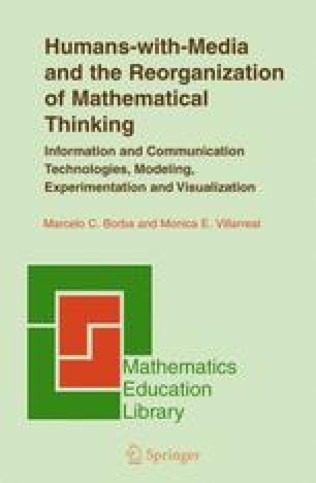
Humans-with-media and the reorganization of mathematical thinking : Information and communication technologies, modeling, visualization and experimentation
Offers a new conceptual framework for reflecting on the role of information and communication technology in mathematics education. Borba and Villarreal provide examples from research conducted at the level of basic and university-level education, developed by their research group based in Brazil, and discuss their findings in the light of the relevant literature. Arguing that different media reorganize mathematical thinking in different ways, they discuss how computers, writing and oral discourse transform education at an epistemological as well as a political level. Modeling and experimentation are seen as pedagogical approaches which are in harmony with changes brought about by the presence of information and communication technology in educational settings. Examples of research about on-line mathematics education courses, and Internet used in regular mathematics courses, are presented and discussed at a theoretical level. In this book, mathematical knowledge is seen as developed by collectives of humans-with-media.

Handbook of Technical and Vocational Education and Training Research
This handbook provides a comprehensive coverage of TVET research in an international context, and, with special focus on research and research methods, it is a cutting-edge resource and reference.Various areas of TVET research are covered, including on the vocational disciplines and on TVET systems. Case studies illustrate different approaches to TVET research, and the final section of the book presents research methods, including interview and observation methods, as well as of experimentation and development.

Frontiers of Optical Spectroscopy ; Investigating Extreme Physical Conditions with Advanced Optical Techniques
Advanced spectroscopic techniques allow the probing of very small systems and very fast phenomena, conditions that can be considered "extreme" at the present status of our experimentation and knowledge. Quantum dots, nanocrystals and single molecules are examples of the former and events on the femtosecond scale examples of the latter. The purpose of this book is to examine the realm of phenomena of such extreme type and the techniques that permit their investigations. Each author has developed a coherent section of the program starting at a somewhat fundamental level and ultimately reaching the frontier of knowledge in the field in a systematic and didactic fashion. The formal lectures are complemented by additional seminars.

Effective Resource Management in Manufacturing Systems : Optimization Algorithms for Production Planning
Effective Resource Management in Manufacturing Systems aims to provide robust methods for achieving effective resource allocation and to solve related problems that occur daily and often generate cost overruns, specifically focusing on problems like resource levelling, sizing of machines and production layouts, cost optimization in production planning and scheduling. This approach is based on providing quantitative methods, covering both mathematical programming and algorithms, leading to high quality solutions for the analysed problems. Details of extensive experimentation is provided for the proposed techniques to put them in a practical perspective, so that, on the one hand, the reader can reproduce them, and, on the other hand, it appears clear how they can be implemented in real scenarios.

Drift-Driven Design of Buildings : Mete Sozen’s Works on Earthquake Engineering
Summarizes the most essential concepts that every engineer designing a new building or evaluating an existing structure should consider in order to control the damage caused by drift (deformation) induced by earthquakes. It presents the work on earthquake engineering done by Dr. Mete Sozen and dozens of his collaborators and students over decades of experimentation, analysis, and reconnaissance. Many of the concepts produced through this work are integral part of earthquake engineering today. Nevertheless, the connection between the concepts in use today and the original sources is not always explained.

Digital self-tuning controllers : Algorithms, implementation and applications
Digital Self-tuning Controllers presents you with a complete course in self-tuning control, beginning with a survey of adaptive control and the formulation of adaptive control problems. Modelling and identification are dealt with before passing on to algebraic design methods and particular PID and linear-quadratic forms of self-tuning control. Finally, laboratory verification and experimentation will show you how to ground your theoretical knowledge in real plant control.
