



Page 1
Page 1
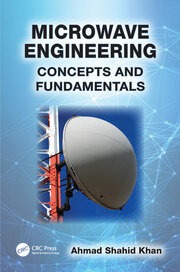
Microwave Engineering : Concepts and Fundamentals
Covers everything from wave propagation to reflection and refraction, guided waves, and transmission lines, providing a comprehensive understanding of the underlying principles at the core of microwave engineering. This encyclopedic text not only encompasses nearly all facets of microwave engineering, but also gives all topics—including microwave generation, measurement, and processing—equal emphasis. Packed with illustrations to aid in comprehension. Describes the mathematical theory of waveguides and ferrite devices, devoting an entire chapter to the Smith chart and its applications Discusses different types of microwave components, antennas, tubes, transistors, diodes, and parametric devices Examines various attributes of cavity resonators, semiconductor and RF/microwave devices, and microwave integrated circuits

Hilbert Space Operators in Quantum Physics
The second edition of this course-tested book provides a detailed and in-depth discussion of the foundations of quantum theory as well as its applications to various systems. The exposition is self-contained; in the first part the reader finds the mathematical background in chapters about functional analysis, operators on Hilbert spaces and their spectral theory, as well as operator sets and algebras. This material is used in the second part to a systematic explanation of the foundations, in particular, states and observables, properties of canonical variables, time evolution, symmetries and various axiomatic approaches. In the third part, specific physical systems and situations are discussed. Two chapters analyze Schrödinger operators and scattering, two others added in the second edition are devoted to new important topics, quantum waveguides and quantum graphs.

Electromagnetic Radiation : Variational Methods, Waveguides and Accelerators
This is a graduate level textbook on the theory of electromagnetic radiation and its application to waveguides, transmission lines, accelerator physics and synchrotron radiation. It has grown out of lectures and manuscripts by Julian Schwinger prepared during the war at MIT's Radiation Laboratory, updated with material developed by Schwinger at UCLA in the 1970s and 1980s, and by Milton at the University of Oklahoma since 1994. The book includes a great number of straightforward and challenging exercises and problems. It is addressed to students in physics, electrical engineering, and applied mathematics seeking a thorough introduction to electromagnetism with emphasis on radiation theory and its applications.

Construction of Mappings for Hamiltonian Systems and Their Applications
Based on the method of canonical transformation of variables and the classical perturbation theory, this innovative book treats the systematic theory of symplectic mappings for Hamiltonian systems and its application to the study of the dynamics and chaos of various physical problems described by Hamiltonian systems. It develops a new, mathematically-rigorous method to construct symplectic mappings which replaces the dynamics of continuous Hamiltonian systems by the discrete ones. Applications of the mapping methods encompass the chaos theory in non-twist and non-smooth dynamical systems, the structure and chaotic transport in the stochastic layer, the magnetic field lines in magnetically confinement devices of plasmas, ray dynamics in waveguides, etc. The book is intended for postgraduate students and researches, physicists and astronomers working in the areas of plasma physics, hydrodynamics, celestial mechanics, dynamical astronomy, and accelerator physics. It should also be useful for applied mathematicians involved in analytical and numerical studies of dynamical systems.
